Interior Painting on Long Island
Walls, ceilings, trim and doors, with the plastering, patching and priming done before a single finish coat goes on.
Smooth walls are made, not painted
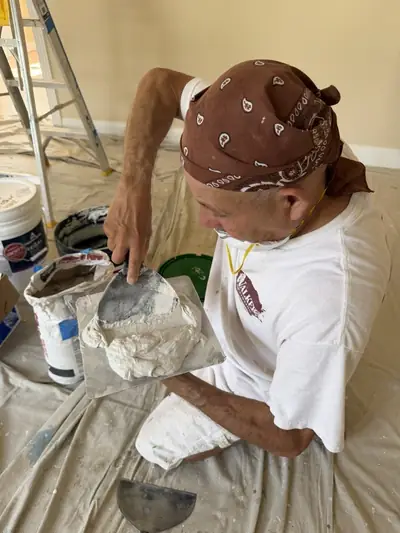
A new color only looks as good as the surface under it. Nail holes, open seams, stains and rough old repairs all telegraph through a fresh finish, so we plaster, patch, sand and spot-prime first, and cut in by hand.
One room or the whole house, Walker Painting has been painting Long Island interiors since 1995.
- Walls, ceilings, molding, trim and interior doors
- Furniture moved to the center of the room on casters; heavy canvas drop cloths down
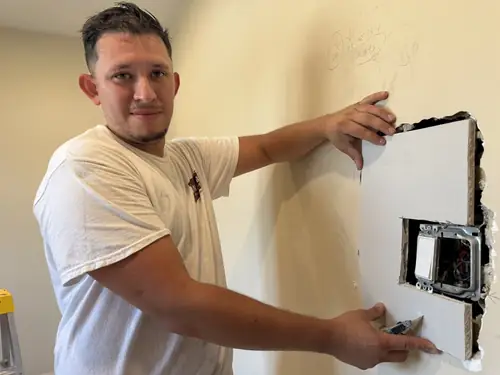
- Plastering, sheetrock patching and water-damage repair before priming
- Wallpaper removed and walls skimmed smooth, or new wall covering installed
- Trim and doors finished in semi-gloss unless you choose otherwise
- Certified lead-safe renovation on pre-1978 homes
What working with us looks like
Free on-site estimate
Walk the rooms with us, talk through colors and sheens, and get a fixed written price. No obligation.
Protect the room
Furniture to the center on casters, canvas drops on the floors, fixtures and hardware masked or removed.
Repair and prime
Holes, cracks and seams filled and sanded, water damage repaired, every repair spot-primed.
Finish and walkthrough
Finish coats, full cleanup, a walkthrough for touch-ups, and a copy of the one-year written warranty.
Interior Painting for Comfortable, Cohesive Rooms
In this guide
- What Is Included in Interior Painting?
- Interior Painting Starts With a Surface Assessment
- How to Choose an Interior Paint Color
- Choosing the Right Paint Sheen
- The Professional Interior Painting Process
- Painting Walls, Ceilings, Trim, and Doors Together
- Interior Painting for Kitchens and Bathrooms
- Interior Painting for Move-Ins, Move-Outs, and Remodels
- How Long Does Interior Painting Take?
- Questions to Ask an Interior Painting Company
- Schedule Interior Painting on Long Island
Interior painting is one of the most direct ways to change the atmosphere of a home. The right color can make a dark room feel lighter, connect an open floor plan, highlight architectural details, or create a calmer place to work and rest. A strong result also depends on what happens before the finish coat: surface inspection, careful protection, repairs, sanding, caulking, and the correct primer.
Walker Painting has provided interior painting on Long Island since 1995, from single rooms to full homes. Our process includes moving furniture on casters, protecting floors with heavy canvas drop cloths, completing plaster and sheetrock repairs, and spot-priming repairs before the finish coats. This guide explains how to plan the work, choose finishes, and understand the steps behind a smooth, durable result.
What Is Included in Interior Painting?
Interior painting can cover much more than walls. Depending on your goals, the project may include:
- Walls and accent walls
- Ceilings, trays, and decorative details
- Baseboards, crown molding, window trim, and door casings
- Interior doors and frames
- Closets, pantries, and built-in shelving
- Stair walls, railings, and select woodwork
- Kitchens, bathrooms, bedrooms, offices, and living areas
If your project includes several parts of the property, start with our overview of complete residential painting services. Homeowners planning a coordinated kitchen update can also pair fresh walls with professional cabinet painting.
Interior Painting Starts With a Surface Assessment
Walls that look simple from across the room often reveal more under direct light. Nail holes, dents, open seams, glossy patches, stains, peeling edges, and rough repairs can show through a new finish. An assessment helps determine what needs cleaning, filling, sanding, caulking, or priming.
Different surfaces require different preparation. New drywall may absorb paint unevenly without the right primer. Previously glossy trim often needs cleaning and abrasion for adhesion. Water stains may require a specialized blocking primer after the source has been corrected. Bathrooms may have soap residue or moisture concerns that should be addressed before coating.
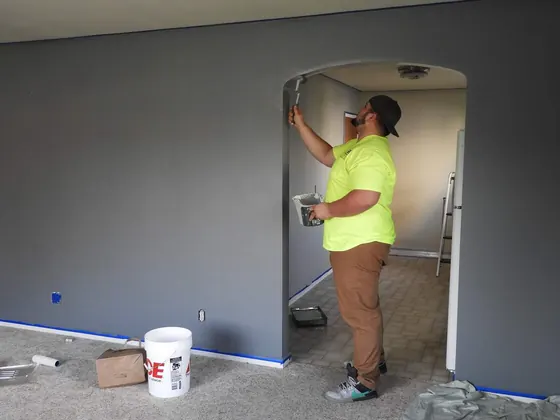
Preparation also protects the rest of the home. Floors, countertops, furniture, fixtures, and hardware should be covered or moved as agreed in the proposal. Switch plates and outlet covers are typically removed where practical, and work areas should be kept orderly throughout the project.
How to Choose an Interior Paint Color
Begin with the elements that are staying: flooring, stone, tile, countertops, large furniture, and window treatments. Their undertones help narrow the range of colors that will feel natural in the space.
Next, consider light. North-facing rooms often receive cooler light, while strong afternoon sun can make colors feel warmer and more intense. Artificial bulbs change color appearance at night. A large sample placed on more than one wall gives you better information than a small chip viewed in a store.
Open layouts benefit from a simple color plan. You do not have to use one shade everywhere, but connected rooms usually look more intentional when the colors share an undertone or repeat in trim, cabinetry, textiles, or accents.
Should every room use the same color?
One color can create continuity and simplify future touchups. Multiple colors can give rooms a distinct purpose and bring attention to features. The right choice depends on sightlines, architecture, natural light, and how you want each area to feel.
Choosing the Right Paint Sheen
Sheen influences appearance, washability, and how clearly the wall shows imperfections. Product names vary by manufacturer, but common choices range from flat or matte through eggshell, satin, semi-gloss, and gloss.
Flat and matte finishes reduce reflection and are often selected for ceilings or lower-traffic walls. Eggshell and satin finishes are common where homeowners want a balance of soft appearance and easier cleaning. Semi-gloss is frequently used for trim, doors, and details because it creates contrast and tolerates regular wiping.
Room use matters, but surface condition matters too. A higher sheen can draw attention to dents and uneven patches. Your painter should recommend a finish after seeing the surface and discussing cleaning needs, moisture, traffic, children, pets, and the overall style of the home.
The Professional Interior Painting Process
Consultation and scope
The first step is a walkthrough. You identify the rooms, surfaces, colors, and priorities. The painter evaluates access and condition, then prepares a scope that defines preparation, products, coats, cleanup, and exclusions.
Room setup and protection
Furniture is moved or grouped according to the agreement. Floors and remaining items are covered. Hardware, wall plates, and window treatments are handled as specified. Clear setup reduces the chance of accidental damage and gives painters safe access to the surfaces.
Repairs and preparation
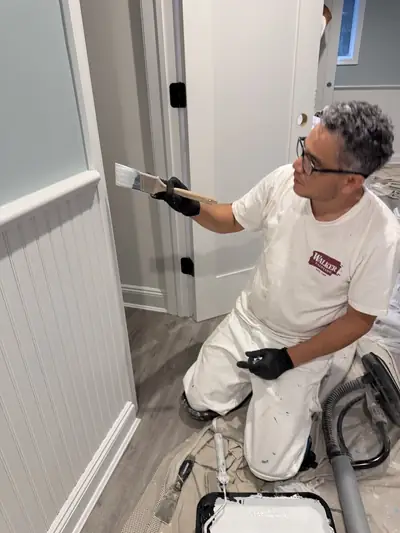
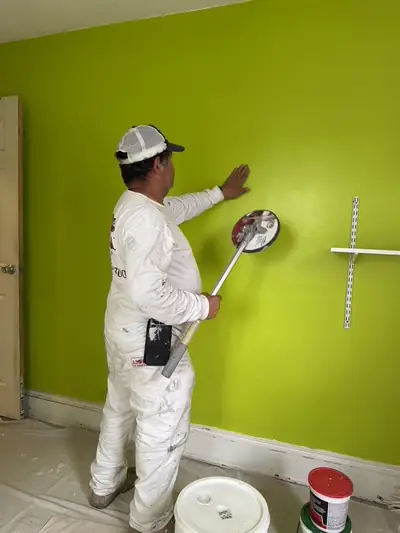
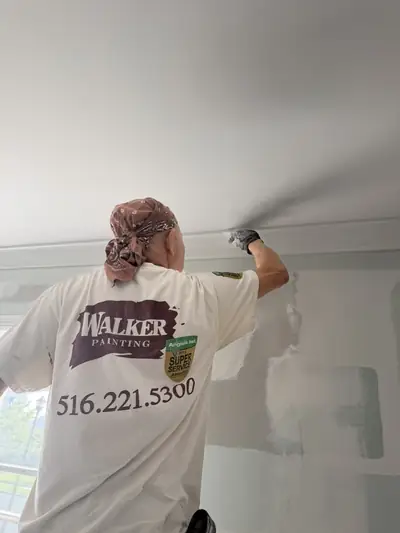
Minor holes and cracks are filled, loose material is removed, rough areas are sanded, gaps are caulked where appropriate, and dust is controlled. Primer is applied to bare, repaired, stained, or otherwise challenging surfaces as needed.
Application
Edges are cut cleanly, and the main surfaces are rolled, brushed, or sprayed depending on the material and desired appearance. Adequate drying time between coats helps the finish develop properly.
Review and cleanup
After the paint has been inspected under normal room lighting, coverings are removed and the area is cleaned. A final walkthrough gives you an opportunity to review the finish and note agreed touchups.
Painting Walls, Ceilings, Trim, and Doors Together
Painting all visible surfaces is not required, but it often produces the most complete transformation. Older ceilings may appear dull beside fresh walls. Yellowed or chipped trim can reduce the impact of a new wall color. Doors often collect handprints and scuffs that become more noticeable after nearby surfaces are renewed.
When several surfaces are included, the order of work matters. Preparation is completed first, followed by a sequence that lets the crew create clean transitions and avoid damaging finished areas. The proposal should state whether closets, inside faces of doors, window sashes, shelves, and built-ins are included because these details can vary widely.
Interior Painting for Kitchens and Bathrooms
Kitchens and bathrooms need special attention because they experience frequent cleaning, humidity, splashes, and changing temperatures. Surfaces should be clean and dry, ventilation problems should be corrected, and existing mildew or coating failure should be investigated before painting.
In a kitchen, wall color needs to work with cabinets, counters, backsplash, appliances, and connected rooms. If the cabinet boxes are sound but the finish looks dated, learn how cabinet refinishing with paint can change the room while keeping the existing cabinet layout.
Interior Painting for Move-Ins, Move-Outs, and Remodels
An empty home can be efficient to paint because crews have open access and fewer items to protect. If you are moving in, schedule painting before major furniture deliveries when possible. If you are selling, focus on visible wear, strong color transitions, and areas that affect the first impression.
During a remodel, coordination is essential. Drywall, carpentry, flooring, electrical work, and fixture installation can affect the painting schedule. Paint should be sequenced so that later trades do not create avoidable repairs. A written plan with the contractor helps clarify when surfaces will be ready and who is responsible for final touchups.
How Long Does Interior Painting Take?
The timeline depends on room count, ceiling height, repair needs, color changes, trim detail, drying conditions, furniture, and crew size. A single uncomplicated room may move quickly, while a furnished whole-home project with extensive trim and repairs requires more time.
Ask for a schedule based on the actual scope rather than a generic promise. The plan should explain the starting area, expected room sequence, daily working hours, and how changes or hidden damage will be handled.
Questions to Ask an Interior Painting Company
Before choosing a contractor, ask:
- Is the estimate detailed and written?
- Which repairs and preparation steps are included?
- Which products and sheens will be used?
- How will floors, furniture, and fixtures be protected?
- Are ceilings, closets, trim, and doors included?
- Who is responsible for moving and replacing items?
- How will occupied rooms be managed?
- What cleanup and final review are included?
- Is the company insured and licensed where required?
Clear answers help you compare the actual value and scope of each proposal.
Schedule Interior Painting on Long Island
Thoughtful interior painting brings color, light, and continuity to the rooms you use every day. Walker Painting can help you define the scope, select appropriate finishes, and create a practical plan for your home.
Call 516-447-2732 or request a free on-site estimate. Walker Painting backs paint jobs with a one-year written warranty against paint failure. If the outside of your home also needs attention, see how our exterior house painting process protects and refreshes curb appeal.
Get an estimate today. Paint tomorrow.
A free on-site estimate, a fixed written price, and a one-year written warranty against paint failure.
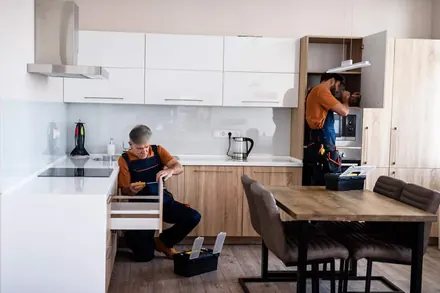
The part most painters skip is the part we’re known for
Prep, protection and paperwork. It is not glamorous, and it is the whole difference between a paint job that lasts and one that doesn’t.
Your home gets protected
We move everything to the center of the room, use casters so nothing scars the floor, and lay heavy canvas drop cloths, never plastic sheeting underfoot.
Lead-safe certified
We are a certified lead paint renovator and have completed the full certification coursework, which matters on almost every pre-1978 Long Island home.
One-year written warranty
Every paint job is covered by a one-year warranty against all paint failure. It is written down, and you get a copy.
Crews you can vet
Every employee is vigorously screened with multiple references. Most of our people have been with Walker Painting for 15 years.

Rated 5.0 across 300+ Google reviews
WOW, thank you to Sal and his team. The professionalism and flexibility working with Sal was like no other. We would happily refer them to anyone looking for a team of caring people who do a tremendous job.
They are fully staffed, which is rare.
Paula’s exterior came with significant rotted wood. The crew handled the repairs without delay, and leaned on Dave and Sal to pick shades that stayed true to her home’s classic traditional style.
Interior Painting FAQs
Do you move furniture?
Yes. We move everything to the center of the room, and casters are used to protect the floor.
Do you remove or install wallpaper?
Both. Removal of the paper and backing is followed by plastering so the walls are smooth before priming and painting, and we install all types of wall covering.
Do you paint molding?
Yes, usually in semi-gloss.
Is there a warranty?
Yes. All paint jobs are covered by a one-year written warranty against all paint failure.
Do I need primer before painting interior walls?
Not every previously painted wall requires a full primer coat. Bare drywall, repaired areas, stains, strong color changes, glossy surfaces, and adhesion concerns may need primer. The surface condition and product system should guide the decision.
Can I stay in the house while the work is completed?
Often, yes. A phased room schedule can keep part of the home available. Discuss ventilation, household sensitivities, pets, children, and work-from-home needs before scheduling.
How should I prepare before the painters arrive?
Remove fragile objects, personal items, small decor, and wall hangings unless the proposal says otherwise. Confirm who will move furniture and window treatments. Keep color selections, access instructions, and alarm details available.
When can I clean a newly painted wall?
Paint can feel dry before it has fully developed its final hardness. Follow the product guidance and your painter’s instructions before washing or scrubbing the surface.
Other services we offer
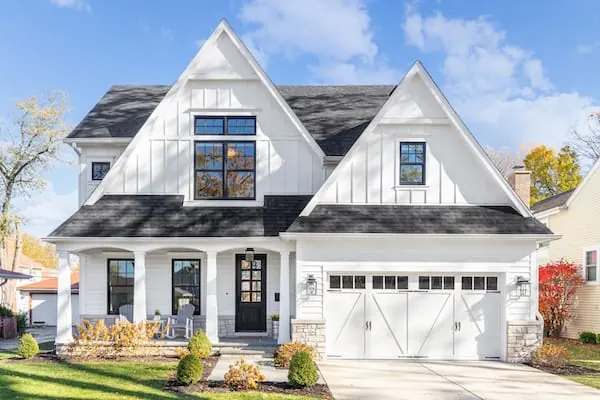
Exterior Painting
Protect and elevate your home’s curb appeal with durable, weather-ready finishes built for Long Island seasons.
Learn more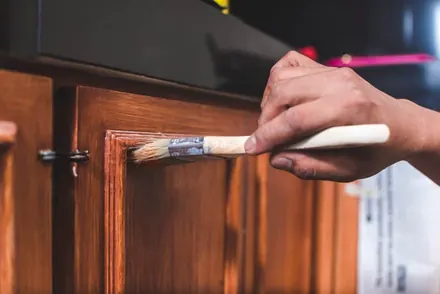
Cabinet Painting
Revitalize kitchen and bathroom cabinetry with expert precision and high-grade finishes that look factory-new.
Learn moreCarpentry & Repairs
Beyond painting, we restore the structural integrity and beauty of your space with expert carpentry and repair work.
Learn more
Power Washing
Comprehensive power washing to clean and prep your surfaces, restoring the brilliance of your exterior spaces.
Learn more
Commercial Painting
High-quality paint and skilled workmanship delivered on time and on budget, with minimal disruption to your operations.
Learn more
Color Consulting
Enjoy a free consultation with professional interior designers (whole-house projects) to select the perfect palette.
Learn more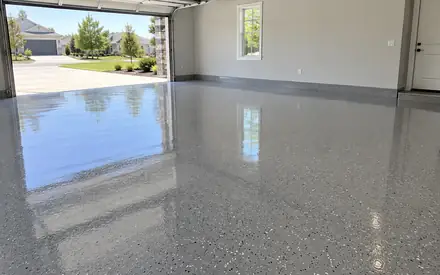
Epoxy Flooring Installation
Durable, high-gloss epoxy floor coatings installed in garages, basements and commercial spaces, built to handle daily wear.
Learn moreNot sure where to start?
Tell us about your project and we’ll recommend the right approach.
Request Free EstimateRequest your free estimate
Tell us about your project and we will get back to you fast. Get an estimate today. Paint tomorrow.
- Free on-site estimate, no obligation
- Nassau & Suffolk licensed, fully insured
- One-year written warranty on every job
- No job too small, even if it’s just one room
Get your free quote
Takes about a minute. We’ll follow up personally.
Request Free Estimate- One minute to complete
- No obligation, no pressure
- Ask about the Painter For A Day special
Prefer to talk? Call 516-447-2732