Plaster & Stucco Repair on Long Island
Cracks, water damage, loose material, previous patches, and surface movement can remain visible through new paint.
Plaster and Stucco Repair Before the Finish Coat
Cracks, water damage, loose material, previous patches, and surface movement can remain visible through new paint. Repairing interior plaster and exterior stucco before coating helps create a sounder, more consistent surface and gives the finished project the clean appearance homeowners expect.
Walker Painting provides plastering, sheetrock patching, water-damage repair, and stucco repair as part of painting projects throughout Nassau County, Suffolk County, Queens, and Manhattan. Repairs are assessed, prepared, primed, and painted within a written project scope. Active leaks, structural movement, or building-envelope failures must be corrected before a cosmetic repair can last.
Request Free Estimate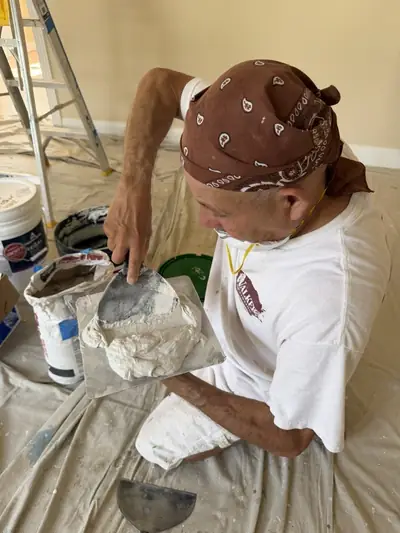
Plaster, Drywall, and Stucco Are Different Materials
Although all three can be painted, they behave differently.
Traditional plaster is a hard interior finish installed over wood lath, metal lath, gypsum base, or another substrate. It may crack, separate, or crumble when the supporting system moves or moisture reaches it.
Drywall or sheetrock uses paper-faced gypsum panels with taped and finished joints. Damage is often repaired by replacing a section, reinforcing seams, and applying joint compound in several layers.
Stucco is an exterior cementitious system installed over masonry or a framed wall assembly. Cracks and surface failure may relate to impact, water, installation, substrate movement, or normal curing and expansion.
The repair method should match the material rather than treating every wall defect with the same filler.
Common Reasons Interior Plaster Needs Repair
Interior plaster may be damaged by:
- Roof, plumbing, or window leaks
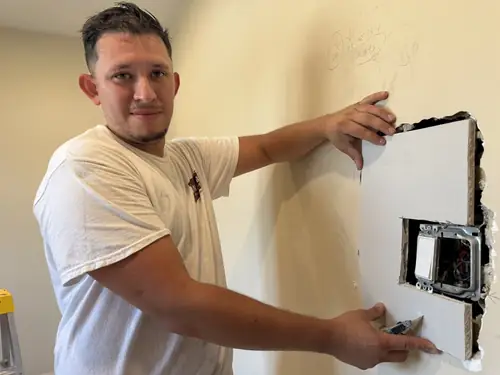
- Electrical or plumbing access cuts
- Remodeling and fixture removal
- Settlement or seasonal movement
- Loose plaster keys or substrate separation
- Impact damage
- Failed earlier patches
- Wallpaper removal that exposes an uneven surface
The cause matters. A recurring crack or damp stain should be investigated before repair. If a leak remains active, a fresh patch and paint may fail or become stained again.
Walker Painting’s interior process includes plastering, sheetrock patching, and water-damage repair before spot priming and painting. For broader interior planning, visit the interior painting guide.
Signs of Exterior Stucco Problems
Stucco may show hairline cracks, wider cracks, impact damage, staining, bulging, hollow areas, or sections where the finish coat is missing. Some small cracks are primarily cosmetic, while others can signal movement or allow water into the wall assembly.
Visible signs worth evaluating include:
- Cracks that are widening or returning
- Diagonal cracks near windows and doors
- Bulges, loose sections, or hollow-sounding areas
- Rust stains or discoloration
- Peeling paint on previously coated stucco
- Dark moisture marks or recurring efflorescence
- Failed sealant around penetrations and transitions
Painting can improve appearance but cannot stabilize a failing wall assembly. Significant movement, widespread delamination, or moisture intrusion may require a stucco specialist, engineer, roofer, or waterproofing contractor before surface repair and paint.
Water Damage Must Be Solved at the Source
Water is one of the most common reasons wall repairs fail. Before closing an interior opening or patching exterior stucco, determine whether the source has been corrected. Possible sources include plumbing, roofing, flashing, windows, masonry joints, condensation, or poor drainage.
Walker Painting’s published interior service describes removing wet sheetrock and insulation, treating the affected area as appropriate, installing new insulation and sheetrock, then taping, spackling, priming, and painting. The actual response must match the project conditions and the limits of the written scope.
If there is suspected mold, extensive contamination, structural damage, or ongoing water entry, specialized assessment may be needed before painting work begins.
The Interior Plaster Repair Process
Inspect the damage
The painter identifies the material, visible cause, loose areas, previous repair, and relationship to surrounding walls or ceilings. Moisture concerns are discussed before work is scheduled.
Protect the room
Furniture is moved or grouped according to the plan. Walker Painting uses casters to help protect floors and heavy canvas drop cloths underfoot. Doors, fixtures, and nearby surfaces are covered as needed.
Remove unsound material
Loose, crumbling, or contaminated material within the repair scope is removed back to a stable edge. Dust and debris are controlled.
Stabilize and rebuild
The repair is made using materials compatible with the existing wall. Deeper repairs may require multiple layers, reinforcement, or replacement backing.
Feather and sand
The patch is extended and smoothed so the transition is less visible under normal lighting. The required finish level depends on wall texture, sheen, and viewing conditions.
Prime and paint
Porous repairs are primed so they do not absorb finish paint differently. The wall or ceiling is then painted as defined in the proposal.
The Exterior Stucco Repair Process
Stucco repair begins with cleaning and inspection. Loose material is removed, crack or patch areas are prepared, and compatible repair material is applied in the required layers. Texture and color are matched as closely as practical before primer and paint when coating is included.
Exact texture matching can be difficult, especially on aged or hand-applied surfaces. Sun exposure and weather also change the color of existing stucco and paint. The estimate should state whether the repair will be spot-painted or whether a larger elevation will be coated for a more consistent appearance.
Power washing may be part of exterior preparation when the surface is stable enough. Learn how Walker Painting adjusts cleaning methods in the power washing service guide.
Matching Texture and Sheen
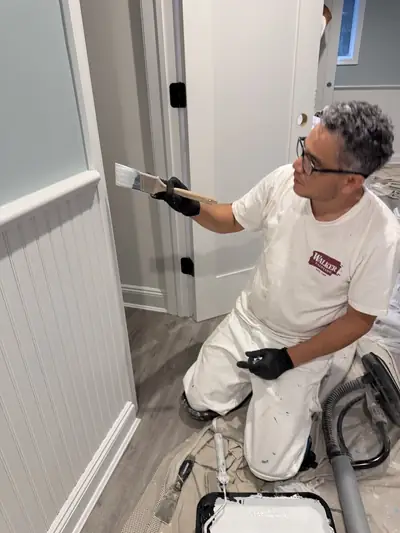
A technically sound patch can still be visible if its texture, sheen, or porosity differs from the surrounding surface. Smooth walls under side lighting show transitions more readily than textured walls under diffuse light. Higher-sheen paint also highlights irregularities.
Discuss the expected finish level before work begins. Some repairs need skim coating across a broader area rather than only filling the damaged spot. On stucco, texture may be applied by hand and can vary naturally. A sample area helps establish the closest practical match.
Repairing Walls After Wallpaper Removal
Removing wallpaper and its backing can expose torn paper, old paste, gouges, uneven plaster, or previous repairs. Painting directly over residue or damaged surfaces can lead to rough texture and adhesion problems.
Walker Painting removes wallpaper and backing, then plasters to smooth the walls before priming and painting. The scope should define removal, adhesive cleanup, repairs, skim coating, primer, and finish coats. Wall condition is sometimes difficult to predict until the covering is removed, so the change process should also be clear.
Lead-Safe Work in Older Homes
Homes built before 1978 may contain lead-based paint. Repair, sanding, scraping, and demolition can create dust and chips. Walker Painting is a certified lead paint renovator and publishes lead-safe procedures as part of its preparation approach.
Tell the estimator the age of the home and any known testing history. The work plan should include the containment, protection, cleaning, and documentation required for the project.
Coordinating Repairs With Painting
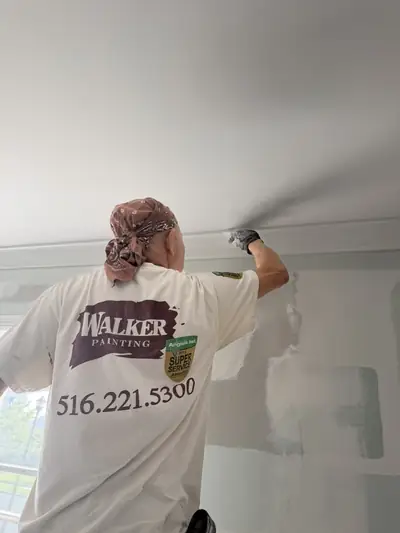
Repair and painting are most efficient when scoped together. The contractor can evaluate how far the finish coat must extend, which primer suits the patch, and whether related trim or adjacent surfaces should be included.
Interior repairs can be coordinated with walls, ceilings, molding, and doors. Exterior stucco repairs can be included with exterior painting and related carpentry repairs so the sequence is clear.
When Another Specialist May Be Needed
A painting contractor may recommend another professional when damage involves:
- Active plumbing, roof, or window leaks
- Structural movement or foundation concerns
- Large-scale stucco delamination
- Extensive mold or hazardous material
- Major insulation or framing damage
- Electrical or mechanical systems
- Widespread masonry deterioration
Identifying this early protects the repair and avoids covering a condition that will continue to cause damage.
Request a Plaster or Stucco Repair Estimate
A smooth finish begins with a stable surface and a repair plan that matches the material. Walker Painting can evaluate damaged plaster, sheetrock, and stucco, explain the visible limitations, and coordinate repairs with painting.
Call 516-447-2732 or request a free on-site estimate for plaster and stucco repair on Long Island.
The part most painters skip is the part we’re known for
Prep, protection and paperwork. It is not glamorous, and it is the whole difference between a paint job that lasts and one that doesn’t.
Your home gets protected
We move everything to the center of the room, use casters so nothing scars the floor, and lay heavy canvas drop cloths, never plastic sheeting underfoot.
Lead-safe certified
We are a certified lead paint renovator and have completed the full certification coursework, which matters on almost every pre-1978 Long Island home.
One-year written warranty
Every paint job is covered by a one-year warranty against all paint failure. It is written down, and you get a copy.
Crews you can vet
Every employee is vigorously screened with multiple references. Most of our people have been with Walker Painting for 15 years.

Rated 5.0 across 300+ Google reviews
WOW, thank you to Sal and his team. The professionalism and flexibility working with Sal was like no other. We would happily refer them to anyone looking for a team of caring people who do a tremendous job.
They are fully staffed, which is rare.
Paula’s exterior came with significant rotted wood. The crew handled the repairs without delay, and leaned on Dave and Sal to pick shades that stayed true to her home’s classic traditional style.
Plaster & Stucco Repair FAQs
Can cracked plaster be repaired before painting?
Yes, when the cause and surrounding material are understood. Loose areas may need stabilization or removal before the crack is rebuilt, feathered, primed, and painted.
Will the patch be completely invisible?
Experienced preparation can make many repairs difficult to notice, but lighting, texture, sheen, movement, and the extent of damage affect the result. The expected finish should be discussed during the estimate.
Can Walker Painting repair water-damaged walls?
Walker Painting lists water-damage and sheetrock repair among its services. The water source must be corrected first, and specialized remediation may be needed for extensive conditions.
Can stucco cracks simply be painted?
Paint alone does not rebuild a crack or correct movement. The crack should be evaluated and repaired with a method suited to the stucco system before coating.
Do repaired areas need primer?
Fresh plaster, compound, stucco, and other porous repairs generally need compatible primer so the finish coat develops evenly.
Can wallpaper damage be repaired?
Yes. Walker Painting’s process includes removing the paper and backing, repairing and plastering the walls, then priming and painting.
Other services we offer
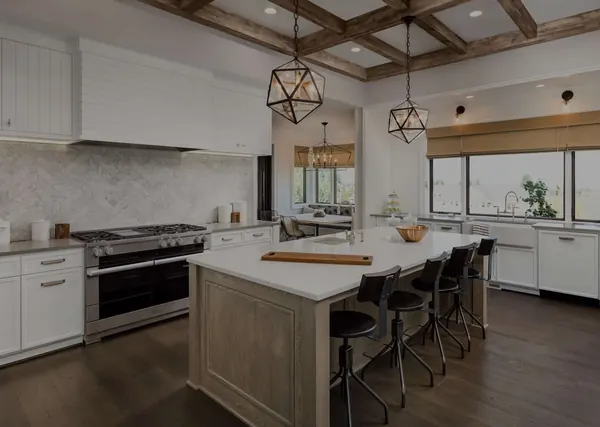
Interior Painting
Transform your living spaces with careful prep, quality materials, and a color palette that brings your vision to life.
Learn more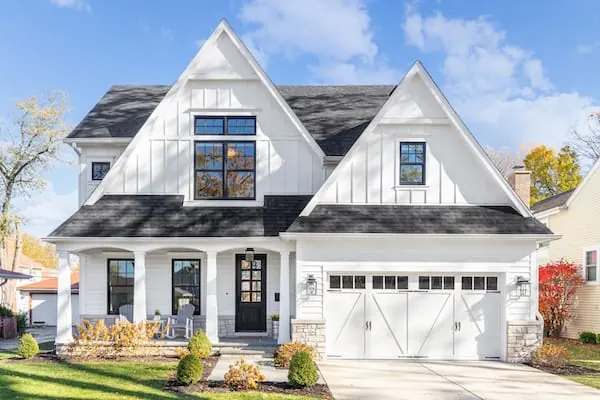
Exterior Painting
Protect and elevate your home’s curb appeal with durable, weather-ready finishes built for Long Island seasons.
Learn more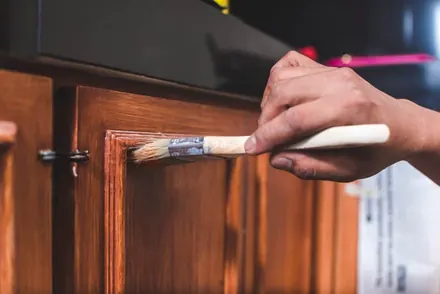
Cabinet Painting
Revitalize kitchen and bathroom cabinetry with expert precision and high-grade finishes that look factory-new.
Learn moreCarpentry & Repairs
Beyond painting, we restore the structural integrity and beauty of your space with expert carpentry and repair work.
Learn more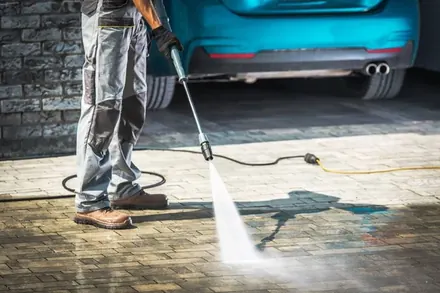
Power Washing
Comprehensive power washing to clean and prep your surfaces, restoring the brilliance of your exterior spaces.
Learn more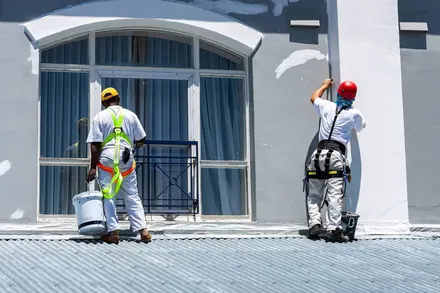
Commercial Painting
High-quality paint and skilled workmanship delivered on time and on budget, with minimal disruption to your operations.
Learn more
Color Consulting
Enjoy a free consultation with professional interior designers (whole-house projects) to select the perfect palette.
Learn more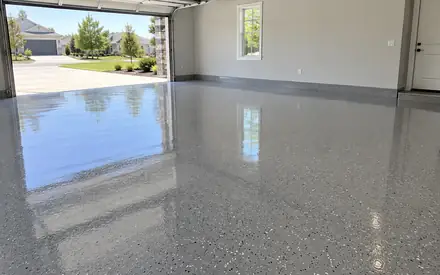
Epoxy Flooring Installation
Durable, high-gloss epoxy floor coatings installed in garages, basements and commercial spaces, built to handle daily wear.
Learn moreNot sure where to start?
Tell us about your project and we’ll recommend the right approach.
Request Free EstimateRequest your free estimate
Tell us about your project and we will get back to you fast. Get an estimate today. Paint tomorrow.
- Free on-site estimate, no obligation
- Nassau & Suffolk licensed, fully insured
- One-year written warranty on every job
- No job too small, even if it’s just one room
Get your free quote
Takes about a minute. We’ll follow up personally.
Request Free Estimate- One minute to complete
- No obligation, no pressure
- Ask about the Painter For A Day special
Prefer to talk? Call 516-447-2732