Exterior House Painting Color Ideas that Work: Taupe, Silver, Slate and Eggshell Color Options
Exterior House Painting Color Ideas That Work come down to three decisions: a neutral body, trim one step brighter or deeper, and a single accent on the front door. Charcoal, slate, beige, taupe, ivory and silver are the shades Long Island homeowners keep asking for, and each one survives a resale. Walker Painting has painted 12,000+ homes since 1995, so the shortlist below comes off real siding rather than off a trend sheet.
The sections underneath explain why each paint family holds up, which finishes belong on which surface, and what the prep costs in time before a crew opens a can. A free color consultation comes with every whole-house project, estimates are free and on-site, and every paint job is covered by a one-year written warranty against paint failure.
The rule holds on any Long Island street: one body color across the most wall, one trim shade framing the windows and corners, and one accent on the door. Everything below fills the rule in with real shades, real finishes and the order of operations a crew follows. Homeowners who want a second opinion get a free color consultation on a whole-house project, and nothing is ordered before the shortlist sits in the proposal.
Trending and Timeless Exterior Colors
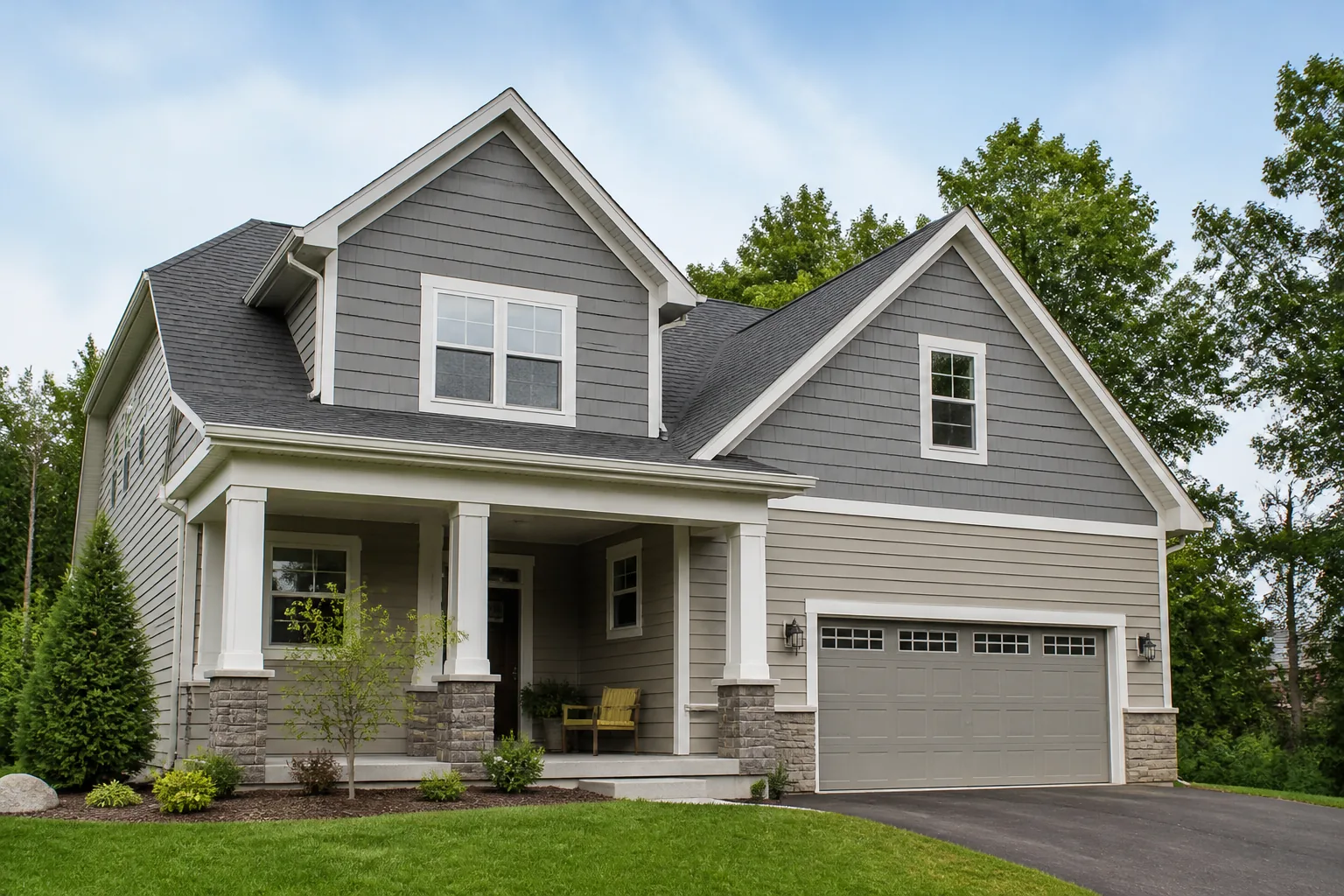
Two groups of colors are worth your time: the schemes with a long record on Long Island streets, and the ones arriving now with enough restraint to stay.
Classic Favorites
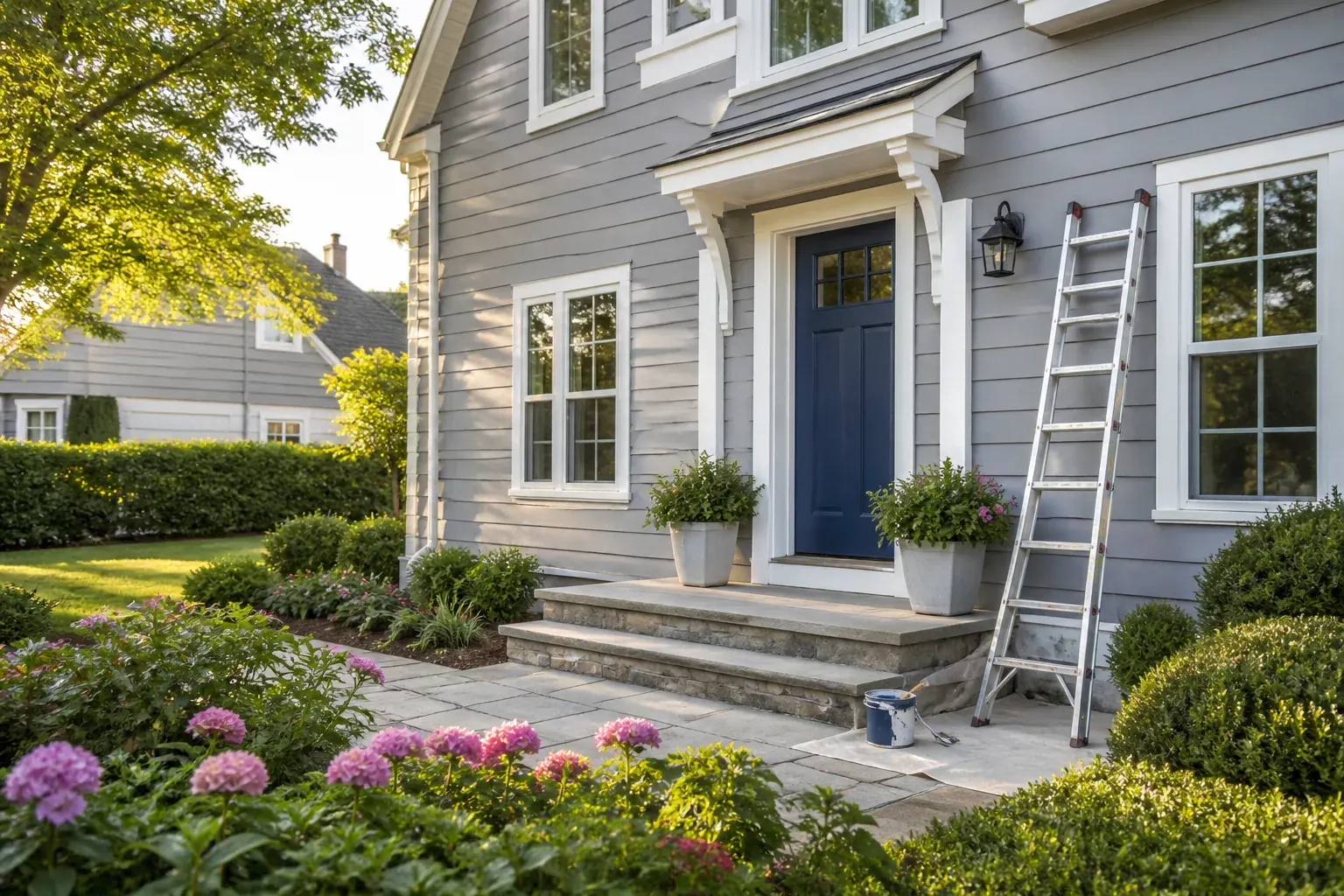
White with black shutters is the scheme a street wears longest, and it has outlived every palette sold as its replacement. Ivory and soft gray bodies behave the same way, because white trim reads correctly against both. A classic combination keeps the count at three: body, trim and door. Buyers rarely argue with a neutral, so a close sale is the wrong moment to test bold hues.
Two Combinations Worth Copying
Two paint combinations show up again and again on Long Island because both survive a change of owner. The first is an ivory body with white trim and a black door, which keeps a small home bright and the lines crisp. The second is a charcoal body with ivory trim and a wood door, which reads modern without going cold. Each uses three shades, and each leaves the accent as the only piece a new owner is likely to change.
Modern Combinations
The modern end of the market runs on contrast: a charcoal or slate body, ivory trim and black window frames. One hue in two values also reads as modern, so a slate body with a charcoal garage door stays quiet. Wood on a door or a column warms a cool gray design without a fourth shade. Silver siding with charcoal shutters lands in the same family and keeps more light on the wall.
Unique Accents
Accent hues sit on one small surface: a front door, a pair of shutters, a railing or a porch ceiling. Deep navy, olive and oxblood hues carry road dust better than a pale accent does. Moldings are usually painted with semi-gloss paint, and the sheen makes an accent read as a decision rather than an accident. A front door, a pair of shutters or a trim touch-up also fits what Painter For A Day covers at a home: one room, one day, one painter.
Explore a Spectrum of Exterior House Painting Color Ideas
The usable spectrum on a home runs from near black to off white, and exterior house color schemes stay legible from the curb when they hold three shades at most.
Charcoal, Slate and the Deep Grays
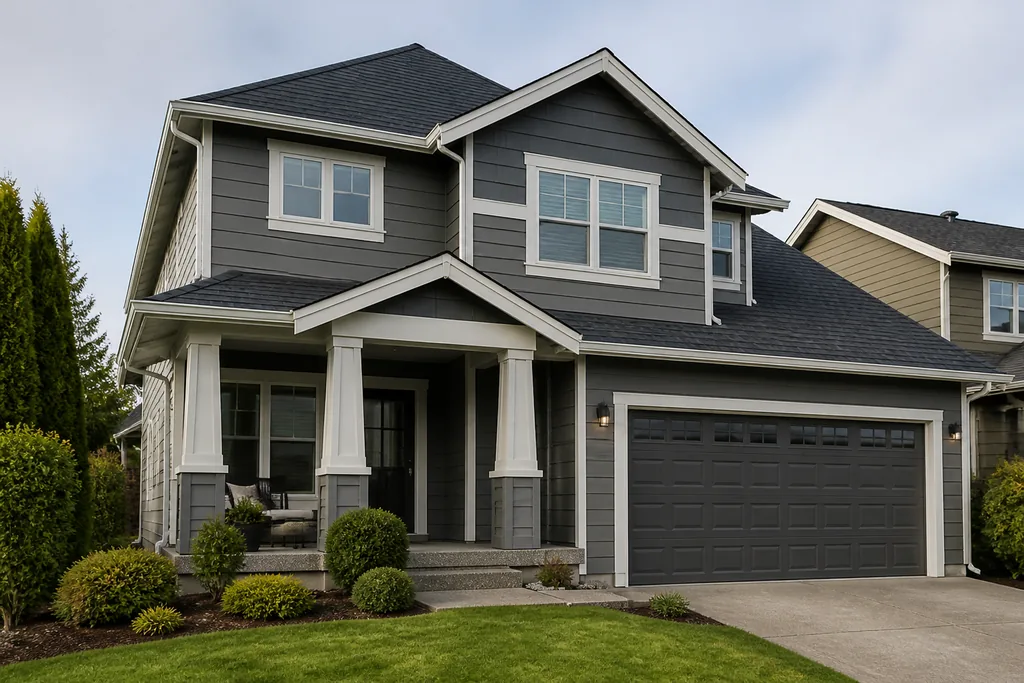
Charcoal is the deepest shade most homes carry, and it reads darker outdoors than it does on a chip in your hand. Slate holds a blue undertone, so it sits well beside a gray roof and gray stone. Deep grays hide checking in old wood, and ivory trim keeps the corner boards visible from the street. A black front door closes the design without a fourth shade.
Beige, Taupe and Ivory
Beige holds a yellow or pink undertone, and it answers to a brick chimney or a tan roof. Taupe is beige with gray mixed in, so it keeps its footing next to a stone foundation in afternoon light. Ivory suits a small cape as a body shade and a darker home as trim. Warm neutral paint also hides pollen between washes, which matters under oak.
Silver, Soft Grays and the Cool End
Silver is a light gray with a cool cast, and it reads almost white at midday. Soft gray paint suits vinyl windows and aluminum gutters, because both arrive near white already. A cool palette needs one warm note, and a wood door or a copper lamp gives it one. Silver also keeps a small home from reading smaller than it is.
Nature Inspired Hues
Olive, sage and deep green hues sit next to a lawn without competing with it. Navy paint reads nearly black from the curb and clearly blue up close, which suits a shutter more than a whole elevation. Each of these hues works as an accent first and as a body shade second. A free color consultation on a whole-home repaint is where bold ideas get tested on a board instead of on the siding.
Shingles, Brick and Stucco Each Set Limits
The material under the paint decides how a shade behaves. Cedar shingles drink the first coat of paint and deepen it, so a mid tone often lands darker than the chip promised. Smooth clapboard shows every brush line, which is why eggshell suits it better than a glossier finish. Brick and stucco keep their own colors permanently, so the body shade beside them has to agree with them rather than fight them. Carpentry replaces any shingle too far gone to hold paint before the crew primes.
Guidelines for Selecting the Perfect Exterior Paint Colors
Four inputs narrow a long list quickly: the architectural style, the climate, the materials you keep, and the finish you pick for each surface.
Match the Architectural Style First
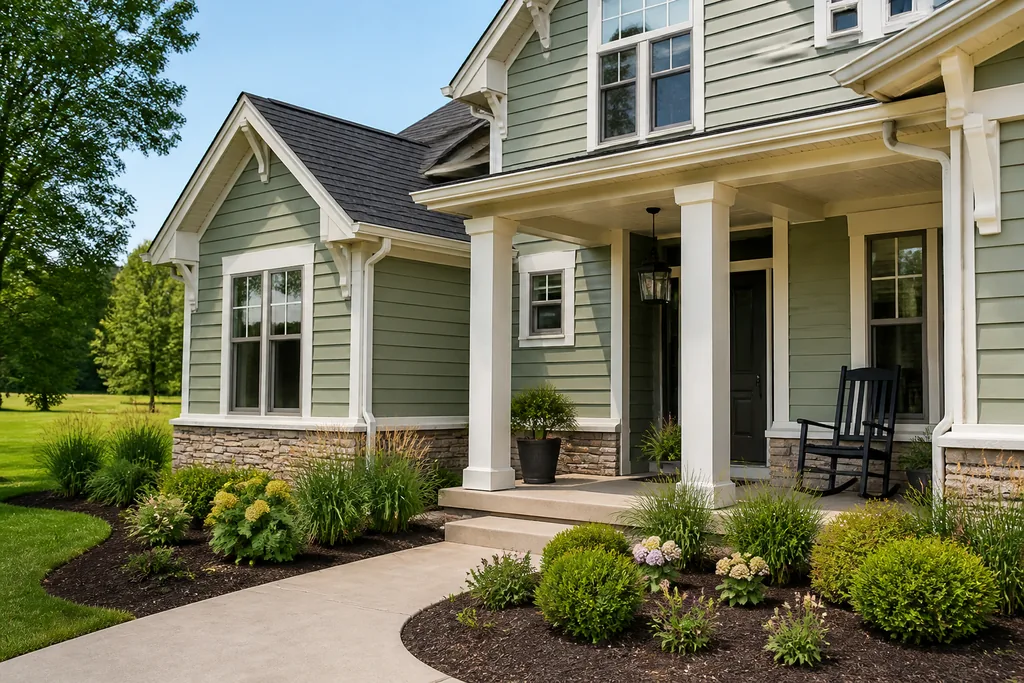
Architectural style decides how many shades a home carries well. A center hall colonial holds a symmetrical design: one body shade, white trim and shutters at every window. A cape or a ranch has less wall to paint, so a pale body with a dark door keeps the proportions honest. A Victorian carries three shades, and the extra one sits on detail a carpenter has already repaired.
Climate, Weather Conditions and the South Wall
Long Island climate is the test every shade has to pass: salt air, freeze and thaw cycles, and full sun. A deep shade fades first on a south elevation, so dark bodies do better where a tree or a neighbor shades the wall. Weather conditions set the calendar too, because primer needs dry wood and a daytime temperature the product allows. Most homes are power washed first, and the siding has to dry before primer goes on.
Hold the Shades Against What Stays
The roof, the brick and the stone are not getting repainted, so the body shades answer to them. Hold a paint sample board against all three in daylight, never under a garage bulb.
Eggshell, Satin and Where Each Finish Belongs
Eggshell is a low sheen with a faint glow, like the shell of an egg, and it hides a wavy clapboard. Satin paint carries more sheen and wipes clean, so it suits trim, doors and shutters. Light reflectance value (LRV) is the number printed on the back of a paint chip, and a lower number means a darker shade. Two paint samples on boards, set against the siding for a day, settle the question better than any chip does.
Confirm the Shortlist in Writing
Color confirmation is a step in the workflow, not an afterthought. The proposal names the body paint, the trim and the accent, with the finish for each surface, so the crew and the homeowner read the same page. A free color consultation on a whole-home repaint sits ahead of the step for anyone still deciding. Scheduling follows the confirmation, and weather conditions move the dates when the siding needs another dry day.
Power Washing and Carpentry Repairs in the Prep Process
The prep process decides how long new shades last, and all of it runs before the first drop of paint.
The exterior workflow runs in one order: inspection and proposal, color confirmation and scheduling, cleaning and preparation, paint application, then a detail review and cleanup. Preparation means scraping, sanding, repairs, caulking and priming, and most homes are power washed first. Carpentry replaces rotted wood and shingles, installs molding, and handles sheetrock patching and water damaged drywall repair where a leak got in.
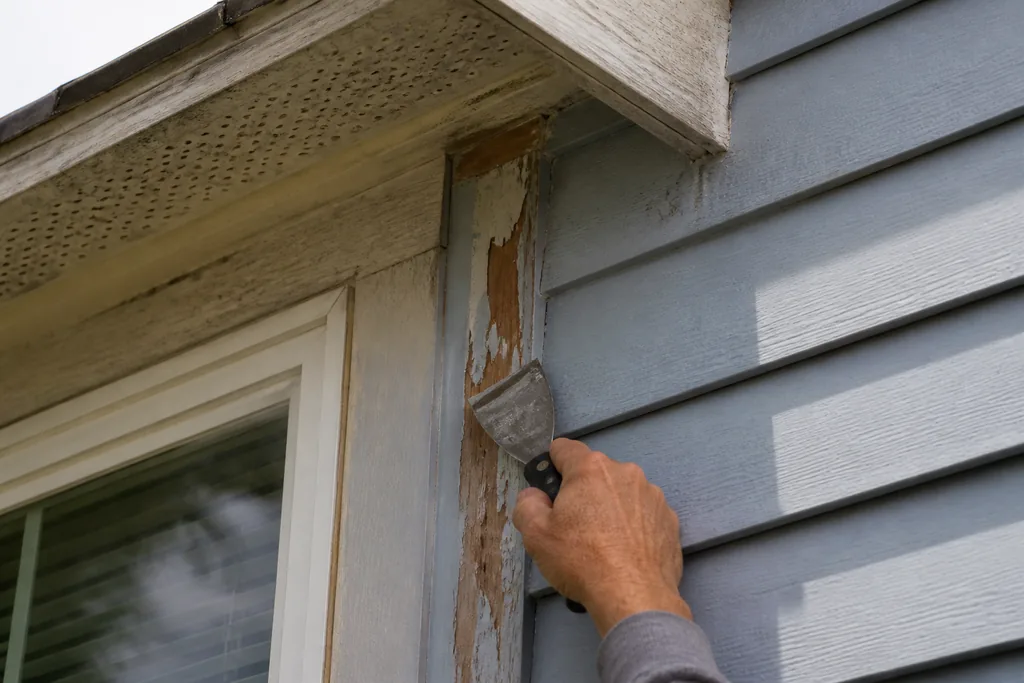
Heavy canvas drop cloths cover the floors and the wood under the work, and the crew clears its own dust before it leaves. The same crew stains or paints a deck, strips wallpaper and installs wall covering, and cabinet painting is a specialty with a real door sample shown at the estimate. Epoxy flooring covers a garage floor in high gloss or satin with optional decorative flake, which finishes the one surface a new palette frames.
Scheduling answers to the weather, because primer and finish coats need dry wood and a daytime temperature the product allows. The crew works one elevation at a time, so the home stays usable while the paint goes on. A detail review closes the job: the crew walks the siding, the trim and the porch with the owner, touches up whatever the light missed in the paint, and clears the drop cloths and the debris.
Why Long Island Homeowners Trust Our Painters
The company was founded in 1995, works out of Seaford, New York, and holds a 5.0 star rating across 300+ Google reviews. Most painters have been with the company for 15+ years, and every employee is vetted, reference checked and able to show multiple references.
The crew is licensed in Nassau and Suffolk counties and carries liability insurance for New York City work. It is a certified lead paint renovator and lead-safe certified for pre-1978 homes, which matters on older Long Island homes. Nassau County is the primary service area, and the crew also paints homes in Suffolk County, Queens and Manhattan.
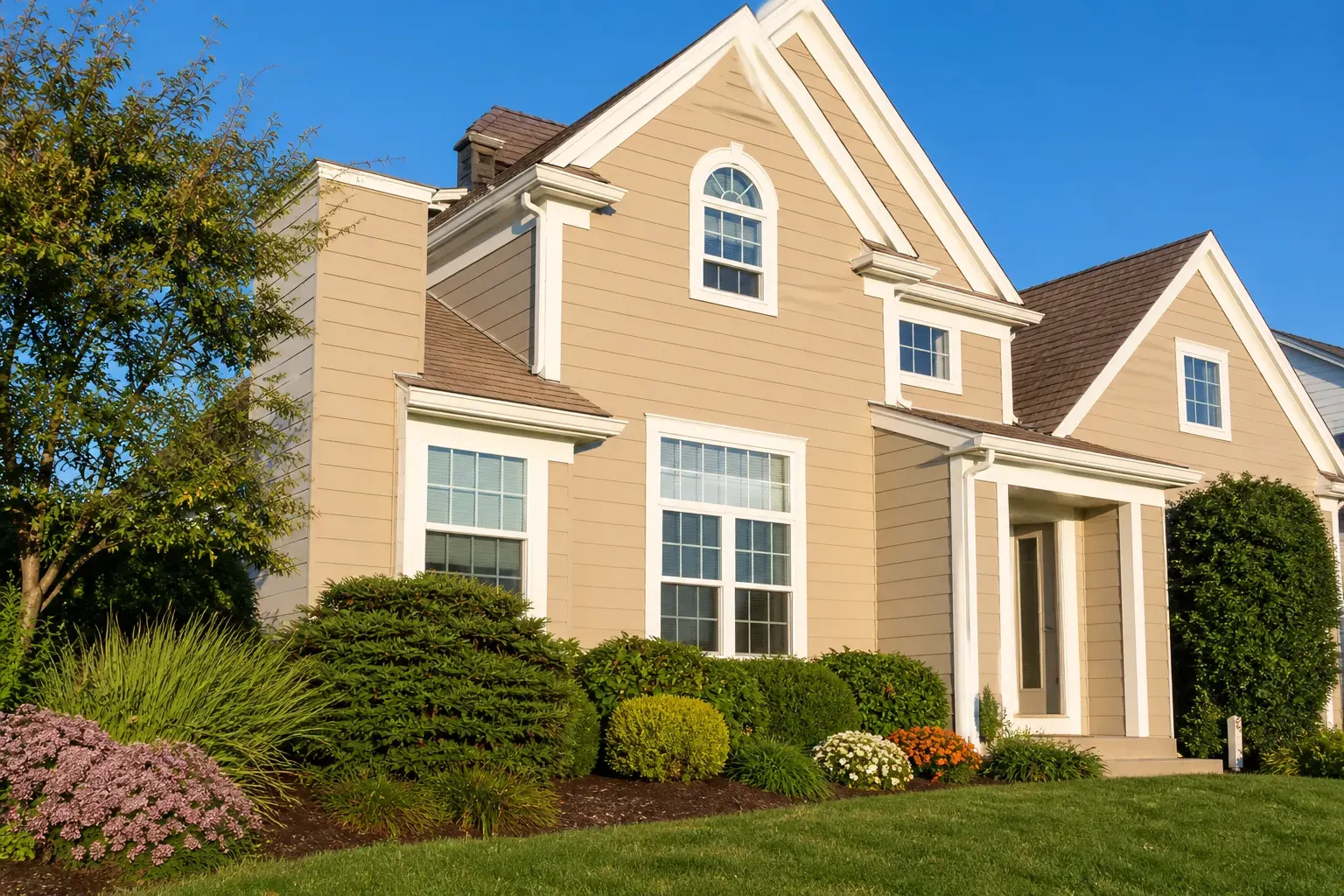
Protection and prep are priced in rather than added later: heavy canvas drop cloths, hand cut lines at the wood and the brick, and a cleanup the crew documents before it leaves. Estimates are free, on-site and carry no obligation, and the listed price range is $$ rather than a figure invented over the phone. Phones are answered 24 hours a day, 7 days a week, and a crew can start as early as the next day.
A vetted crew matters on a repaint, because ladders, power washing and open windows put strangers close to the home all week. The painters on a crew carry the same standards from job to job, which is what holds a 5.0 star rating in place across 300+ Google reviews.
Exterior House Painting Color Ideas that Work FAQ
Does Exterior Paint Color Affect Home Value?
Condition does more for value than shade does. A sound, primed and coated surface keeps water out of wood siding, and property value answers to that far more than to a palette. A neutral body paint with white trim is the safer pick near a sale, because the next owner changes one accent instead of a whole elevation.
What Is the Most Popular Color for the Exterior of a House?
White and off-white bodies with white or black trim stay the most requested paint schemes on Long Island, and soft gray follows them closely. Charcoal and slate own the modern end, while beige and taupe hold the warm end. Any of those shades reads well on wood siding, and the shortlist at an estimate usually lands on two neutrals and one accent.
How Many Colors Should My Home Show Out Front?
Three is the practical limit on one home: body, trim and door. A Victorian with carved wood detail carries a fourth on the brackets and the spindles, and a cape usually reads better with two. Each extra shade on the home adds a cut line a brush has to hold, and the proposal prices those lines before the crew starts.
Which Finish Holds Up Outside, Eggshell or Satin?
Both finishes hold up on a home, and the surface decides. Eggshell keeps a large wall calm and hides a wavy clapboard, while satin paint wipes clean and suits trim, doors and shutters. Semi-gloss paint suits a handrail or a column base, where hands land and a wall takes the most contact.
Do I Need a Power Wash Before the New Coat?
Most homes get one. Power washing takes chalk, pollen and mildew off the siding so primer bonds to wood rather than to dirt. The siding then has to dry, which is why weather sets the schedule, and scraping, sanding, repairs and caulking follow the wash.
When Can the Crew Start, and What Does the Warranty Cover?
A crew can start as early as the next day, and phones are answered 24 hours a day, 7 days a week on Long Island. Every paint job is covered by a one-year written warranty against paint failure, and the terms sit in the proposal you sign. Estimates are free, on-site and carry no obligation on any paint job.
A color palette is one decision, and the prep under it is the other. Get a Free Estimate on your own siding, or call 516-447-2732, answered 24 hours a day, 7 days a week. A free color consultation comes with a whole-house project, and the one-year written warranty against paint failure is written into the proposal. Get an estimate today. Paint tomorrow.