Exterior House Painting: How to Plan the Project
Here is the short answer. Exterior House Painting: How to Plan the Project runs in eight moves: book an estimate, settle a scope in writing, confirm colors, pick a paint finish, reserve a dry weather window, pay for preparation, schedule two finish coats, then walk every elevation at the end.
Walker Painting has worked that order on 12,000+ homes since 1995, and each section below takes one move apart. Nothing here costs you anything, because an on site estimate is free and carries no obligation.
Get a Free Estimate or call 516-447-2732,answered 24 hours a day, 7 days a week. Color Consulting
- Walker Painting has painted 12,000+ homes since 1995.
- Every paint job carries a one-year written warranty.
- Estimates are free, on site and carry no obligation.
- Phones are answered 24 hours a day, 7 days a week.
Exterior House Painting: How to Plan the Project
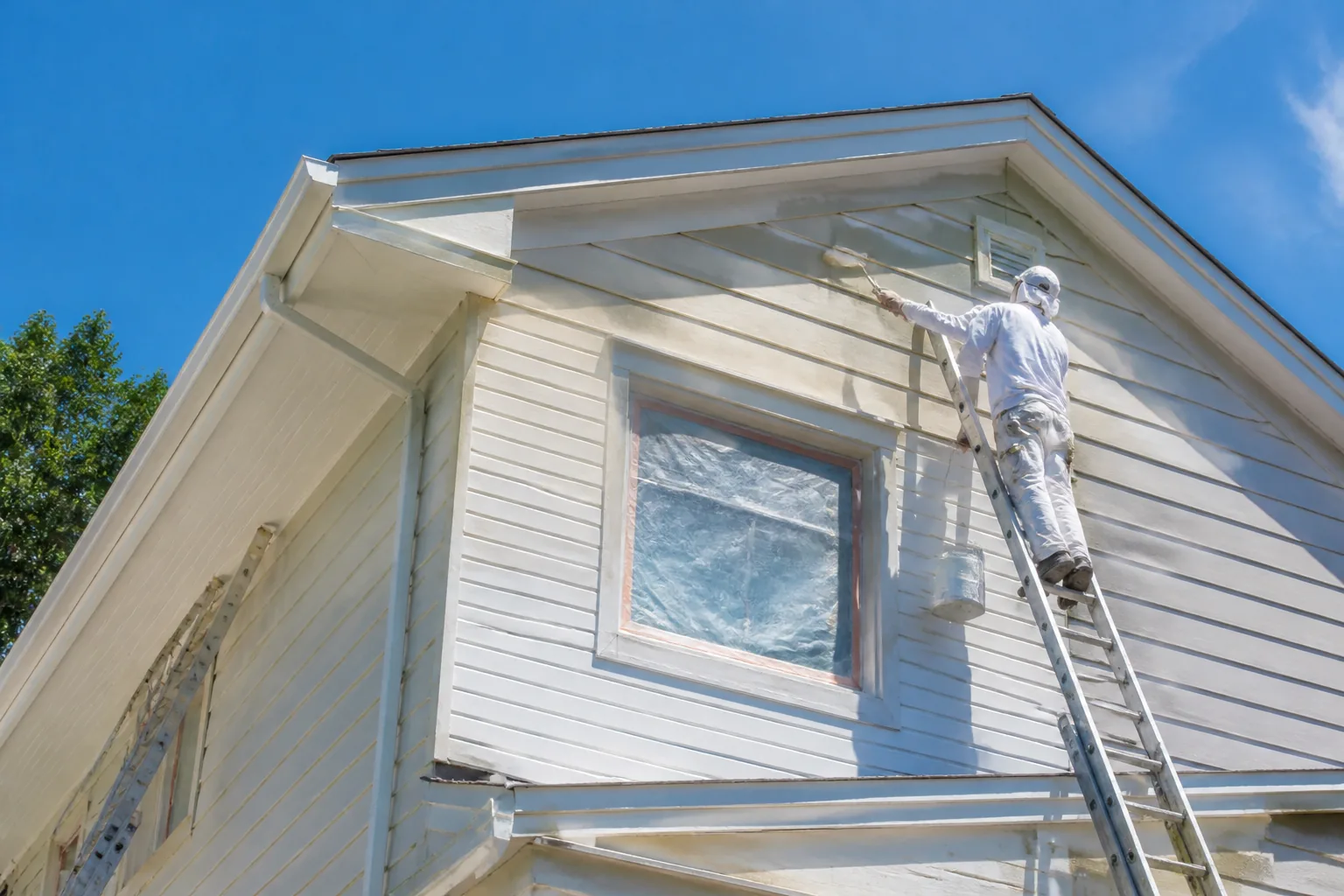
Weather rules every other decision, so a calendar comes first. Exterior paint needs dry siding, air above 50 degrees and a settled forecast, which on Long Island means late spring to October, and our painting crew books a date inside the window. Humidity close to 90 percent slows dry time on every surface, so a damp morning pushes brush work to the afternoon.
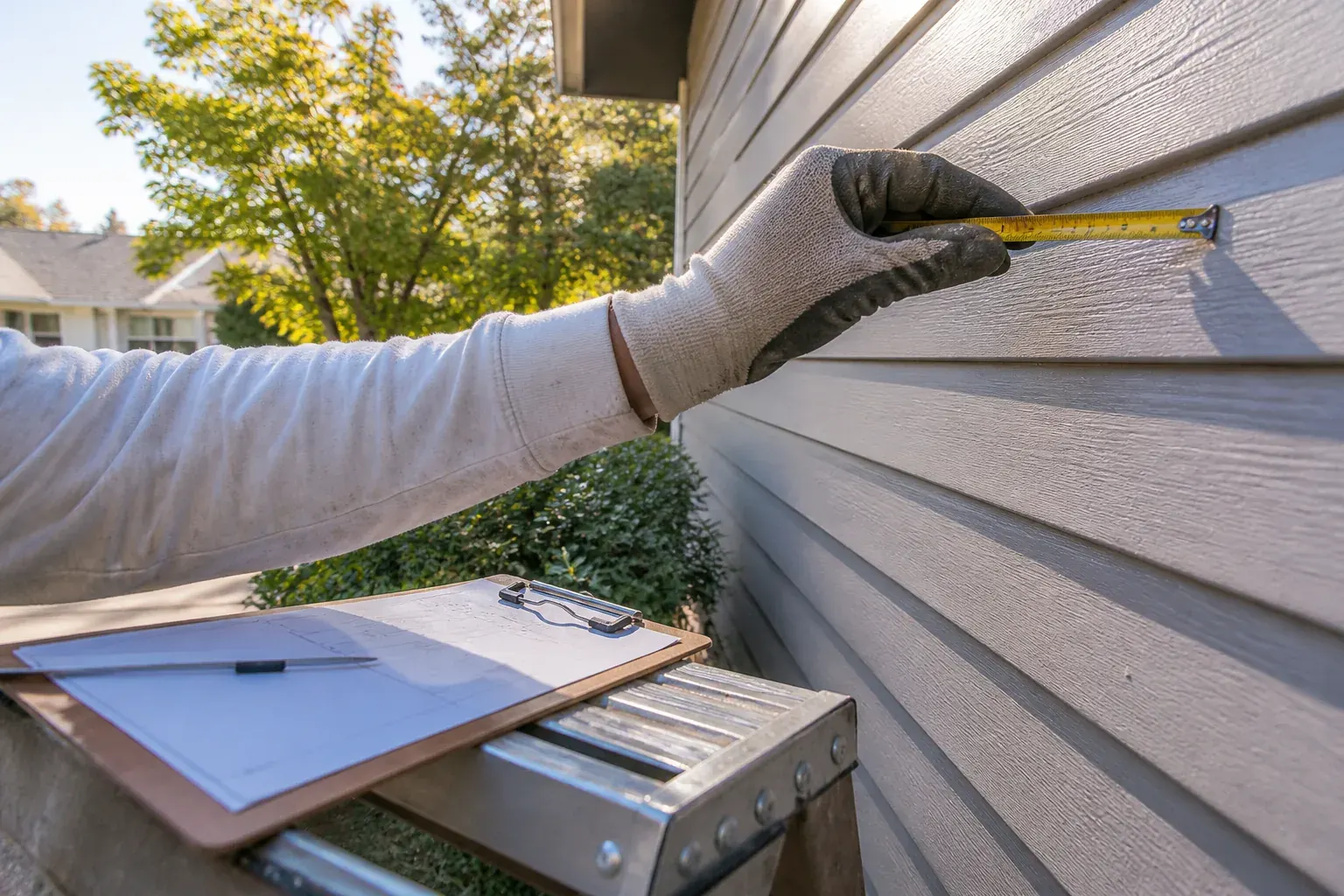
Scope is the second move. Our estimator measures siding, trim, soffits, fascia, sashes, shutters, a front door and a garage door, then has to mark which surfaces take paint and which take stain. A brick chimney, a stucco wall and board and batten siding each want a different primer, so each one has to earn a separate line.
Condition is the third move, and it is where the hours hide. Chalky siding, peeling film, soft wood, open seams and cracks all add preparation time to a schedule. Homes built in 1978 or earlier have to go to a certified lead paint renovator, and our painters are lead-safe certified for that work.
Five moves are left, and they belong to you and a color consultant: shades, paint finish, start date, coat count and a final walk. Each one goes on a written proposal before any ladder touches a gutter, and the free color consultation that comes with a whole home repaint settles the first of them.
Put all of it in writing before a crew arrives. The proposal names the surfaces, the primer, the paint finish, the shade on the trim, the coat count and the start date, so no step rests on a verbal promise. Ask for warranty terms on the same page.
Choose a Painting Scope and a Paint Finish
Scope is a list of surfaces, not a guess at square footage. Walk a property with our estimator and name every item you want painted: clapboard, shingles, window sashes, shutters, railings, a porch ceiling, a garage door and a fence. Exterior House Painting How to Plan the Project stalls most often when that list stays verbal. Painting exterior sashes in a second shade adds brush hours, and that line sits apart from a siding total.
Finish is the next choice, and it follows the surface. Satin acrylic sheds rain on most exterior siding, flat hides waves in older clapboard, and semi-gloss lifts trim, sashes and a front door out of a field color. Moldings are usually painted with semi-gloss paint, and harder finishes wipe clean with a damp cloth.
Primer is the quiet half of that choice. Bare wood takes a penetrating primer, a knotty board takes a stain blocking primer, and chalky siding takes a bonding primer, so a materials list answers to a surface rather than to a price. Ask us to write primer and paint onto the proposal by name, surface by surface, and keep that page next to your warranty.
Allow Time for Exterior Painting Preparation
Preparation takes more of the week than painting does, and it is the half that decides whether a coat holds for eight years or has to be redone in two. Most houses our painting crew repaints get power washing first, because pressure lifts chalk, pollen and mildew off exterior siding, and primer bonds to clean materials far better than to a dusty layer.
Give the walls a full day to dry after a wash. Trapped water pushes primer off a stucco panel within one season, and our painting crew would rather lose a day than lose the film. Budget two days of prep for a small ranch and up to a week for a large colonial with damaged trim.
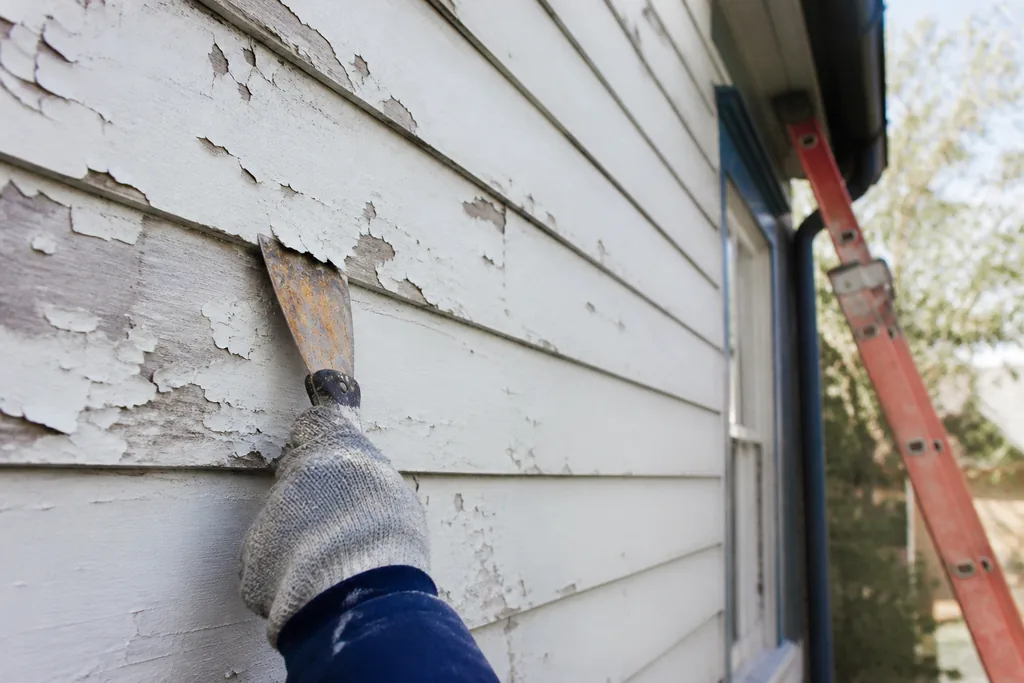
A painting week has a shape. Power washing takes the first morning, scraping and sanding fill the next two days, the carpentry repairs and the caulking follow, and the primer goes on once the patches cure. Paint lands on the last two days, which is why the forecast matters more than the calendar.
Clean the Surface, Then Repair and Sand the Exterior Wood
A scraper takes curled film back to a firm edge, sandpaper feathers the line between old paint and bare wood, and a brush clears dust. Our painting crew sands every feathered edge by hand, then packs caulk into open seams, nail holes and gaps around windows and doors. Our carpentry crew swaps rotted wood, split shingles and water damaged drywall, and every repair has to cure before any primer goes on.
Masking closes that step. Our painting crew covers light fixtures, windows, decks and plants with heavy canvas drop cloths, plastic sheeting and tape, and masking goes on late so days of rain never sit on it. Spot primer lands on bare wood and patched filler, and a full prime coat follows on a stripped exterior wall. Protect what stays put, and keep brushes, rollers and a sprayer staged where our painting crew can get to them.
Inspiration and Design Advice for a Fresh Exterior
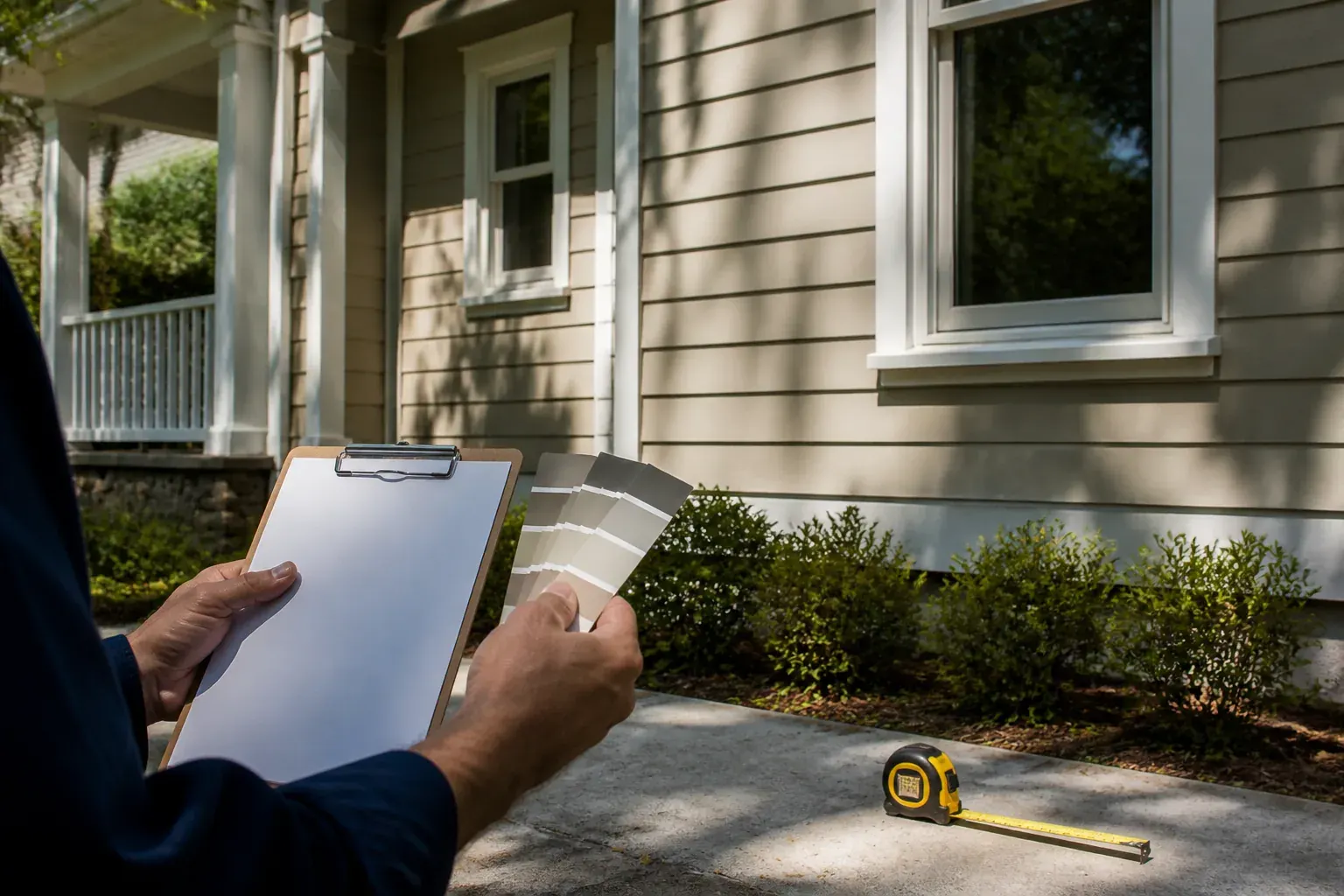
Inspiration turns practical the moment a swatch meets real siding. Tape four color cards to a sunny wall and four more to a shaded wall, then look at them at 9:00 and again at 5:00, because sun shifts every shade through a day. A gray that reads cool at noon can turn blue by dusk.
Two tips keep a choice honest. Hold to a field color, a trim color and one accent color, and no more: two shades of one family plus a crisp white on trim reads calm on a colonial, while a deeper field color with pale trim suits a cedar ranch. A front door is where a bold shade earns its keep, since a door takes one quart and repaints in an afternoon.
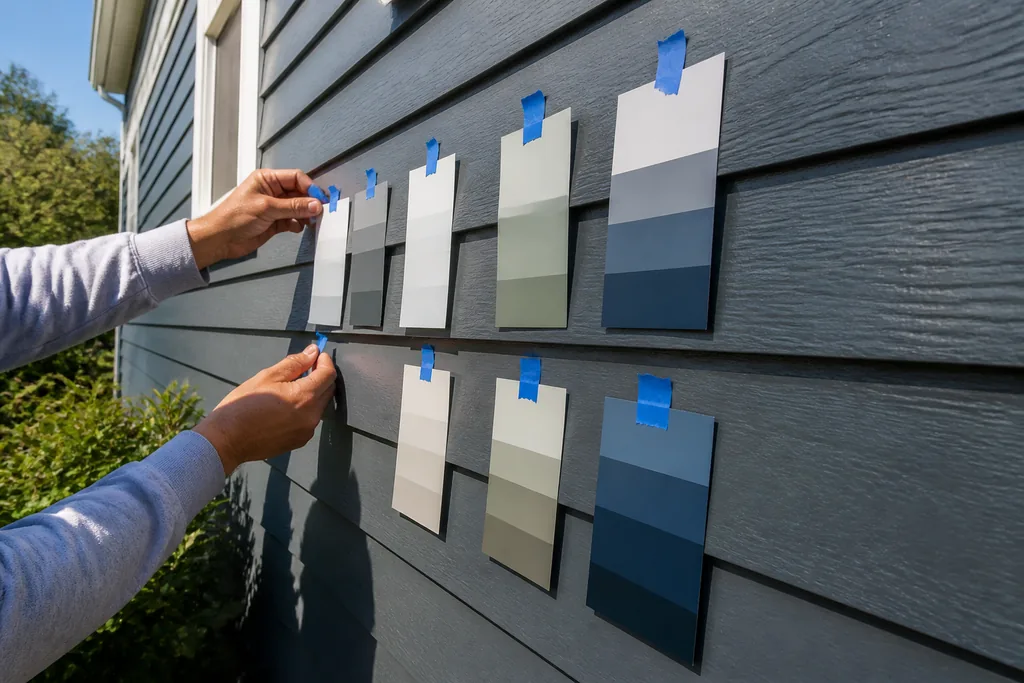
Curb value sits behind every shade on the card. Soft grays, warm whites and muted greens hold their look longer than a saturated tone, and gloss level matters as much as hue. A flat wall hides texture, a satin wall sheds rain, and semi-gloss trim wipes clean. Our color consultant walks a street with you, points to what already works nearby, then adds those shade names to your proposal.
Look at the whole street before a deposit. A shade that suits the brick on one porch can fight the roof next door, and a roof is the one color nobody repaints.
Pricing
What Exterior Painting Costs Depend On
We publish no square foot rate, because a 1920s cedar shingle cottage and a 1990s vinyl colonial of one footprint are different jobs. Four levers move the figure, and each one shows up as its own line on a proposal.
Painted areas come first, measured across exterior siding, trim, soffits and detail work. Condition comes second, since scraping, sanding, caulking, spot priming and carpentry repairs all add labor to a schedule that a sound home never needs. Color count comes third, because picked out sashes and a separate garage door shade add masking and brush hours to a day. Height comes fourth, as a third story gable needs staging that a ranch never asks of our painting crew.
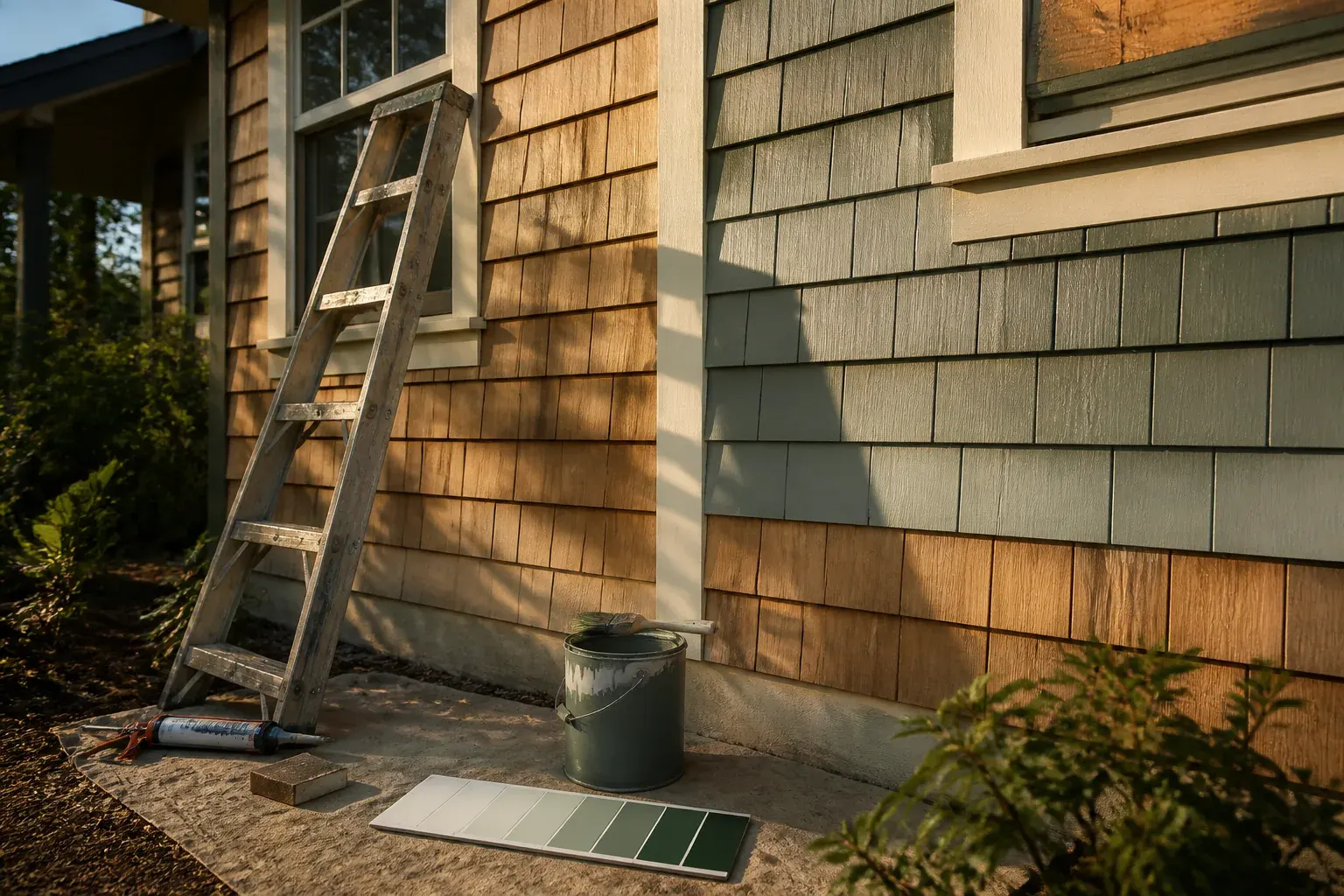
Quality paint costs more per gallon and lasts years longer, so material choice shifts that figure too. Exterior House Painting How to Plan the Project ends in a number you can hold us to, written out surface by surface, and your estimate itself stays free with no obligation.
Our estimator measures the home, lists the materials by name, and leaves the figure with you on the same visit. That way the comparison you make later runs line against line rather than number against number, and the preparation hours stay visible instead of buried.
How it works
Our Five Step Exterior Painting Process
The exterior painting workflow runs in five steps, and the order holds on every home.
- Inspection and a written proposal cover each surface, primer and paint finish.
- Color confirmation and scheduling set shades and a first day on site.
- Cleaning and preparation covers power washing, scraping, sanding, repairs, caulking and priming.
- Paint application follows, with moldings usually in semi-gloss paint.
- A detail review and a cleanup close out the paint job.
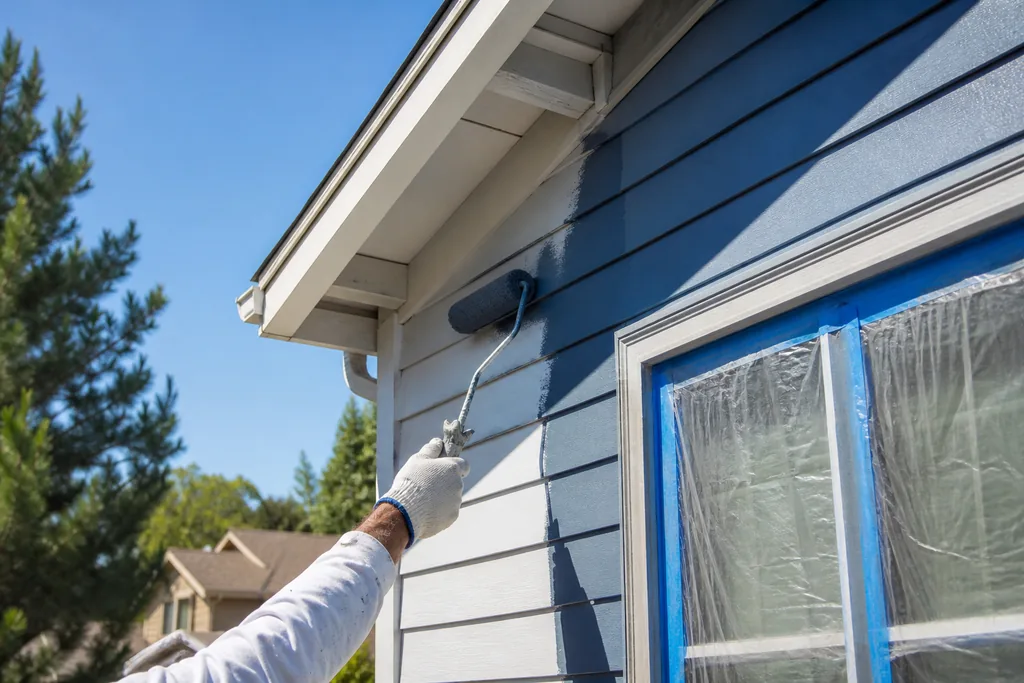
Two finish coats over primer hold color far longer than one, and each coat needs a full dry time printed on a can. Our painting crew cuts trim by brush, then rolls or sprays a field, and a second pass closes edges while paint stays workable. Working from a roof line down keeps drips off fresh siding, and on a three story gable our painting crew stages a scaffold rather than leaning a ladder on new trim.
That sequence is Exterior House Painting: How to Plan the Project in practice, and it is the part you can watch happen. Tape comes off a day a last coat sets, since tape baked onto hot siding takes new paint down to bare wood with it.
Leftover paint stays labeled by surface and goes to an indoor shelf, because a touch up two winters later holds better from an original can. Our crews can start as early as tomorrow once a proposal is signed.
Why us
Why Homeowners Choose Our Long Island Painting Crew
Our record reads as a list of facts, and the working painting crew rests on these.
- Walker Painting opened in 1995 and holds 30+ years of residential painting work.
- Our house painters have finished 12,000+ homes.
- Nassau County is our primary service area, with Suffolk County, Queens and Manhattan alongside it.
- Most painters here have stayed 15+ years.
- Every employee is vetted and reference-checked, with multiple references.
- Licensed in Nassau and Suffolk counties, and insured with liability coverage for New York City work.
- Our painting crew is a certified lead paint renovator, lead-safe certified for pre-1978 homes.
- Customers rate the company 5.0 stars across 300+ Google reviews.
- Every paint job carries a one-year written warranty against paint failure.
Which Other Painting Services Pair With a Repaint
One vetted painting crew covers inside and outside, so a single proposal can hold a whole home. Cabinet painting is a specialty here, and its estimate includes an actual door sample and photos. Power washing covers exterior siding, decks, patios and walkways. Our carpentry crew installs molding, swaps rotted shingles and patches sheetrock. Epoxy flooring comes in high-gloss or satin with optional decorative flake for a garage or a basement. We also stain decks, remove wallpaper and install wall covering, and interior rooms get heavy canvas drop cloths with furniture moved to the center of a room on casters.
So that is the whole guide: a weather window, a written scope, colors, finish, preparation, two coats and a final walk. Our painters work through Exterior House Painting: How to Plan the Project at the home itself, and a figure arrives in writing before our visit ends. Get a Free Estimate or call 516-447-2732.
FAQ
Frequently Asked Exterior Painting Questions
These six answers come from the estimators who walk out to a property, and they close out Exterior House Painting How to Plan the Project for a Nassau County homeowner. Exterior painting questions land here most often.
What Dry Time Does Exterior Paint Need Before Rain?
Most coatings need four hours of dry weather at a minimum, and a cool or damp day stretches that to a full day. Our painters read dry time printed on a can, then stop early rather than risk a washed coat. Rain inside that window means a wash down and a fresh coat on the affected wall.
Is Interior Paint Ever Safe on an Exterior Wall?
No. Interior paint carries no ultraviolet blockers and no flexible binder, so it chalks and cracks within one season on a sunlit exterior wall. Exterior coatings hold additives for sun, rain, salt air and freeze cycles, which is why a label matters as much as a color.
How Often Should a Home Exterior Be Repainted?
Painted siding on Long Island usually holds eight years or so, and south walls, west walls and salt air near the water shorten that span. Chalking, peeling edges and bare wood are the signals our painters look for, and a free on site estimate settles the timing.
What Paint Finish Works on Exterior Trim?
Semi-gloss is what we go to on trim, sashes, railings and a front door, because it wipes clean and lifts those lines out of a field. Moldings here are usually painted with semi-gloss paint, and the same rule holds on a garage door.
What Pushes the Cost of an Exterior Painting Estimate Up?
Painted area, surface condition, color count and height move the figure more than anything else. Our estimator measures each one on site, commits primer and paint finish to writing, and leaves a free no obligation number with you that same visit.
Can You Paint Exterior Vinyl Windows?
Yes. Our painters use a bonding primer and a coating rated for vinyl, in a shade no darker than an original frame. A dark color on vinyl absorbs heat and a frame can warp, so our estimator checks manufacturer limits at a walk around. Ask us to test one frame first, then read the result in full sun.