Exterior House Painting Designs to Inspire Your Next Project: Color Inspiration for Long Island Homes
Walker Painting has repainted Long Island homes since 1995, 12,000+ homes in all, and nearly every estimate opens with the same question: which color? Exterior House Painting Designs to Inspire Your Next Project all start with the three surfaces a brush never gets to touch again, the roof shingles, the brick and the stone. A homeowner who wants to see real ideas rather than a mood board tends to find the paint color faster.
A color palette that suits a colonial in Nassau County reads wrong on a beach cottage in Suffolk County. Architectural style, siding material, the lighting on each wall and the lush green surroundings behind the home all narrow your exterior color palette before anyone opens a fan deck. The sections below walk the paint colors our painters use, the contrasting combinations that suit each architectural style, and the order we follow to get to a final color scheme.
Get a Free Estimate or call 516-447-2732,answered 24 hours a day, 7 days a week. Color Consulting
- A one-year written warranty covers every paint job.
- Free on site estimates come with no obligation.
- A free color consultation comes with a whole home repaint.
- Painters here are vetted and lead-safe certified.
Exterior House Painting Designs to Inspire Your Next Project
A design here is a short list, not a mood board. One field color crosses the siding, one trim color runs the casings, fascia and corner boards, and one accent color holds the front door. Three paint colors read as a color scheme. Six paint colors read as an argument, and they are enough to make a simple home look busy.
Fixed features set the range before a single paint color gets picked. Roof shingles, brick, stone and stained wood all stay as they are, so the color palette has one job, which is to sit beside those elements instead of fighting them. A brown roof pulls the body color toward clay, buff or beige. A gray roof opens slate, pewter and charcoal instead. An exterior paint color has to earn its place on three elevations, not one, so check it on the back of the home as well as the front.
Scale decides the rest of the color scheme. A tall colonial carries a darker body color low and a lighter color above, which works to drop the apparent height. A wide ranch reads taller once vertical trim comes out in pure white. Our painters write every paint color and paint finish into the written proposal, including the surface it covers, so a touch up two seasons later gets to use the same can.
Walker Painting works on exteriors across Nassau County, Suffolk County, Queens and Manhattan, and the same three color discipline holds on vinyl siding, stucco, cedar shingle and brick. What changes is the primer under the paint and the paint sheen on top. Exterior paints differ by substrate, so the can that suits clapboard rarely suits stucco. It takes two coats of architectural paint over a bonding primer to hold the color through many winters, and durability like that belongs in the proposal rather than in exterior shades to explore on a screen.
Color Palette Inspiration for Your House Exterior Siding
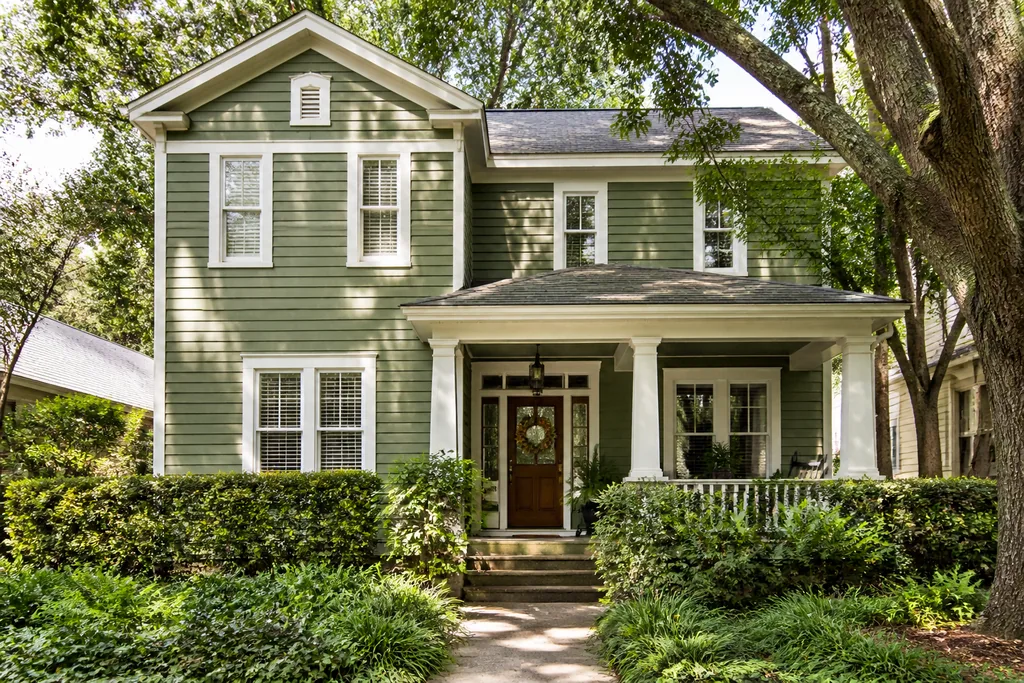
Color inspiration gets useful the moment it turns specific. Olive green over cream trim suits a shaded lot under a tree line of oaks. Golden yellow with white trim and black shutters suits a small cape. Leaf green reads calm beside mature landscaping, and a coral or a teal and red pairing belongs on a front porch detail rather than a whole wall. Our painters keep color inspiration for your exterior walls down to the paint colors they have already brushed on a Long Island home, so the options here are real work rather than a photo found on a design site.
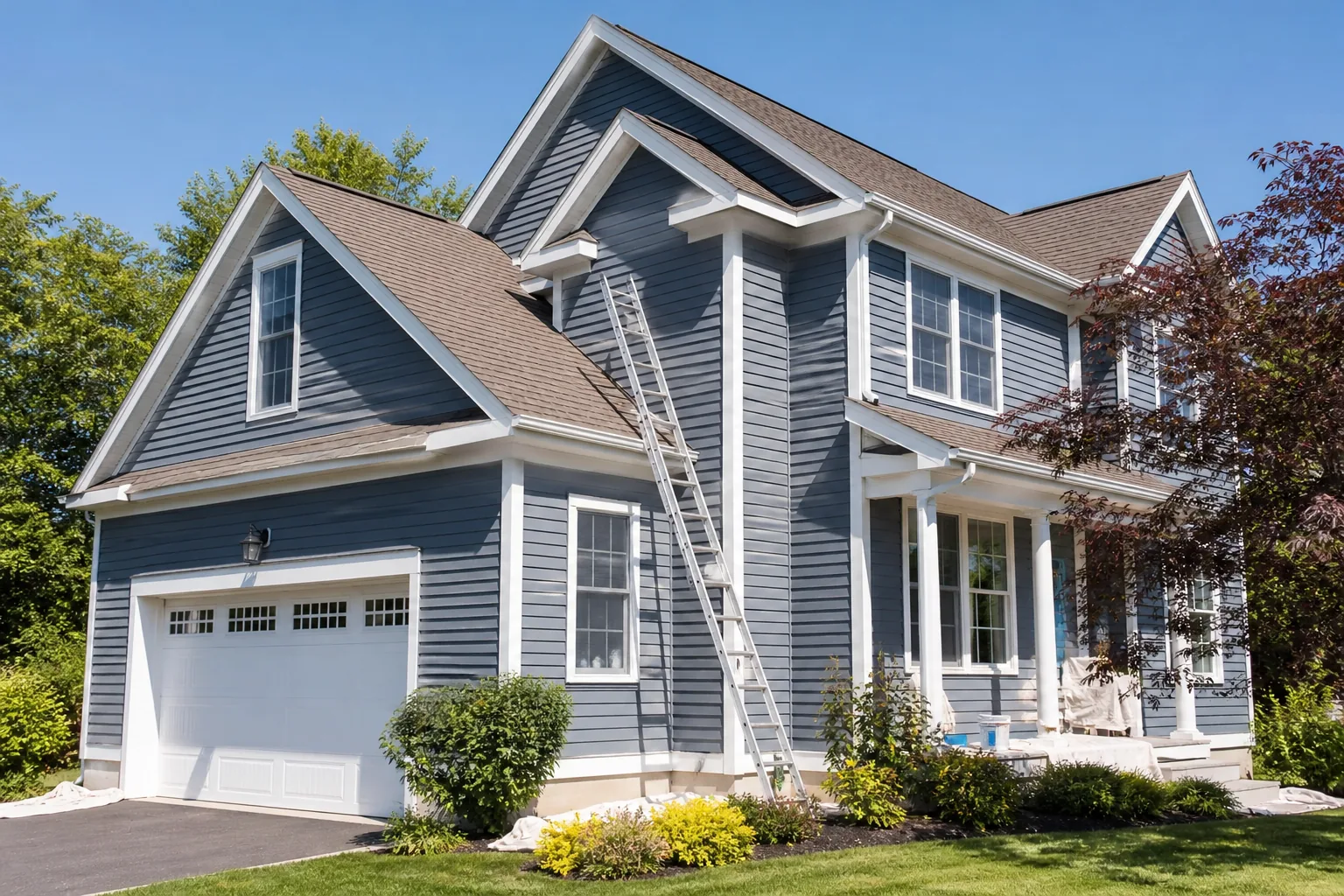
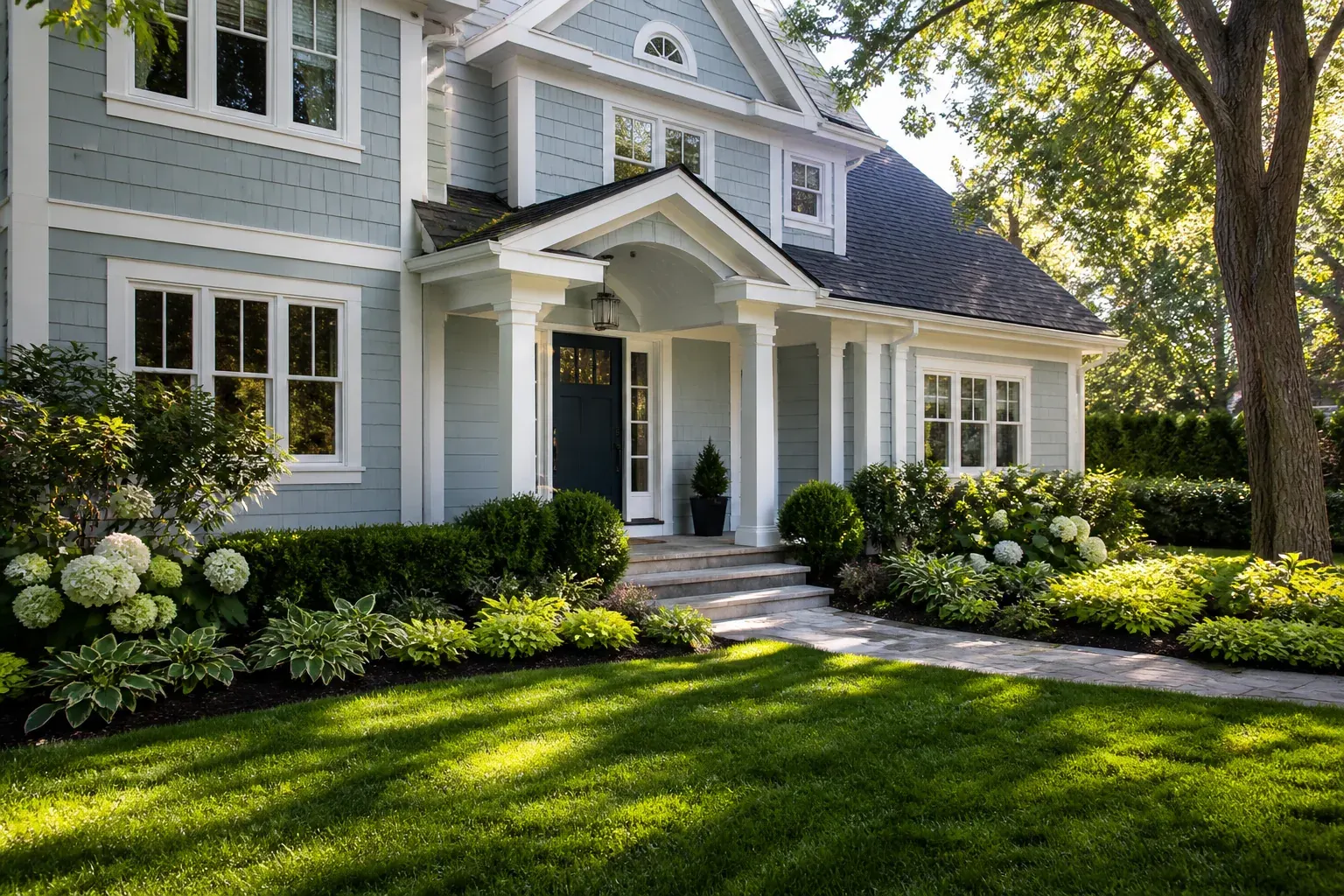
A darker body color now runs through the quiet streets of many a Nassau County neighborhood. Dark slate, deep ocean, forest green and off black all hold their depth on a north wall and give windows somewhere bright to sit. Dark gray and charcoal do the same job with less drama, and a blue-gray body color under pure white trim reads as the subdued end of that dramatic color range on a 1950s ranch.
A light body color still wins on close lots. Bright white, mountain sage and warm dove gray hold light between close neighbors, and whites and browns together suit a shingled cottage without a single bold note. A pale color also hides the small waves in older clapboard siding that a dark body color would advertise, which is especially true on an expansive wall. Blues sit between the two camps, since a pale blue body color reads as trim from the curb and a navy body color reads as a statement you have to want.
One accent color carries the statement. A red door on a white cape, a deep blue door on a gray colonial, a charcoal garage door on a sage body color: each is a single striking note against a quiet field. Two loud accents on one home work against each other, so it pays to pick one and let the rest of the paint stay calm.
Aligning Your Designs With Architectural Style
Architectural style is the firmest filter there is. A classic colonial home takes white trim and black shutters. A craftsman bungalow takes earthy greens, browns and a stained wood door. A modern home holds charcoal, white and a warm wood entry. Even Gothic architecture and brutalist architecture, the two architectural styles our commercial crews get to paint in New York City, follow the same rule, which is that the paint answers the building and never the fashion. A color combination that suits the architecture and the roof needs no defending, and our painters use a wet sample to match the body color to the brick before anything else.
Exterior Color Schemes for Colonial and Traditional Houses
A traditional color scheme runs on restraint. Three colonial combinations come up again and again on the homes we paint: a warm white body color with black shutters and a black door; a soft gray body color with pure white trim and a deep red door; and a pale beige body color with cream trim and a charcoal door. Each color scheme here is timeless, and several Nassau County streets are full of homes that use one of them.
A traditional home usually carries more trim than any other style, so the trim color does most of the work. Dentil molding, pilasters, window casings and a dormer cheek all read as one line when they share a single white. Two whites on the same line make the home look patched, which is the part of the job a neighbor is sure to notice from the sidewalk.
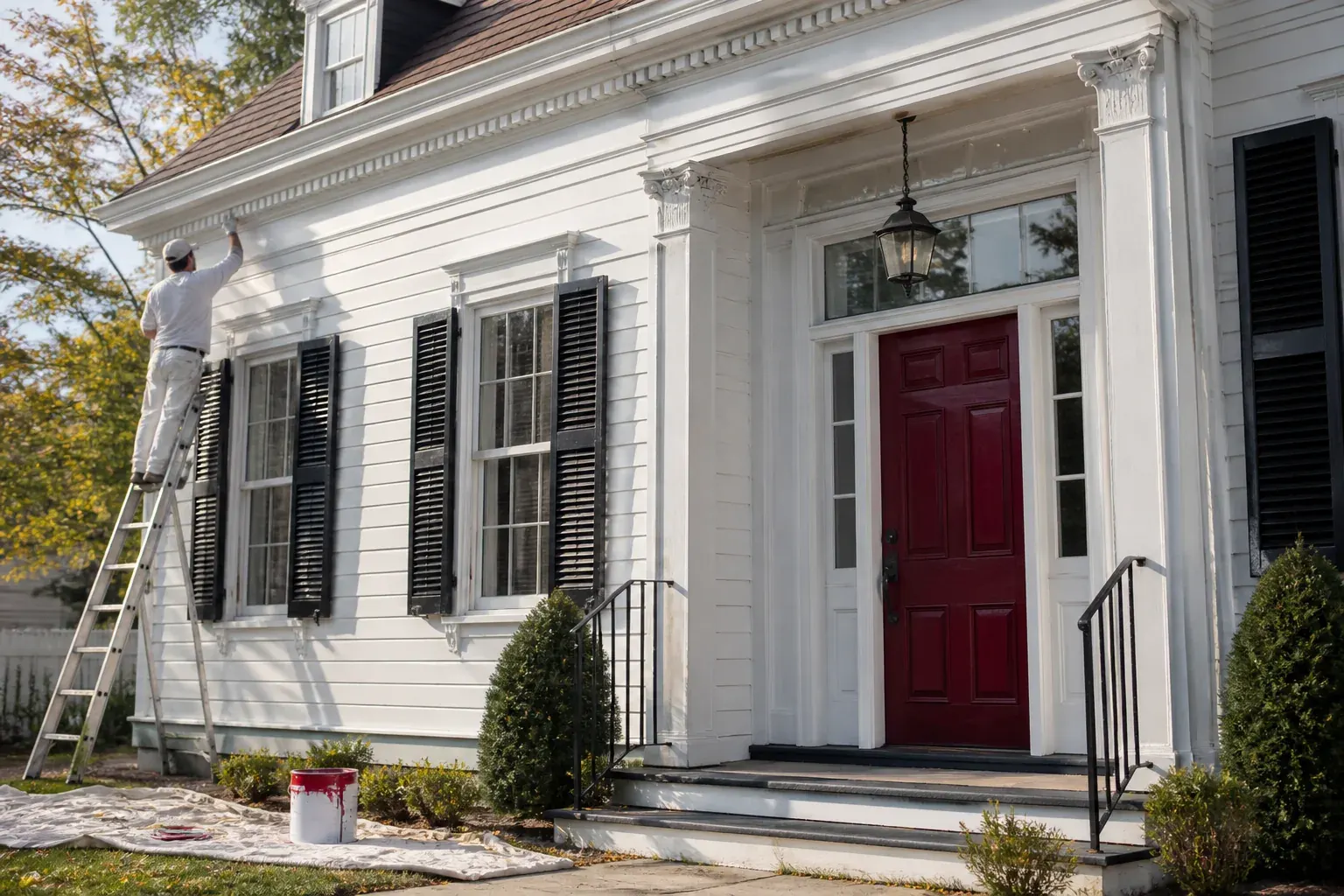
Shutters are the lever people forget. Black shutters give a white body color a hard edge. Shutters in the body color keep a busy wall calm. Shutters one step darker than the body color provide depth without a hard edge, and a single shutter left in the wrong color is the first thing a visitor looks at on the way to the door.
Brick is the other constant. A red brick base cuts the body color options worth trying down to warm whites, soft grays and deep greens. Painted brick on a front porch opens the field again, though once brick is covered it needs repainting on a cycle, which belongs in the budget conversation rather than the design one. Curb appeal on a traditional street comes from that restraint and not from a louder exterior color, and a quality paint job holds that restraint for years.
Modern Farmhouse, Coastal and Beach House Color Schemes
The modern farmhouse look has four parts: a bright white or soft greige body color, black windows, a dark standing seam roof and a stained wood front porch post. It photographs well and it fades honestly, because white shows chalking later than a deep color does. Plenty of homeowners move to this color palette when they want to refresh a plain ranch.
Contemporary and modern color schemes run the other way. A contemporary color scheme takes a charcoal or off black body color, pure white trim held to a thin line, and a single warm wood door. On a flat roofed modern home the body color carries everything, so the paint finish matters more than usual and the paint sheen can become a real decision.
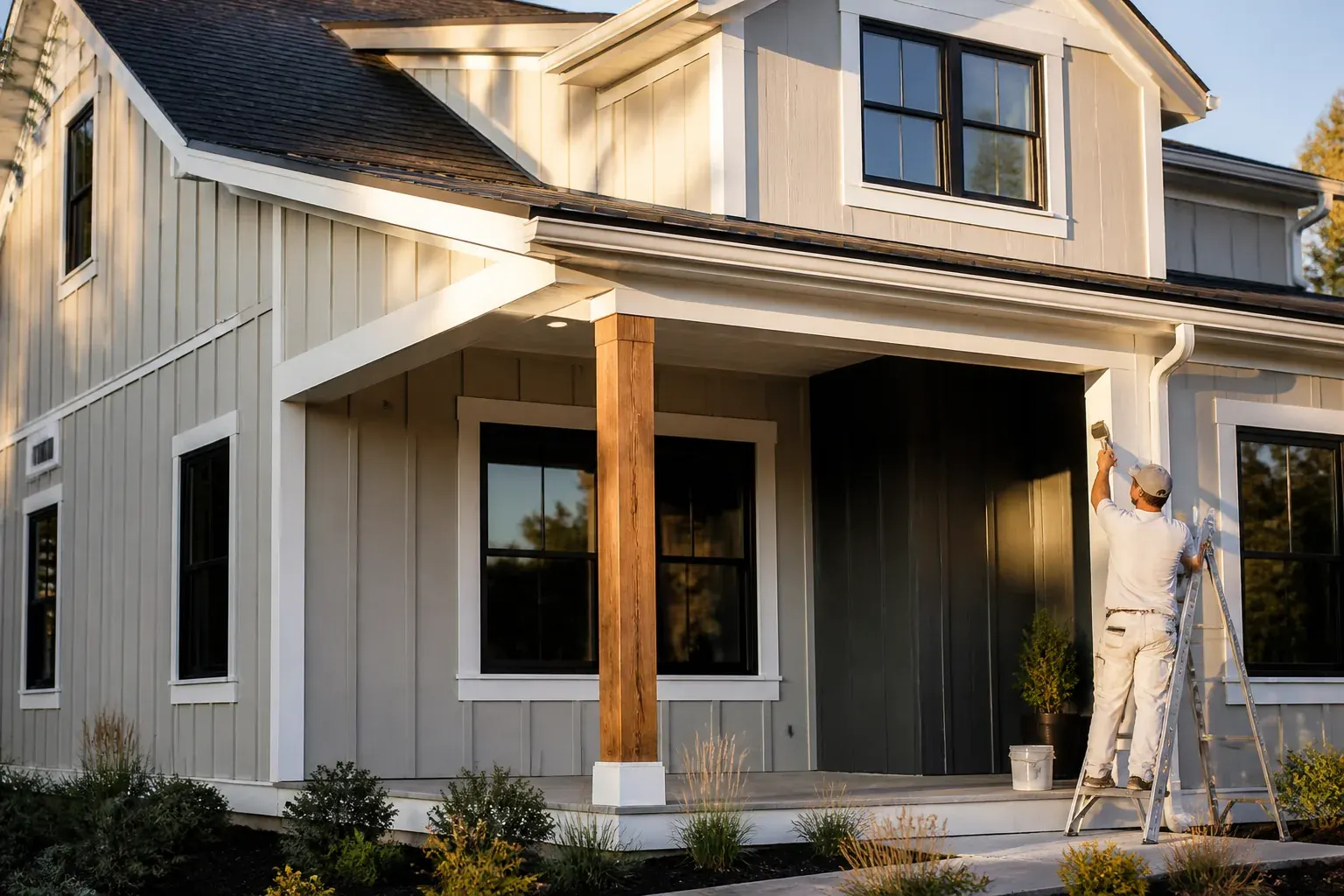
Coastal and beach house color schemes answer the salt air first. Soft blues, weathered grays, sand and crisp whites all suit a south shore lot, and a navy door with white trim reads as a beach cottage from the street without a single nautical cliche. Most homes we paint get power washed first, which matters twice as much within a mile of the water. Exterior paints for a coastal lot need a satin acrylic paint finish, because salt spray finds flat paint first and weather near the shore is harder on a color than anything inland.
A shingle sided cottage takes a stain rather than a paint on the field, with painted trim, shutters and a bright front door. That combination keeps the texture of the wood and still offers the entry a color scheme of its own, which is a beautiful result on a weathered Suffolk County home.
Craftsman, Spanish Revival and Mediterranean Exterior Stucco Palettes
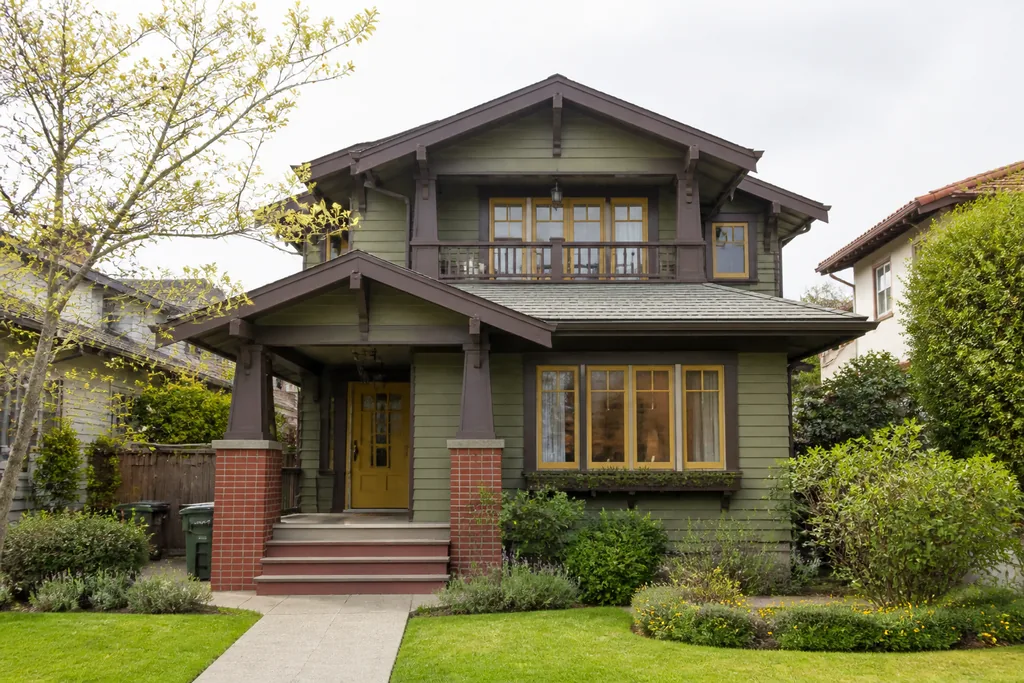
A craftsman or bungalow color palette comes out of the ground the building sits on. A craftsman color palette holds olive green, moss, clay, deep browns and a mustard sash, natural earth colors that sit under a stained door and exposed rafter tails. Cream trim keeps the whole home from going dark, and a stone porch pier sets the darkest color in the color palette.
A Mediterranean or Spanish Revival home reads from the roof down. A clay barrel tile roof takes a warm white, soft ochre or pale sand body color, with trim that nearly disappears and ironwork as the only dark note. Stucco takes the color differently from clapboard, because the texture holds shadow and deepens that color by a step, so it pays to brush the sample on stucco rather than on a board you carry around.
A Spanish or Mediterranean home also carries less trim, so accents land on the door, the gate and the window grilles. One deep teal or oxblood door against a sand body color does more than three painted details ever will. A warmer color like this shifts with the seasons, so a sand body color that reads soft in June reads yellow under a low winter sun, and that is worth planning for.
The same rule holds across all of these styles. Set the body color to the roof and the masonry, set the trim to the architecture, then keep the accent color for the entry, where a visitor actually waits. We will bring palettes to match your architecture rather than a sheet of paint colors that ignore it, and we will highlight the two that suit the home.
Your Color Selection, From Paint Chip to Finished Exterior
A paint chip the size of a playing card tells you very little. It hides depth, it hides undertone, and it reads wrong on a bright day. Color selection runs in a fixed order here, and the chip is the first step rather than the last word on your exterior color scheme. The order exists to keep a homeowner from having to guess at a paint color.
Step one is an inventory of what stays: roof, brick, stone, masonry, walkway, window frames and the nature that frames the home in summer. Step two is the body color, held against those fixed elements in daylight. Step three is trim, then shutters, then the one accent color. Step four is the paint finish, because paint sheen changes a color as much as a tint does. Skip a step and the color that looked right on the chip turns into the color you want to repaint.
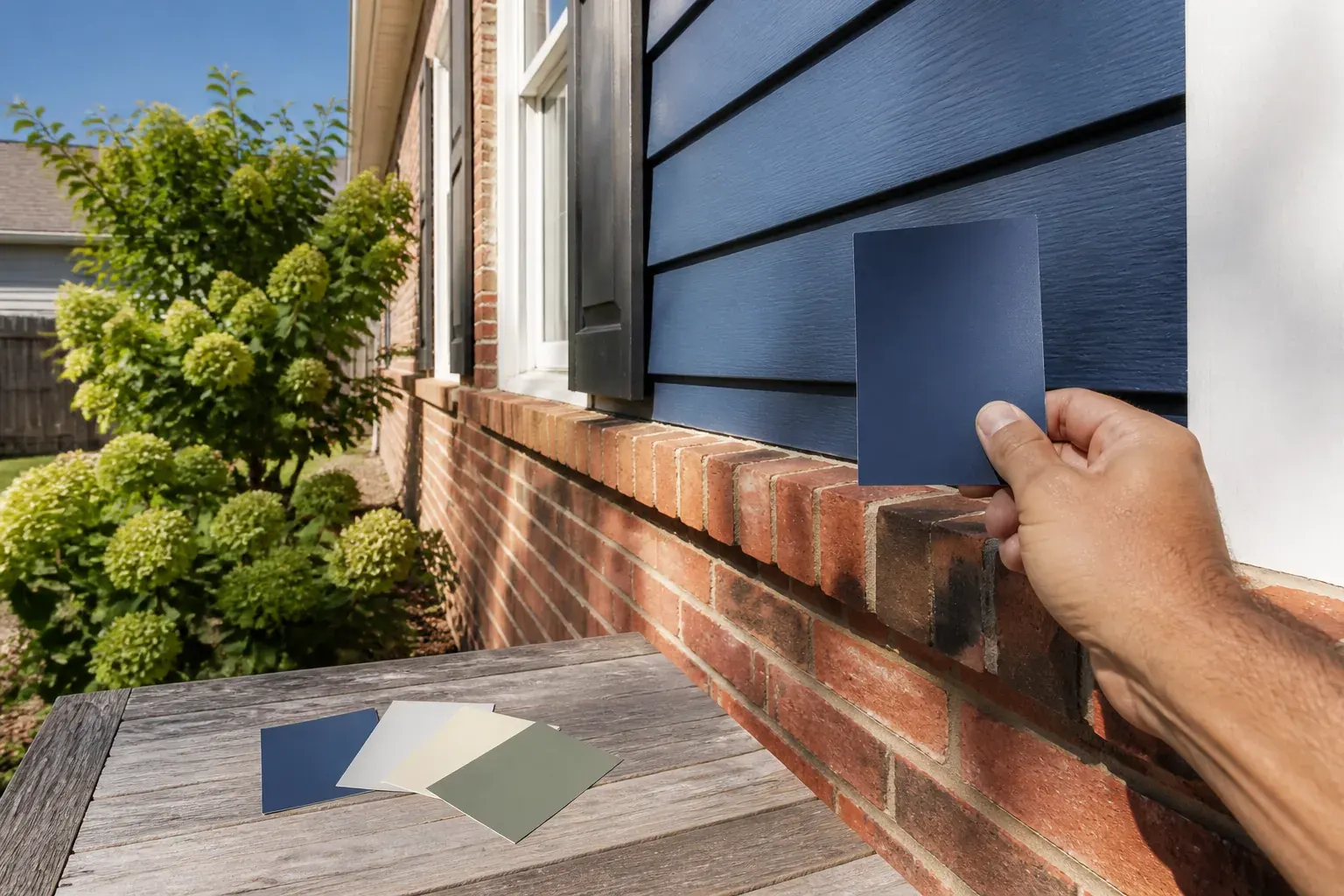
Undertone is where many homeowners get caught. Two grays that look identical indoors split apart on a wall, one going blue and the other going green, once the sky and the lawn start to reflect into them. The same thing happens with whites, where a warm white beside a cool white makes the cool one look gray. That is why a neutral is harder to pick than a rich color.
Our free color consultation on a whole home repaint puts a trained eye on that order. It is included in the proposal, so the design work costs nothing extra, and every paint color lands in writing before the crew schedules a start date. Bring us your exterior color palettes, screenshots and fan deck pages, and we will select two body color candidates for you to live with.
Evaluating Lighting and Shadow on Your Walls
Lighting on the lot matters as much as the chip in your hand. North walls read cooler, so beige drifts gray and ivory drifts green by late afternoon. A south wall bleaches the same color by August and shows every bit of chalking first. A porch roof throws a permanent shadow that deepens whatever body color sits under it, which is why a sample belongs on the front porch wall as well as on the open gable, and why we check both before we write the proposal.
Testing Your Exterior Color Scheme Before the Painters Arrive
Nobody should pick a color from a chip alone. Buy a sample quart of exterior paint, brush a two foot square on each elevation, and look at the squares in morning light, at noon and again at dusk. Leave them up for two days and the color either settles or starts to irritate. That is the simplest way to avoid a repaint, and it costs one afternoon.
Place each test square of exterior paint color where it has company. Beside the trim you plan on, beside the window glass, beside the brick and under the roof line, because a body color is never seen alone. A square floating in the middle of a blank wall tells you almost nothing about the finished color scheme, so we put shades to test on your facade where the roof, the masonry and the trim all land in one view.
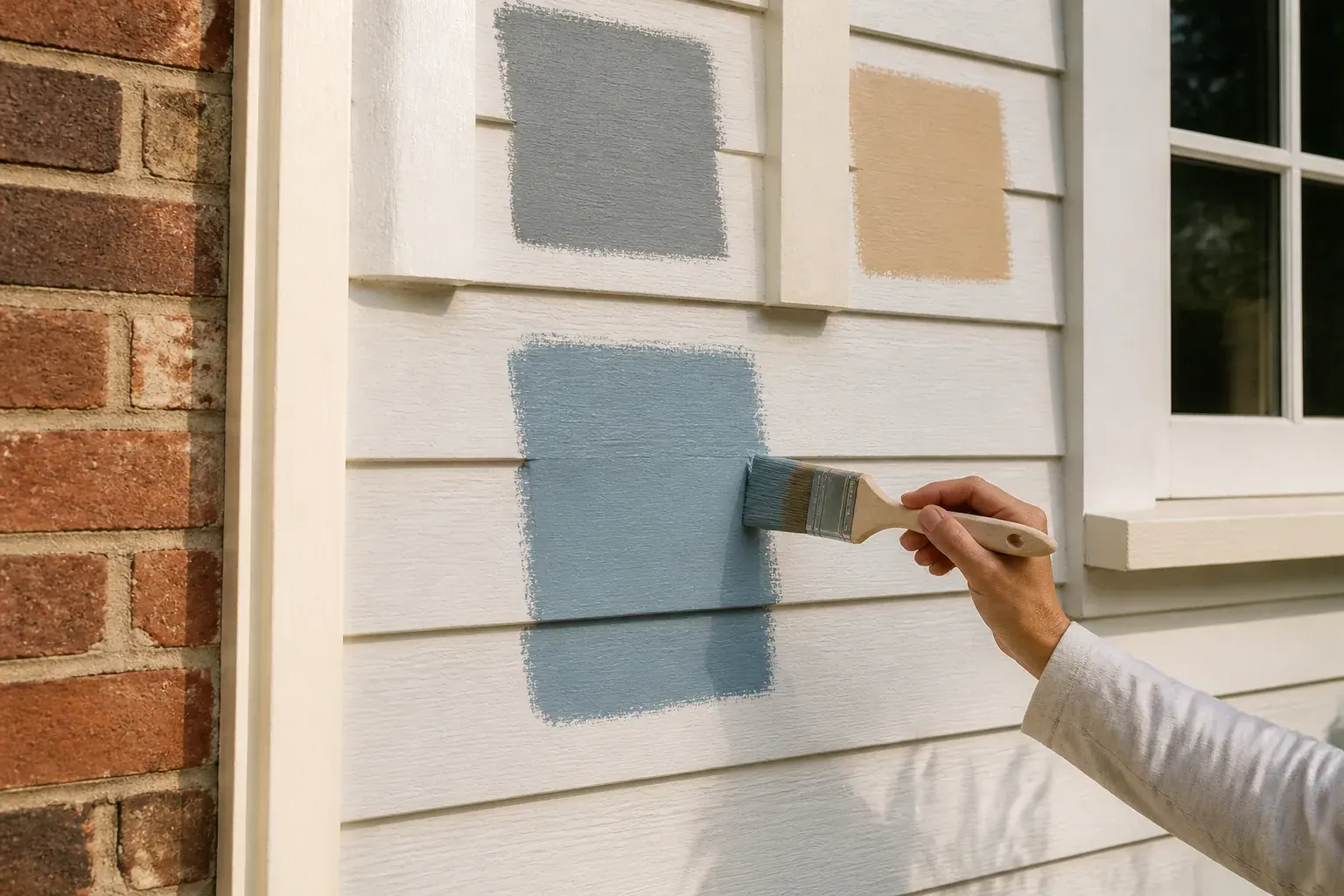
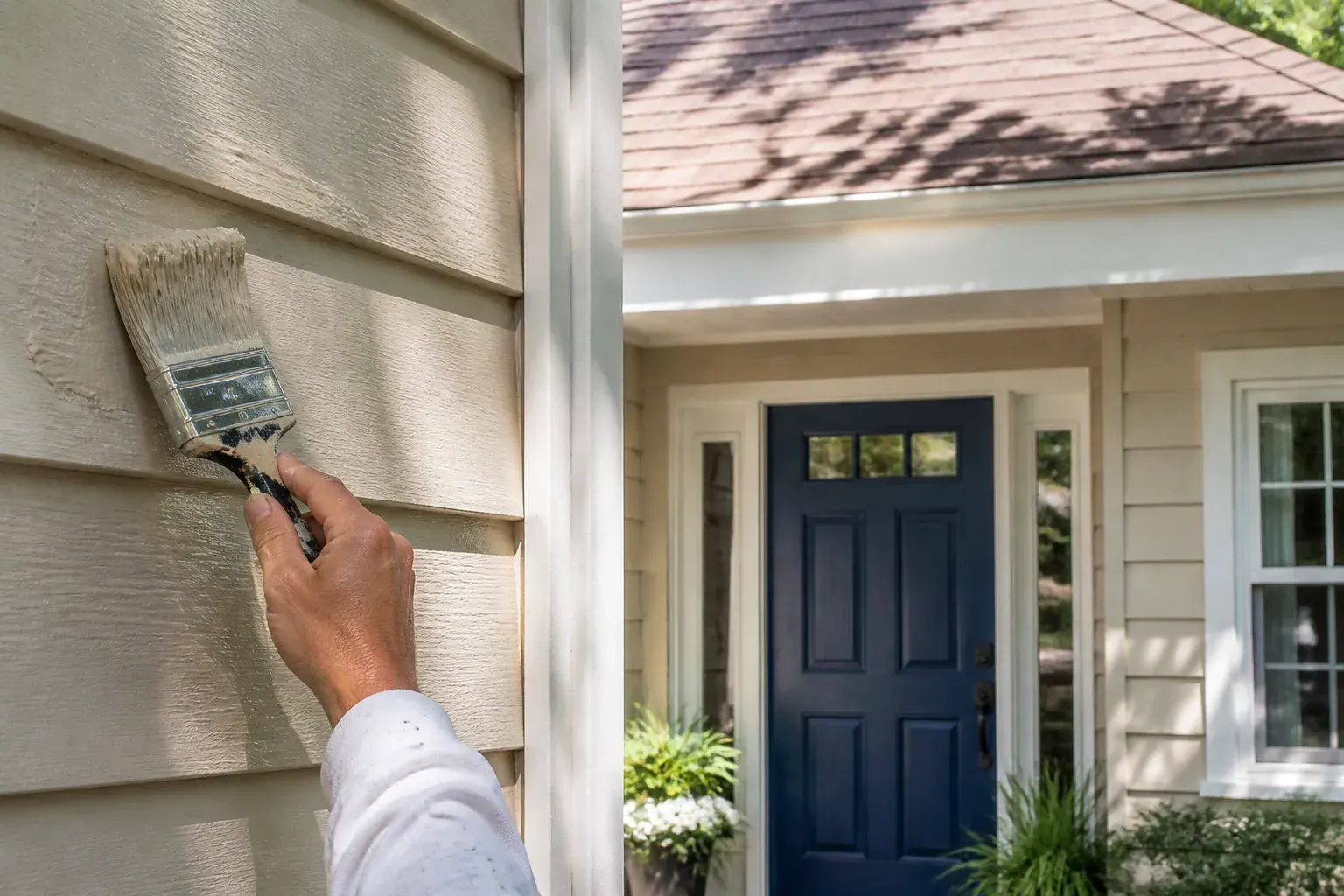
The paint finish holds the final decision. Flat hides a wavy wall, satin wipes clean and sheds rain, and semi-gloss lifts moldings, sashes and a front door out of the field. Moldings are usually painted with semi-gloss paint, which is a mid sheen that takes a wipe without going shiny. The same color in two sheens can look like two colors on one home.
Peeling or chalking on a south or west wall is the first sign that a paint film has given up, and salt air, freeze cycles and summer sun get to those walls before any other. A sample tells you about color. The condition of the wall under it tells you about prep, and prep decides how long the new color scheme lasts. Around here that is the part of the job that brings the real value.
Trying On Your Paint Shades With Samples
Our painters will brush the shortlist on the home itself during the estimate window when a homeowner asks. The shortlist holds two body color candidates, one trim color and one door accent, each labeled, each on a different elevation. The work takes an hour and it creates the kind of results that a week of saved photos never will, which is why we keep offering it.
Pricing
What Drives the Cost of Your Exterior Paint Color Project
Three things drive the figure on a repaint proposal: the painted surfaces, the condition of those surfaces and the number of paint colors in the color scheme. A two color home takes far less masking than a four color home with picked out window sashes and porch spindles.
Condition usually costs more than color. Scraping, sanding, caulking and spot priming take hours that a sound wall never needs, and carpentry replaces rotted wood and shingles before any paint gets to go on. Power washing comes first on most homes we paint, so pressure lifts chalk off the siding before the primer. It is important to care for the surface, because paint only holds where the wall is sound.
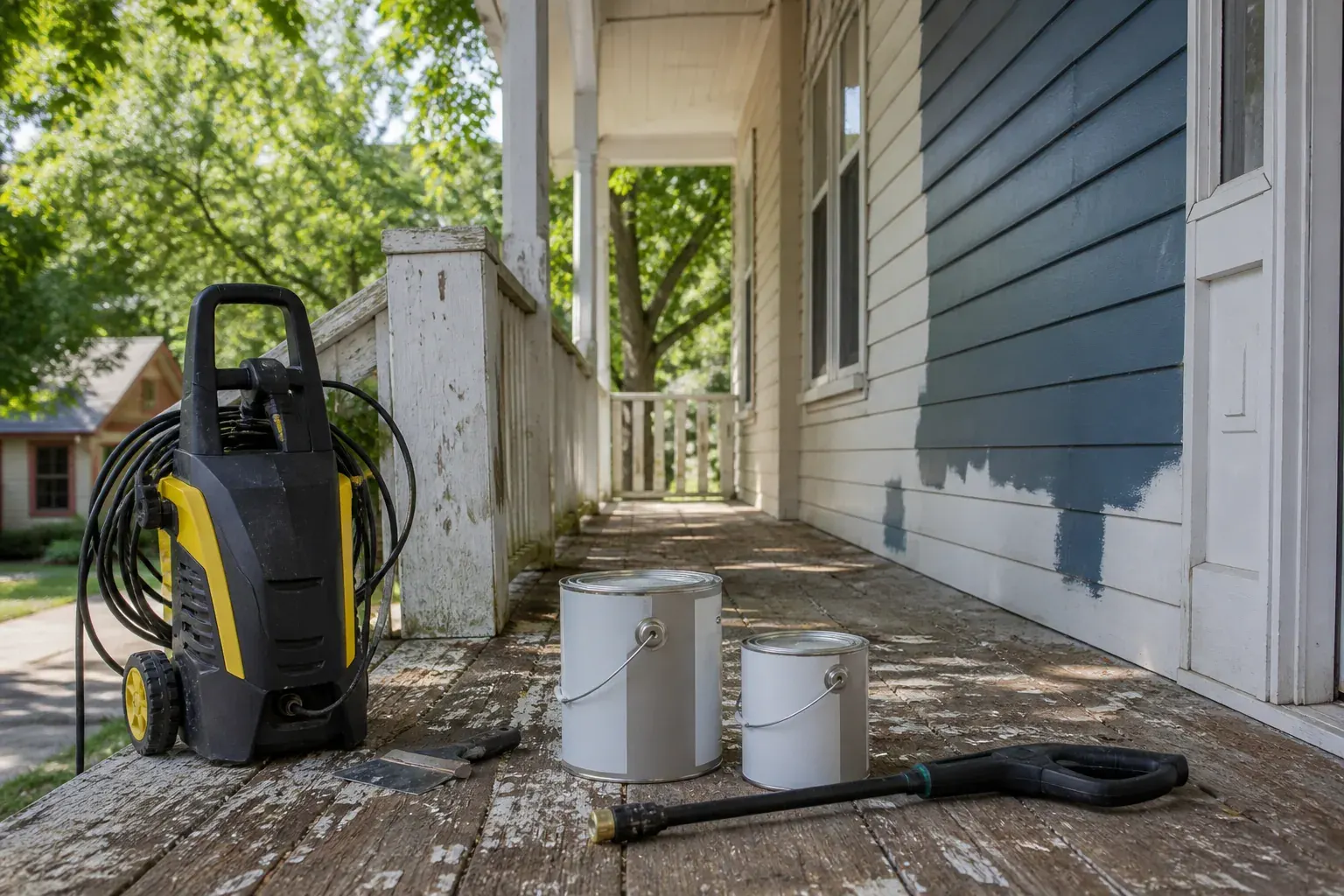
Design choices change the labor hours more than the paint itself. Picking out sashes, rails and dentil molding adds brush time to your exterior repaint project. One body color above white trim keeps the schedule short. Our painters write that figure after a free on site estimate, and the written proposal names every surface, paint color and paint sheen, so nothing arrives as a surprise.
We publish no square foot rate for this work, because a 1920s shingled cottage and a 1990s vinyl colonial of the same size are different jobs. Your estimate is free, it happens on site, and it carries no obligation. Call us to book a visit and we will bring the color decks to the home.
How it works
Our Exterior Repaint Process for Your New Designs, Step by Step
A repaint runs in five steps here, and the prep steps decide how long the new color palette gets to last.
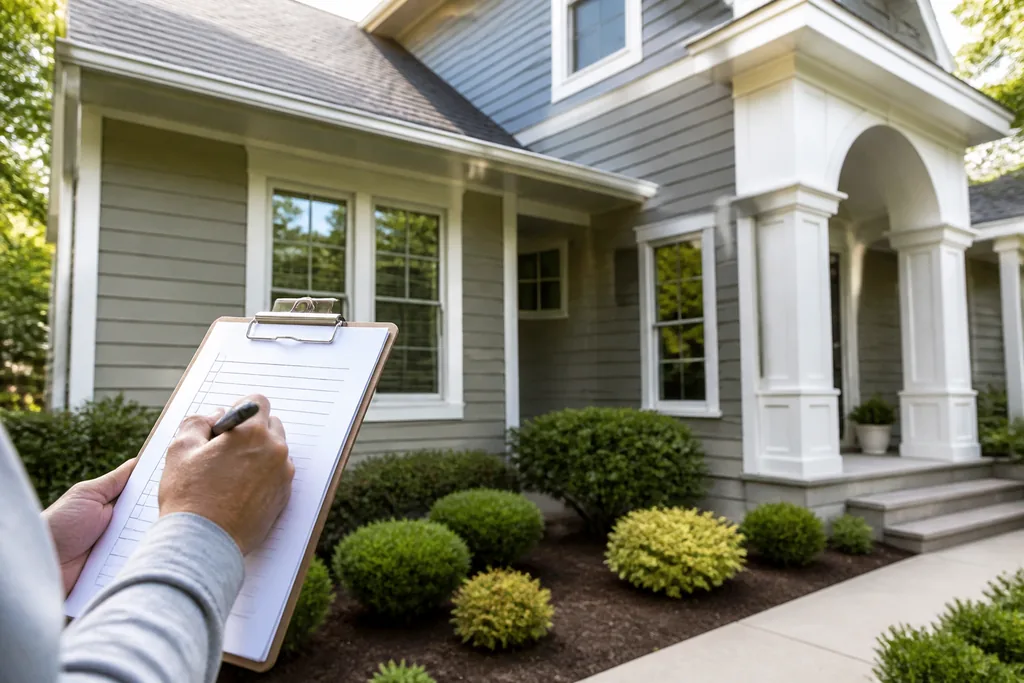
- An inspection and a written proposal cover every surface, paint color and paint sheen.
- Color confirmation and scheduling set the color palette and the start date.
- Cleaning and preparation covers power washing, scraping, sanding, repairs, caulking and priming.
- Paint application follows, with moldings usually in semi-gloss.
- A final detail review and cleanup close the work.
Crews can start as early as the next day once a proposal is signed, which is why the rule here is plain: get an estimate today, paint tomorrow. Heavy canvas drop cloths cover walkways, porch boards and plantings while the work runs. Those five steps turn designs to inspire your next project into a finished home with a written warranty behind it, and they run the same way on every home we paint throughout Nassau and Suffolk.
Why us
Why Long Island Homeowners Trust Our Exterior Painters
- The company started in 1995 and carries 30+ years of residential work.
- Most painters here have been with the company 15+ years.
- All employees are vetted and reference-checked, so the same painters come back.
- Licenses cover Nassau and Suffolk counties, and liability insurance covers work in New York City.
- The crew is a certified lead paint renovator, lead-safe certified for pre-1978 homes.
- Customers rate the company 5.0 stars across 300+ Google reviews.
- Every job carries a one-year written warranty against paint failure.
How Your Color Project Connects to Our Other Services
The same vetted crew handles the work inside and out, so one proposal can cover a whole home. Cabinet painting is a specialty, and its estimates include an actual door sample and photos. Carpentry work covers sheetrock patching and replaces rotted shingles. Epoxy flooring comes in high-gloss or satin with optional decorative flake for a garage. A homeowner working with an interior design plan can hand us that color palette and have it carried through a whole home, and we also stain decks, remove wallpaper and install wall covering. One crew that is available for the inside and the outside keeps the color story consistent from room to room.
Get started
Book Your Free Color Consultation and On Site Estimate
A free color consultation comes with a whole home repaint and puts a trained eye on the body color, the trim and the accent color. The on site estimate is free and written, it carries no obligation, and phones are answered 24 hours a day, 7 days a week, so you can call us to book a time that works.
You now have the Exterior House Painting Designs to Inspire Your Next Project that actually decide a repaint: fixed features, three paint colors, the right architectural style and a tested sample. Beyond that, a painter who gets to look at the home in person will see what a photo cannot. Get a Free Estimate or call 516-447-2732.
FAQ
Exterior House Color Questions, Answered
These are the frequently asked questions Long Island homeowners put to our painters about color schemes, paint colors, trim and paint finishes. Each answer below is the one our estimators give at the home.
How do you choose exterior paint colors for your house?
Start with the roof, the brick and the stone, because paint never gets to cover those elements again. Pick a field color that sits beside them, add a lighter trim color above it, and keep one accent color for the front door.
Which exterior colors are homeowners choosing now?
Warm grays, sage greens, charcoal and off black run through the paint colors our painters use for Nassau County homes. A popular trend right now is a deep navy or forest green front door, and whites still carry most trim.
Which exterior colors suit a smaller home?
A light field color and a trim color close to it make a small home read wider, because strong contrast chops a short wall into pieces. Keep the garage door in the field color and save the accent color for the entry.
What exterior color do design experts recommend?
No single color suits every home, so a designer starts from the roof, the brick and the architectural style of the building. Our free color consultation on a whole home repaint puts that same reading on your walls.
What exterior paint colors should you avoid?
Avoid any color that fights a fixed feature, keep the garage door quiet, and use no more than three body colors on one home. Trim that sits too close to the siding makes windows and corner boards disappear.
Can I paint my front door a different color than my shutters?
Yes, and it works well when the door carries the brighter accent color and the shutters hold the trim color or a darker version of the body color. Two loud accents on one wall split the eye, so one of them has to stay quiet.