Exterior House Painting for Long Island Homes: Prep, Primer and Paint
Walker Painting has run exterior house painting jobs since 1995, and the crew works across Nassau County, Suffolk County, Queens and Manhattan. One repaint covers clapboard siding, wood trim, shingles, porch railings, shutters and the front door.
Most of those exterior surfaces get power washing before a brush touches them. The company has painted 12,000+ homes and puts a one-year written warranty against paint failure on every job. Estimates are free, happen on site and carry no obligation, and the phones are answered 24 hours a day, 7 days a week.
Get a Free Estimate Call 516-447-2732Color Consulting
- One-year written warranty against paint failure
- Most painters here 15+ years, every employee vetted
- Lead-safe certified for homes built before 1978
- Free on-site estimates, crews can start the next day
Why us
Why Nassau County Homeowners Choose Our Painters
The company opened in 1995 and has 30+ years behind it, and Nassau County is the primary service area. Most of its painters have been here 15+ years.
Every employee on the vetted crew is reference-checked, with multiple references on file before anyone opens a can of paint. The company is rated 5.0 stars across 300+ Google reviews, holds licenses in Nassau and Suffolk counties, and carries liability insurance for New York City work.
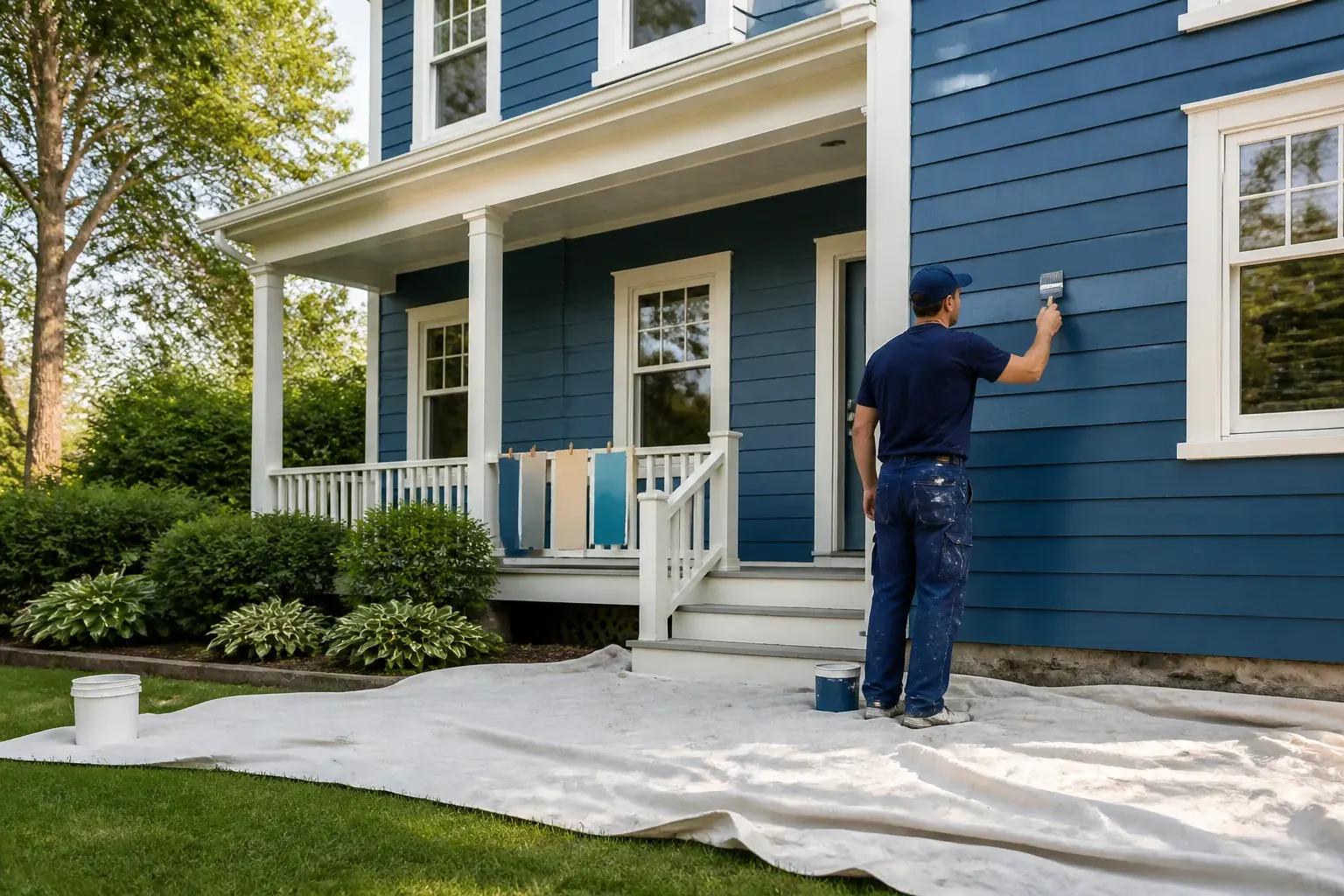
- Protection: heavy canvas drop cloths go down before any paint opens, and furniture moves to the center of the room on casters for indoor work.
- Safety: a certified lead paint renovator handles any home built before 1978.
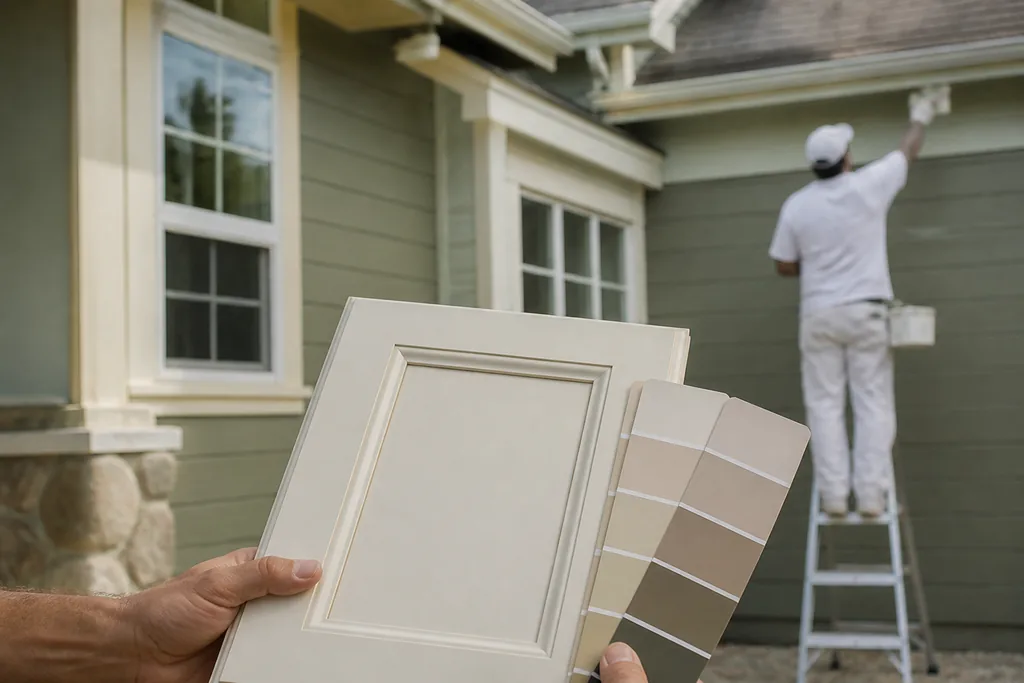
- Color: a free color consultation comes with whole-house projects.
- Access: phones are answered 24 hours a day, 7 days a week, and a crew can start as early as the next day.
Pricing
What Changes the Price of Exterior Work on a Long Island Home
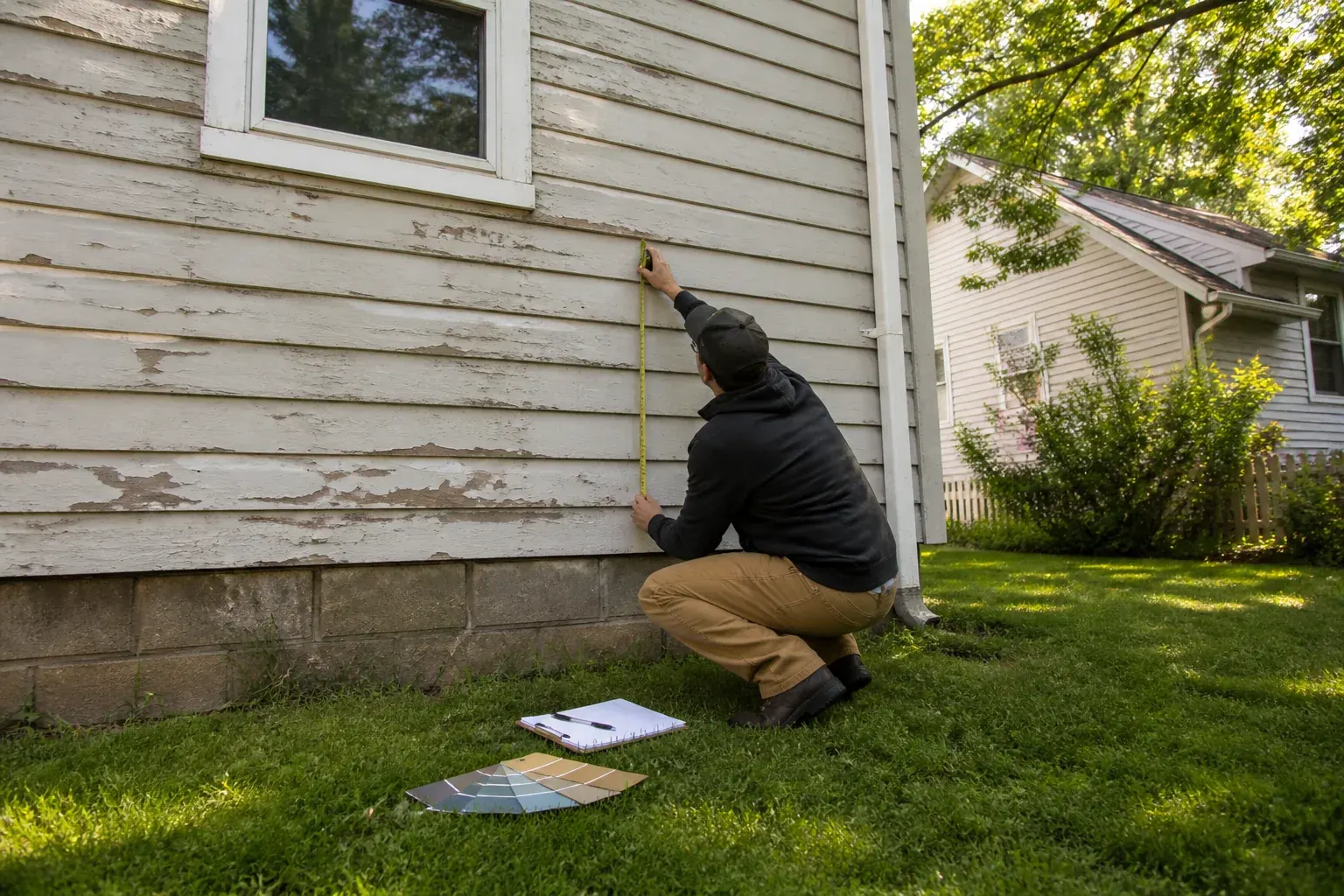
No price list is published for this paint work, so the number arrives in the written proposal after a free on-site estimate. The estimator measures the walls, counts the stories and notes every surface that needs repair before paint.
Five things move the figure most: the size of the building, how much scraping and sanding the siding needs, how much rotted wood or how many shingles get replaced, how many colors the plan uses, and whether railings, shutters, porch ceilings and the garage door join the scope.
How it works
How the Exterior Repaint Runs, Step by Step
The paint job follows five steps, starting with the proposal.
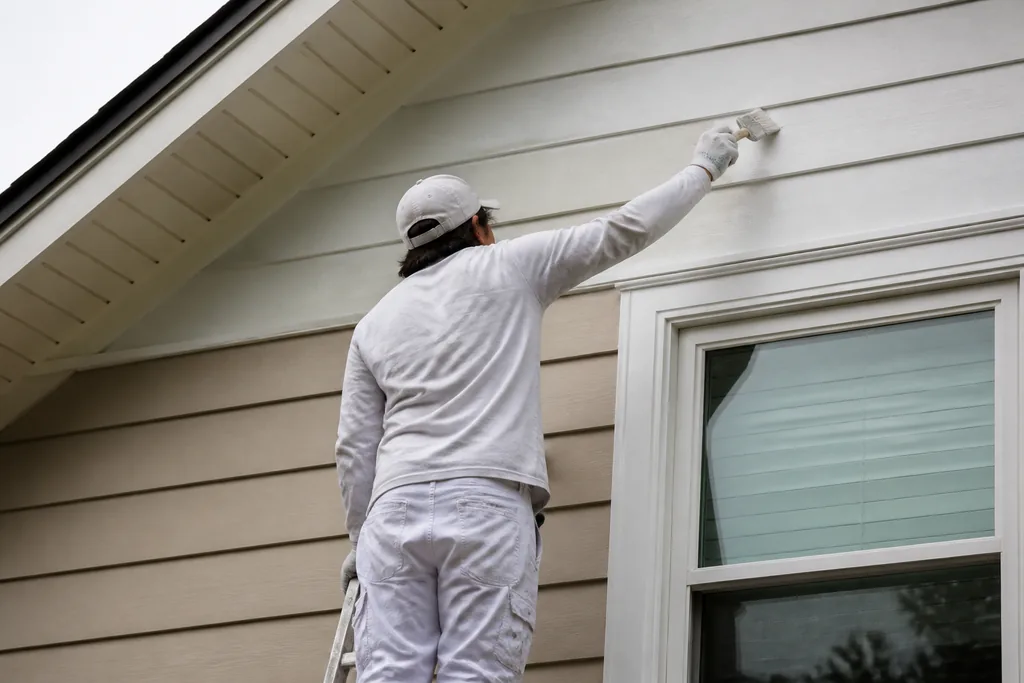
- Inspection and proposal: the estimator walks the home, measures and writes the scope.
- Color confirmation and scheduling: you choose each color and set the dates.
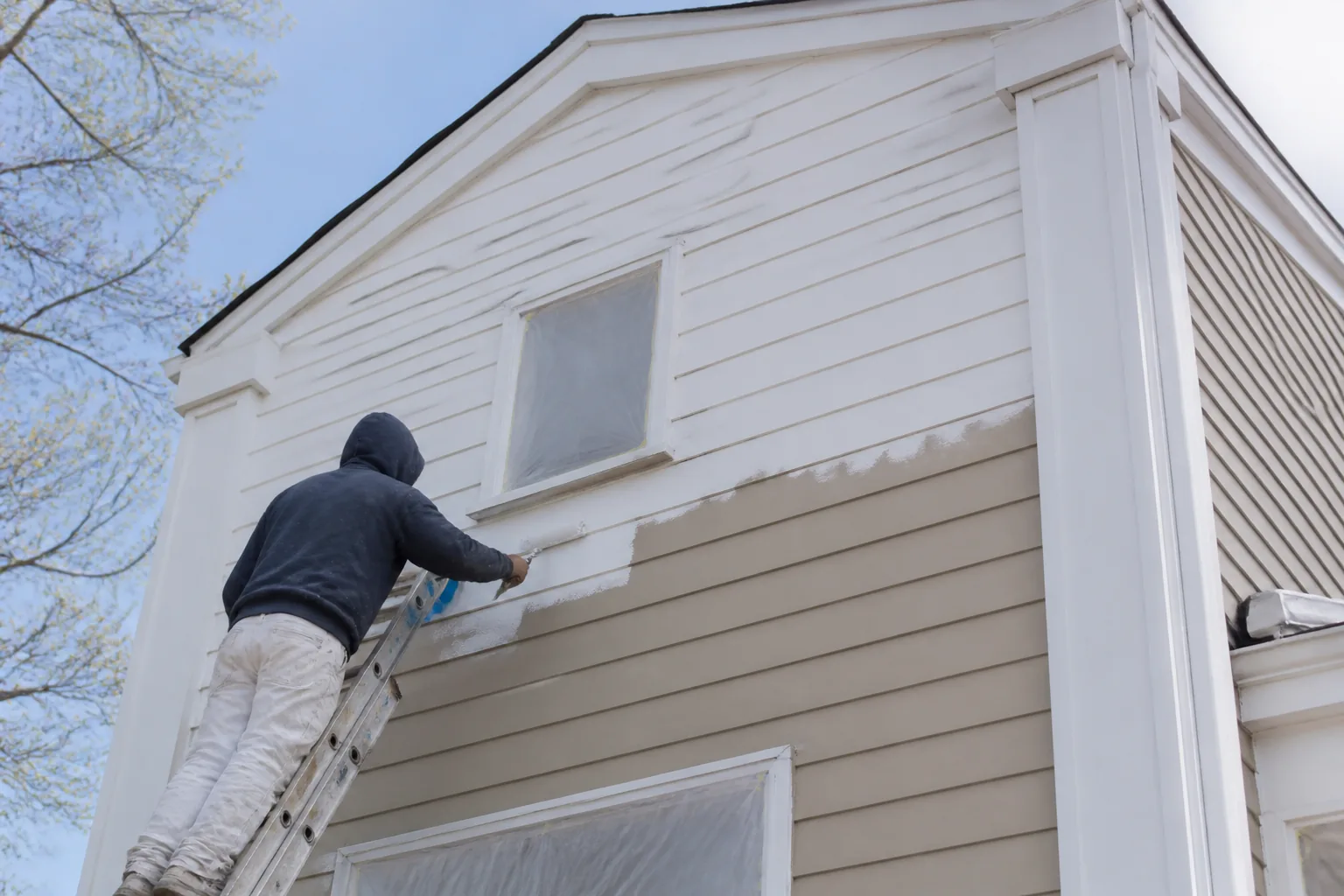
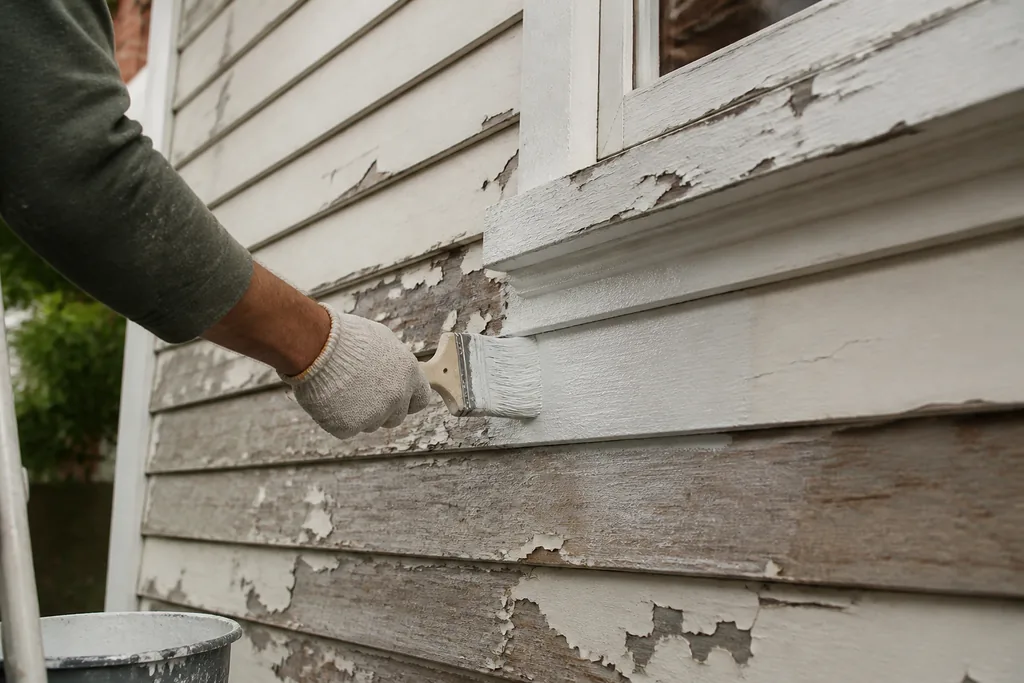
- Cleaning and preparation: the crew runs power washing, then scraping, sanding, repairs, caulking and priming.
- Paint application: the crew puts the finish coats on siding, trim and doors.
- Detail review and cleanup: the crew does a final walk-around and clears the site.
Get started
Book Your Exterior Repaint Today
Every estimate is free, happens at your house and carries no obligation. Crews can start on your paint job as early as the next day. Phones take calls at 516-447-2732 at any hour, or Get a Free Estimate
More detail
Exterior Painting Surfaces and Primers on Older Houses
Most finishes sold for siding today are acrylic latex paint, which stays flexible while wood swells and shrinks through the seasons. Oil and alkyd products still turn up on old trim, and what is already on the wall decides the primer.
Exterior Surfaces: Clapboard Siding, Trim and Shingles
Clapboard siding holds water in its laps, so pressure washing and a dry day matter more there than on brick. Cedar shingles bleed tannin, so the walls need a stain-blocking or mold killing primer. Moldings are usually painted with semi-gloss paint, and rotted wood or broken shingles get replaced before any coat goes down.
Weather sets the calendar more than anything else. Damp mornings, cold nights and a wall still wet from pressure washing all shift the start time, so the forecast matters before the first coat. A north-facing wall under trees dries slowest and shows mold stains first.
How Our Exterior House Painting Connects With Interior and Cabinet Work
The company covers the rest of the building too. Interior Painting runs room by room, cabinet painting is a specialty with an actual door sample shown at the estimate, and carpentry covers molding, rotted wood, shingles and water-damaged drywall. Epoxy flooring in high-gloss or satin finish suits a garage or basement, and commercial work covers offices, retail interiors and warehouses.
Residential and commercial work both run through the same company. Cabinet work follows its own steps: labeled doors, degreasing and sanding, then a bonding or stain-blocking primer before the finish. For a small job, Painter For A Day sends one painter for one day to a front door, shutters, trim touch-ups or a single room. The company also stains or paints decks, removes wallpaper and installs all types of wall covering.
FAQ
Exterior Paint and Prep FAQ
What happens when it rains in the middle of exterior painting?
Rain stops the work, because wet siding will not hold paint. The company has published no weather limits, so ask the estimator how rain and overnight damp shift your schedule. Crews can start as early as the next day once the weather clears.
What if my home was built before 1978?
Lead safety rules cover homes from before 1978. The company is a certified lead paint renovator and is lead-safe certified for those homes, so scraping and sanding follow the lead-safe method.
Do I really have to fill in the nail holes on my clapboard siding?
Filling and caulking are part of the prep step, with scraping, sanding and repairs. A filled hole keeps water out of the wood before paint, and the estimator writes the repair scope into the proposal.
Have you ever heard of mold killing primer?
Mold killing primer is a stain-blocking primer sold for damp, shaded walls. The company uses bonding or stain-blocking primer on cabinet work, so ask the estimator which primer suits your walls.
Can your contractor match the exact color I already have?
Bring a chip, a shutter or a spare board to the estimate and ask about matching it. A free color consultation comes with whole-house projects.
Will my new paint actually last, or will it start peeling in a year?
Every job carries a one-year written warranty against paint failure. Peeling exterior paint usually traces back to skipped prep, which is why the painting crew scrapes, sands, caulks and primes first.
Is power washing included before you paint?
Most house exteriors get power washing first. Pressure washing is the same step under another name, so ask the estimator whether your house needs it.