Exterior House Painting Trends to Watch: Popular Exterior Paint Colors, Siding, Trim, Front Door and Curb Appeal Ideas
Exterior House Painting Trends to Watch on Long Island all run one way this season. Exterior field colors have turned warmer and quieter. Trim has turned crisper. One element, a front door or a garage door, now carries a saturated color by itself. Walker Painting has repainted homes across Nassau County since 1995, and our estimator hears the same short list at the curb.
This guide names the exterior colors homeowners ask for, shows where each one works on a home, and sets out what our painters check first. No paint manufacturer is named, because the exterior color that suits your home answers to your roof and the light your walls get. Your home, your roof and your own siding set the exterior color long before a trend gets a vote, and the most popular exterior house colors change every few years while the paint colors that last are the ones you read on your own siding, in your own light.
Get a Free Estimate or call 516-447-2732,answered 24 hours a day, 7 days a week. Color Consulting
- Our crews have painted 12,000+ homes since 1995.
- Exterior estimates are free, on-site and carry no obligation.
- A whole house project includes a free color consultation.
- Every job has a one-year written warranty against paint failure.
- Our vetted crew is lead-safe certified for pre-1978 homes.
Exterior House Painting Trends to Watch This Year
Three directions run through nearly every exterior repaint our crews quote this year. The field color has moved warmer. The trim has moved whiter. One element now carries a saturated color by itself.
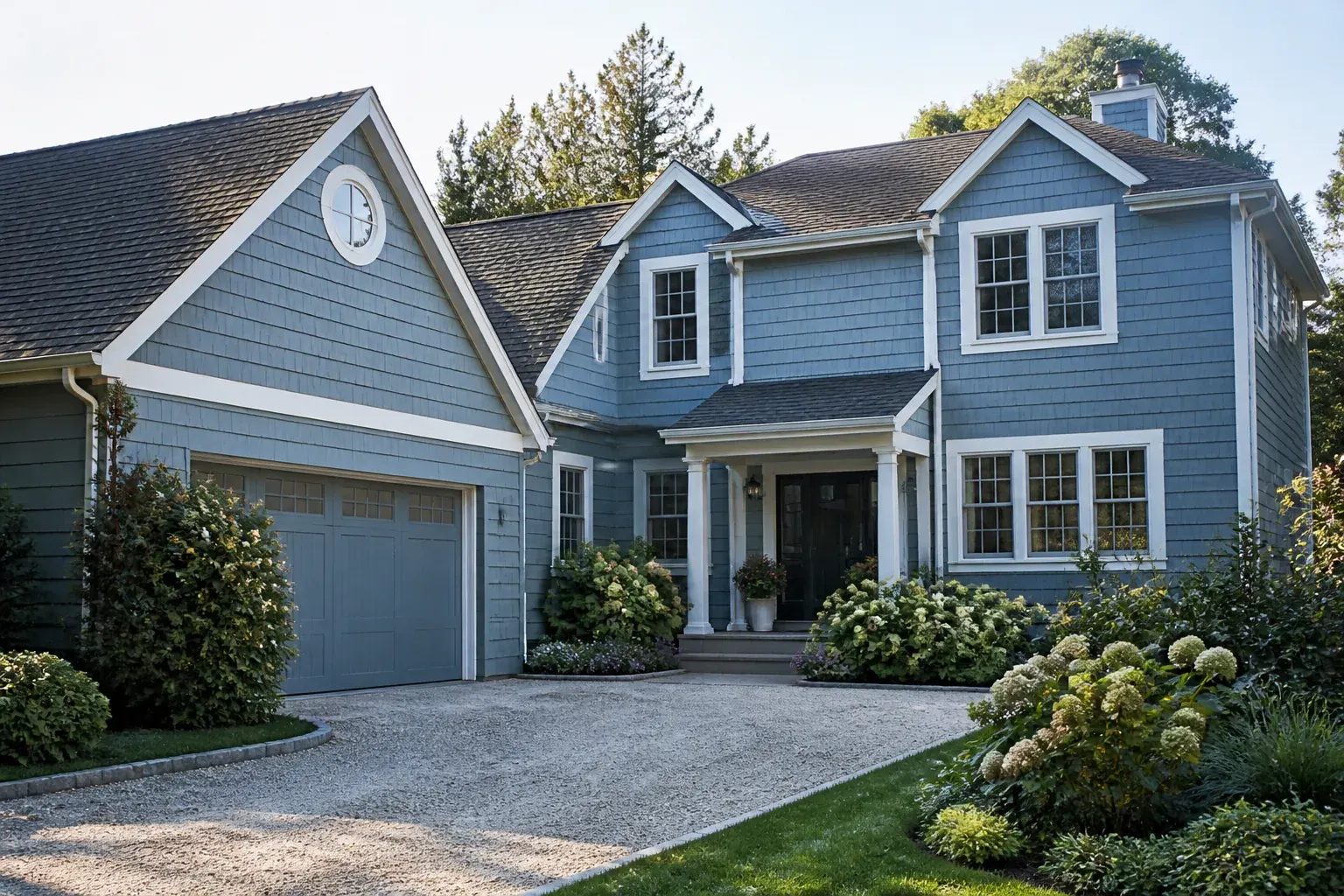
A field color is the big surface, the siding that covers most of a home exterior. Warm whites, soft grays and greige sit at the front of that queue, and the cool blue grays of a decade ago have stepped back. Many homeowners bring inspiration photos to the curb, and the natural tones in them tend to repeat.
Contrast is the second direction: a bright white trim next to a mid gray field reads sharper than the same white next to beige. The third direction is the statement piece: a charcoal garage door, a forest green front door or a black window sash does more for curb appeal than three new paint colors at once.
These are directions our estimator answers at the curb, and the exterior look a home owner wants to keep should outlast any season. What most homeowners choose first is not the paint color they choose once these colors are brushed on their own siding, and that is where every free color consultation starts.
Popular Exterior Colors and Trends on Long Island
Long Island exteriors sit in a particular setting. Salt air, summer sun and a dense mix of capes and colonials all have a say. A color that reads well in a desert subdivision is thin on a shaded suburban street. Consider the surroundings too: a sunny south elevation and a shaded north one are two different spaces for the same exterior color.
Warm Whites, Soft Grays and Greige Across the Field
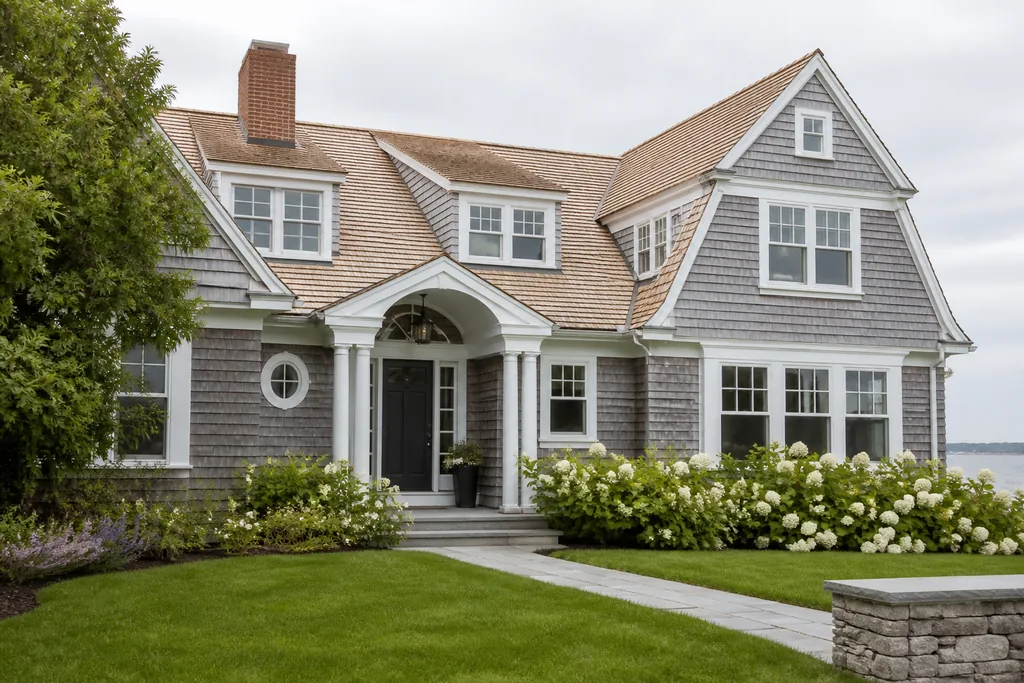
Warm whites lead every list our painters are handed. A creamy white with a yellow undertone keeps a cape from reading clinical, and it holds its tone better than a stark white once the sun starts to bleach a south wall. Greige, the middle ground from gray to beige, is kinder to brick and stone than either parent color is, and these colors read warm because they carry a yellow or a brown undertone that most of the cooler grays do not.
Deeper Blues, Greens and Charcoal as an Exterior Field Color
Dark field colors are the clearest trend of recent seasons. Navy, slate, charcoal and a near black all appear on Long Island streets. Greens run from sage to olive to forest. Deep green, dark blue, black and charcoal all read richer on a shaded wall than on a chip, and these paint colors want clean, sanded siding to look that way.
A saturated finish shows every ripple in old siding, so our crew adds sanding time before a first coat. Red is rare on a whole home exterior and common on a front door.
Exterior Color Choices for Different Long Island Home Styles
Architecture narrows the list faster than taste does. the exterior palette a house needs to carry answers to its own era and its own roofline.
Capes, Colonials, Ranches and Farmhouse Builds
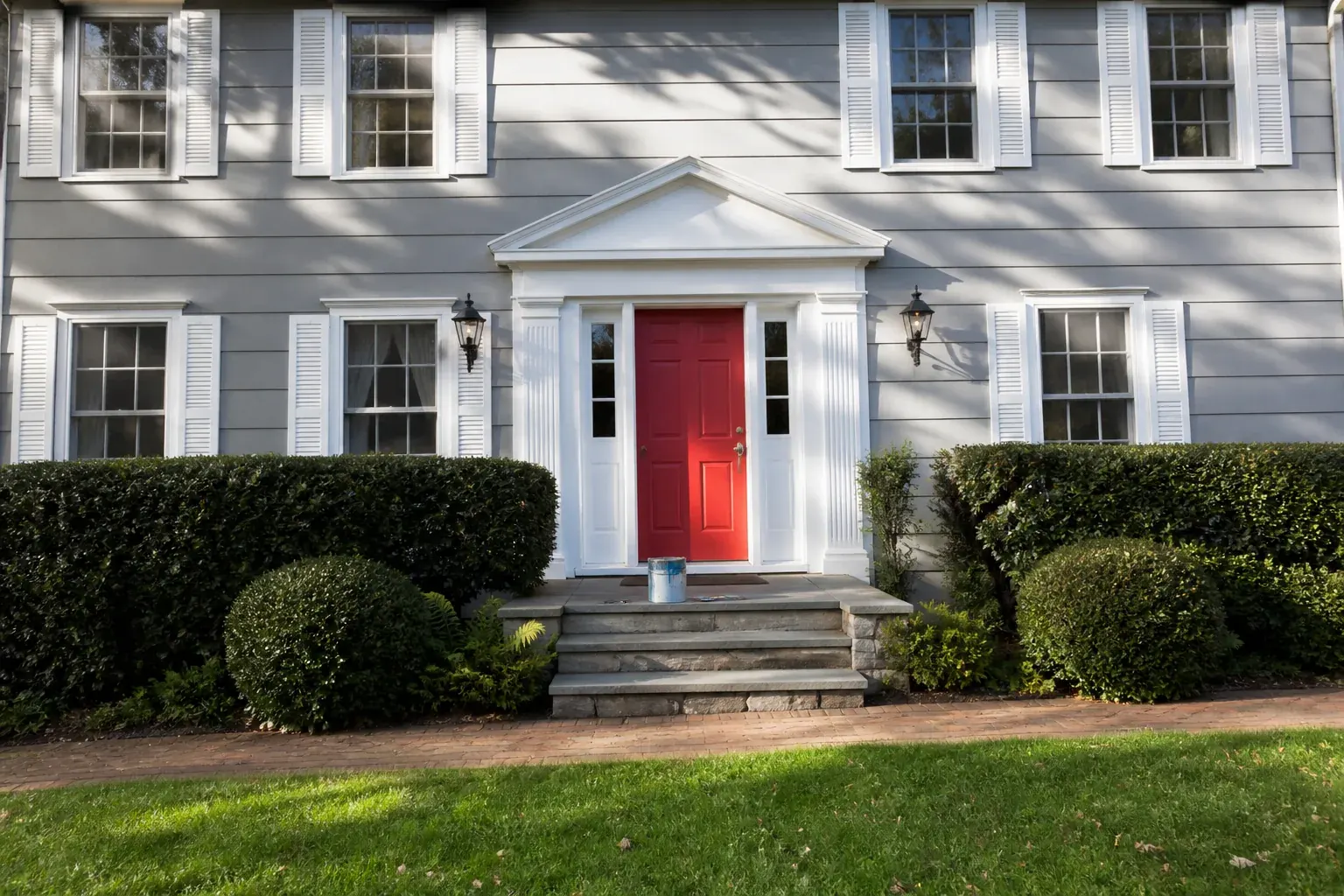
A cape has a small field and a large roof, so a light field color keeps it from reading squat. White, cream and soft gray all suit it, and the shutters carry the contrast. A colonial has symmetry to protect, so our painters keep the field quiet and give the front door the work.
A ranch has long horizontal lines and plenty of siding, so mid tone colors fit better. A modern farmhouse build wants the opposite: a crisp white field, black windows and a dark metal roof. Historic homes in the older villages need a palette true to their period.
Brick and stone decide a great deal. A red brick base pushes you toward warm whites and deep greens. A gray stone base opens up the cooler neutrals. Vinyl siding adds one rule, because a dark shade over light vinyl can warp panels. Brick, stone, stucco and wood each hold a paint color differently, so the same warm gray that reads earthy on brick reads cool on stucco.
Color Combinations and Schemes That Work on Houses
A single color is not a scheme. A home needs a field, a trim and an accent working together.
Three Part Schemes: Field, Trim and Accent
The simplest scheme our designers reach for runs from a light field to a lighter trim to a dark accent. A warm white field, a bright white trim and a charcoal door is the Long Island version.
Color combinations hold together when the undertones agree. A warm white trim next to a cool gray field fights itself. Our color palette work starts by sorting every candidate into warm or cool, then builds the palettes inside one family.
Three colors is usually the ceiling. There are other ways to use a classic three color scheme, and using one family of hues keeps your exterior calm. The colors that fail are the ones chosen one at a time, with no plan for how they sit together. Choose one family of hues first, then choose the three colors inside it: a field paint color, a trim white and one deep accent.
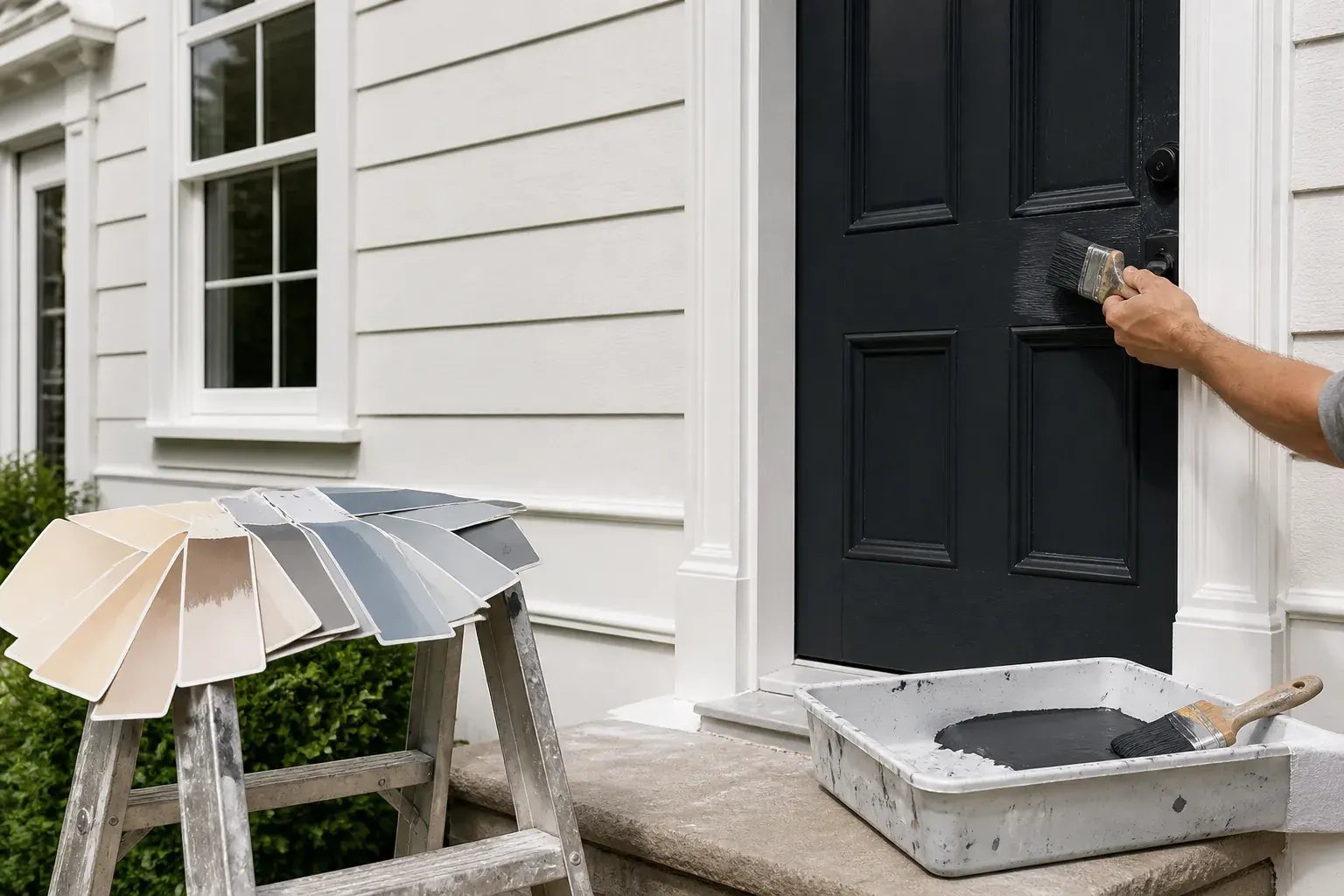
Where Accent Colors Add the Most Visual Impact on Front Doors and Shutters
Exterior accent colors cost almost nothing in paint and a great deal in attention, so placement matters more than the shade does. Our painters put them where the eye already goes.
The front door is the first slot. It faces the street, it is small enough to carry a strong color, and it is easy to change later. A garage door is the second slot, because two wide panels fill much of a front elevation. A garage door a half step darker than the field makes a whole home exterior read tidier.
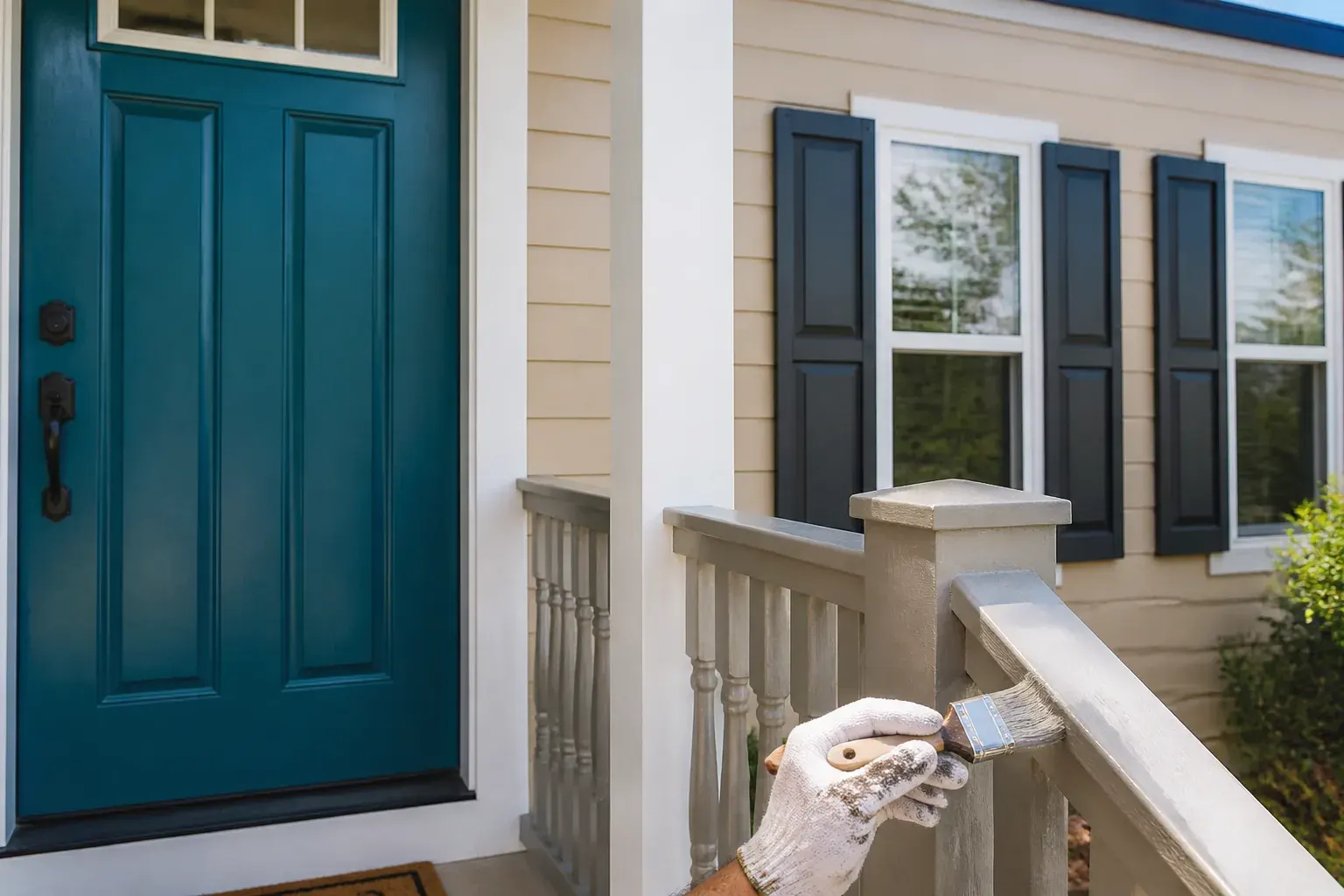
Shutters are the third slot. One shutter color across every window ties a home exterior together. Railings, porch posts and a metal handrail take accents too. A front porch ceiling in pale blue is a traditional touch still asked for here. Front doors, garage doors and shutters are where a deep green, a dark blue or a black reads hardest, and these paint colors cost little to change once they stop suiting the home.
One accent family per home is the rule. exterior accent colors to place with care lift a home exterior, and the same colors scattered across six surfaces flatten it.
Siding, Trim and Door Colors as One Exterior Palette
Siding, trim and doors are three jobs on one wall, and our crew prices and plans all three together.
Trim Whites and Why They Read Differently on Siding
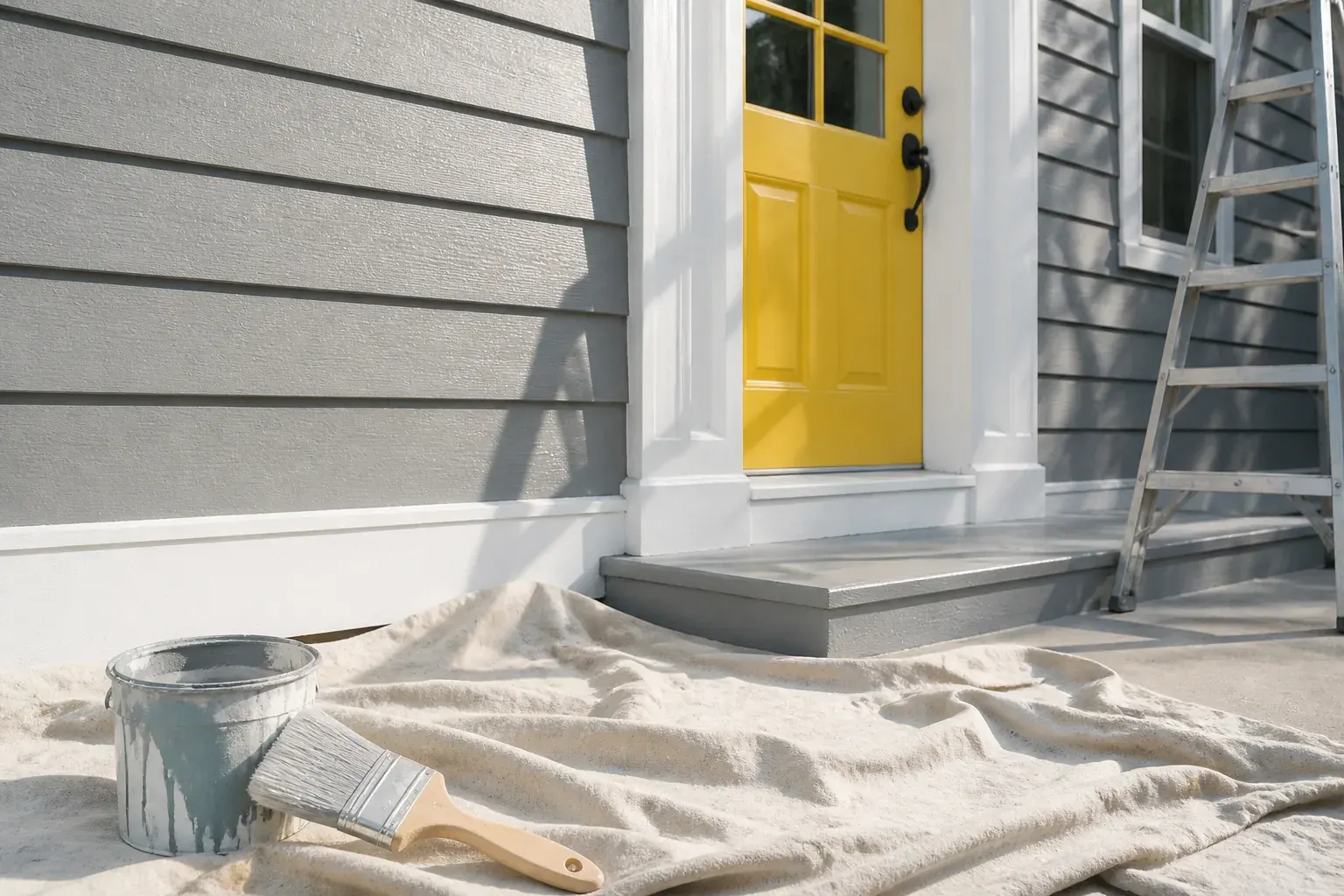
Trim is where small decisions show. A bright white trim on a gray field gives maximum contrast and a crisp line. A soft white trim on the same field is calmer and kinder to old wood. A trim painted to match the siding makes a home read larger and simpler. Trim whites themselves run from a warm creamy white to a crisp cool white, and every one of them changes how the siding paint color next to it reads.
Window sashes are a separate choice from window casings. A black sash next to a white casing is the strongest change available without a repaint of the whole exterior. Fascia, soffits and corner boards follow the trim color, and moldings are usually painted with semi-gloss paint.
Doors finish the picture. A front door in a saturated hue, a garage door a shade darker than the field, and a side door painted to match the trim is a reliable arrangement. the exterior trim colors to pair with a roof are chosen with the roof in the room, because a brown roof and a cool gray trim rarely agree.
Exterior Design Elements Shaping Curb Appeal
Exterior paint is one layer of curb appeal. The exterior elements around it either support the color or cancel it out.
Landscaping is the loudest neighbor. Dark green shrubs next to a dark green field erase a home exterior, while the same shrubs next to a warm white wall frame it, so our estimator looks at the landscape before a field color is confirmed. Hardscape matters too, because a gray paver walkway next to a warm beige home exterior reads as a mismatch.
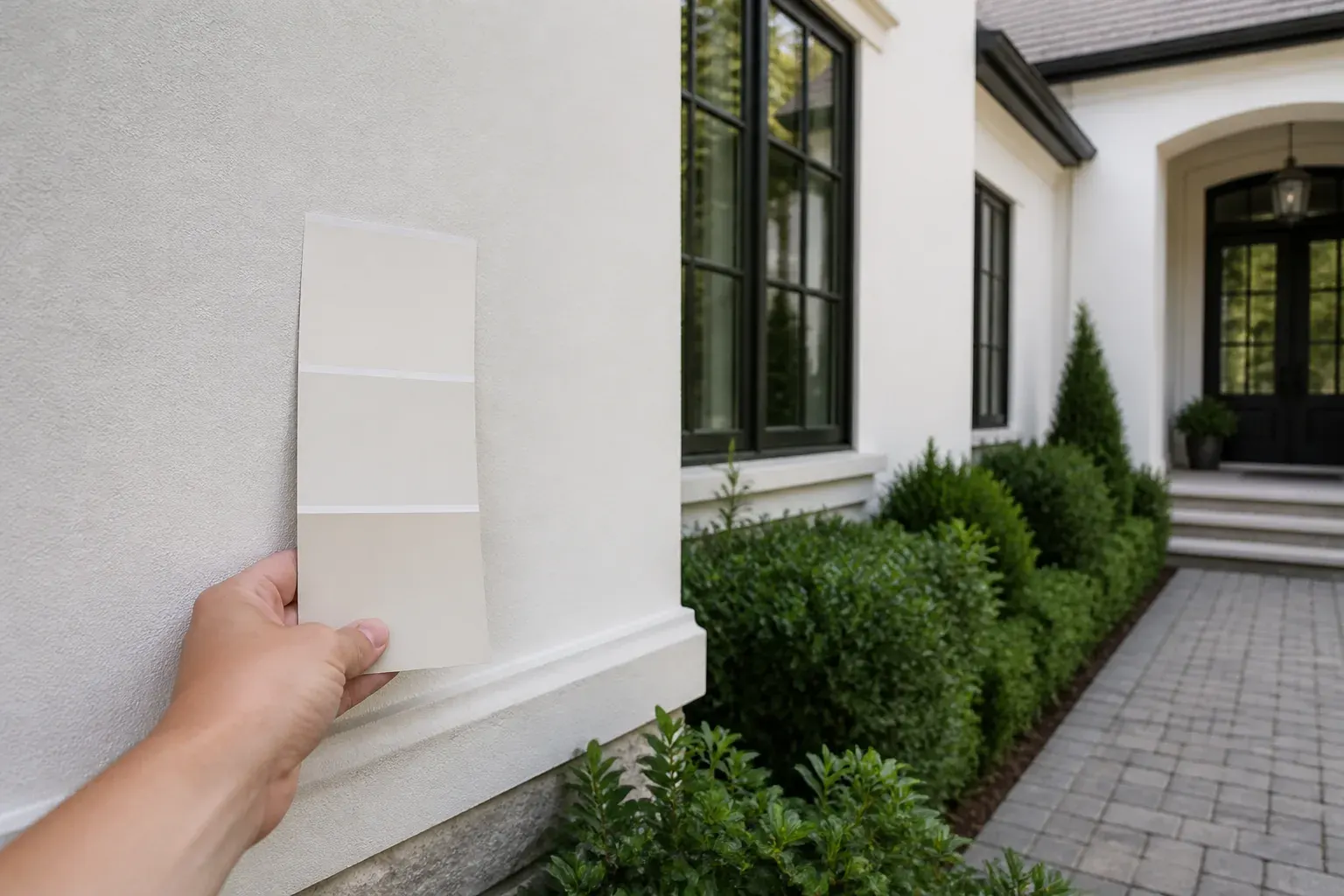
Lighting changes everything after dusk. Warm exterior lighting takes a neutral field toward yellow, and cool fixtures take it toward gray. Walk around your home at midday and again at dusk to see how your paint colors shift. Warm white siding, soft gray siding and a deep green front door each read differently under those lights, so look at these colors after dark too.
Power washing the walkway is part of how a finished exterior job presents from the curb. An outdoor space reads as part of the exterior today, and homeowners inspired by a timeless, versatile neutral rarely buy a bolder shade later.
Layered Exterior Materials Instead of One Flat Surface
Flat walls of one material are being broken up, and that is the exterior design shift our estimator fields most after color.
Board and Batten, Shingle and Stone Together
Board and batten on a gable above lap siding is the common version. Shingle on a dormer does the same job, only softer.
Stone and brick veneer at the base ground a home exterior visually. Siding painted above them in a warm neutral lets the masonry stay the feature. A whitewash over old brick is another direction homeowners ask about. Two materials with one quiet paint color read better than one material with two loud colors, and that is how most layered home exteriors are planned.
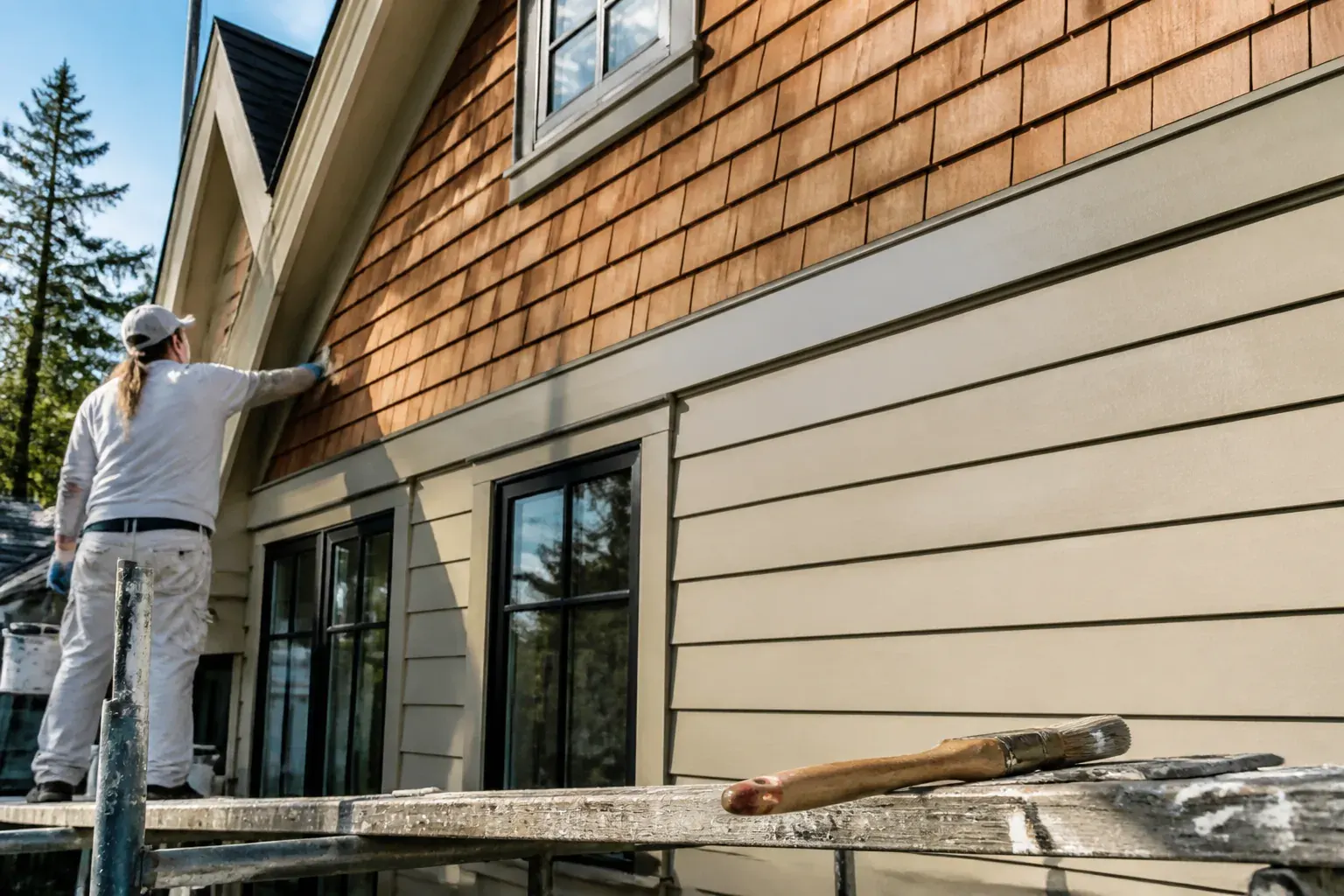
Cedar shingles hold a finish only after a thorough clean, and stucco needs crack repair before priming. Our proposal lists each exterior surface separately.
Paint That Draws Out Exterior Architectural Detail
Older Long Island homes have detail that one flat color hides.
Semi Gloss Trim, a Flat Field and the Light Between Them
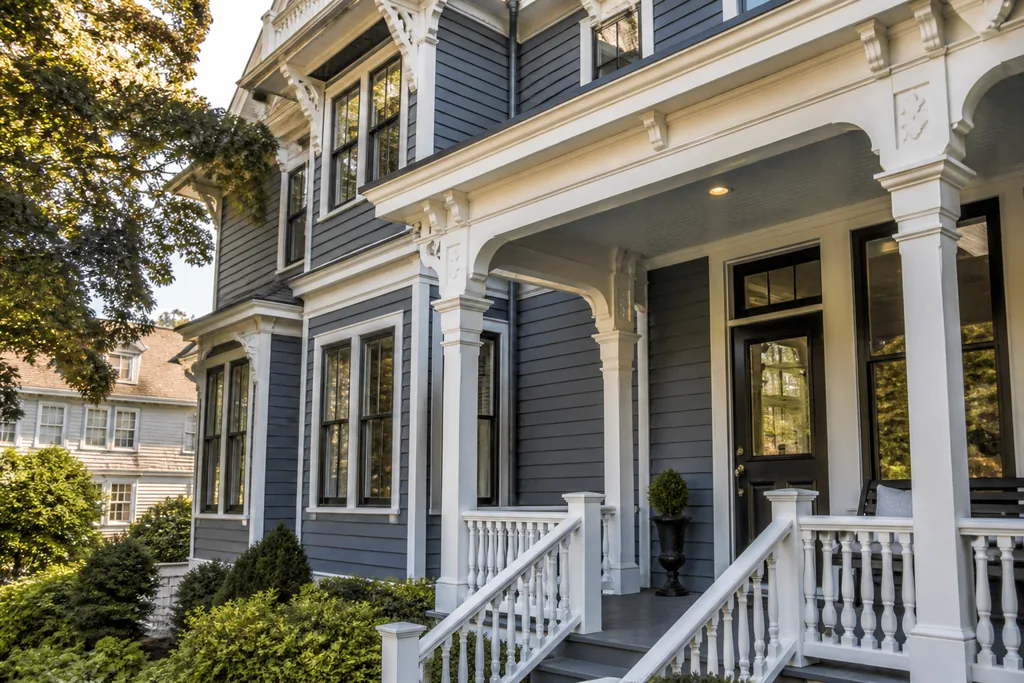
A flat or low sheen field color absorbs light and sits back. A semi-gloss trim reflects it and steps forward. That difference alone reveals architectural detail on an exterior wall without a third color.
One element picked out in a deeper tone is the next step. A porch ceiling or a column base takes a darker shade of the trim color. Our painters keep that to one or two elements on a historic home exterior. A warm white trim over a soft gray field picks out brackets, corbels and window hoods without a third paint color.
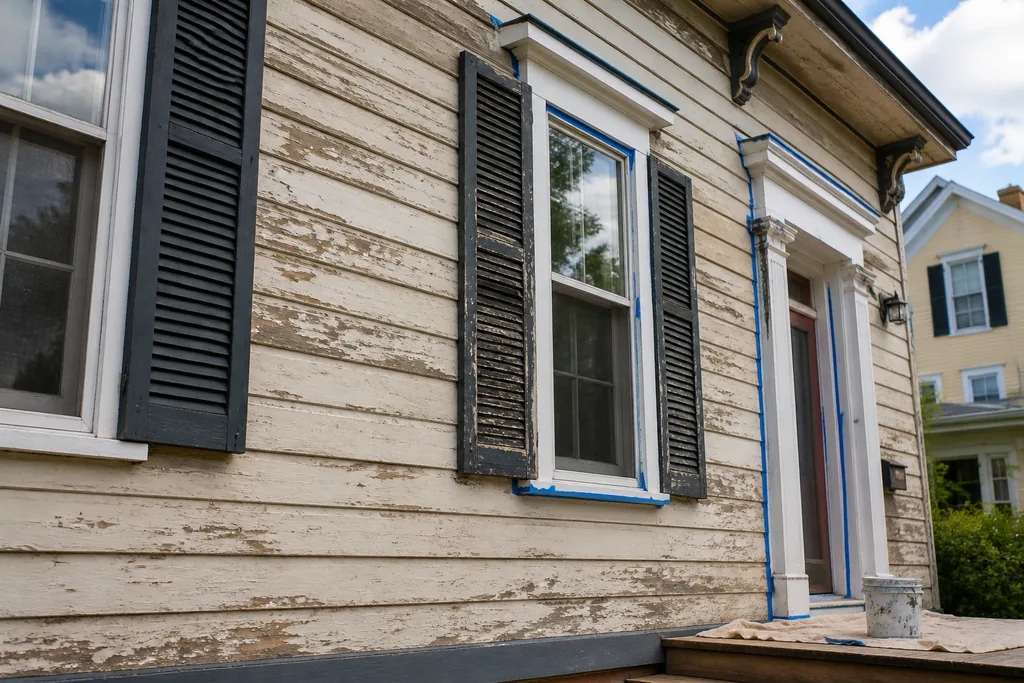
Prep decides whether detail survives. Loose paint in a molding profile comes off before a fresh coat, or the shape blurs. an exterior repaint plan to follow on a detailed home exterior budgets hand time for scraping in those profiles, and our carpentry crew replaces rotted wood and shingles first.
Modern Exterior Paint Colors Homeowners Ask For
Modern, in color terms, is quiet and warm with one hard edge. The exterior paint colors our estimator is asked for cluster into four groups.
Earthy neutrals come first: warm white, greige, taupe, mushroom and a muted clay. Second are the deep greens, from sage to olive to forest. Third are the blue family darks, navy and slate. Fourth is black itself, now common on windows, doors and metal railings. Paint colors that look new this year read dated in a few years, while the house colors that read warm, soft and natural hold their look.
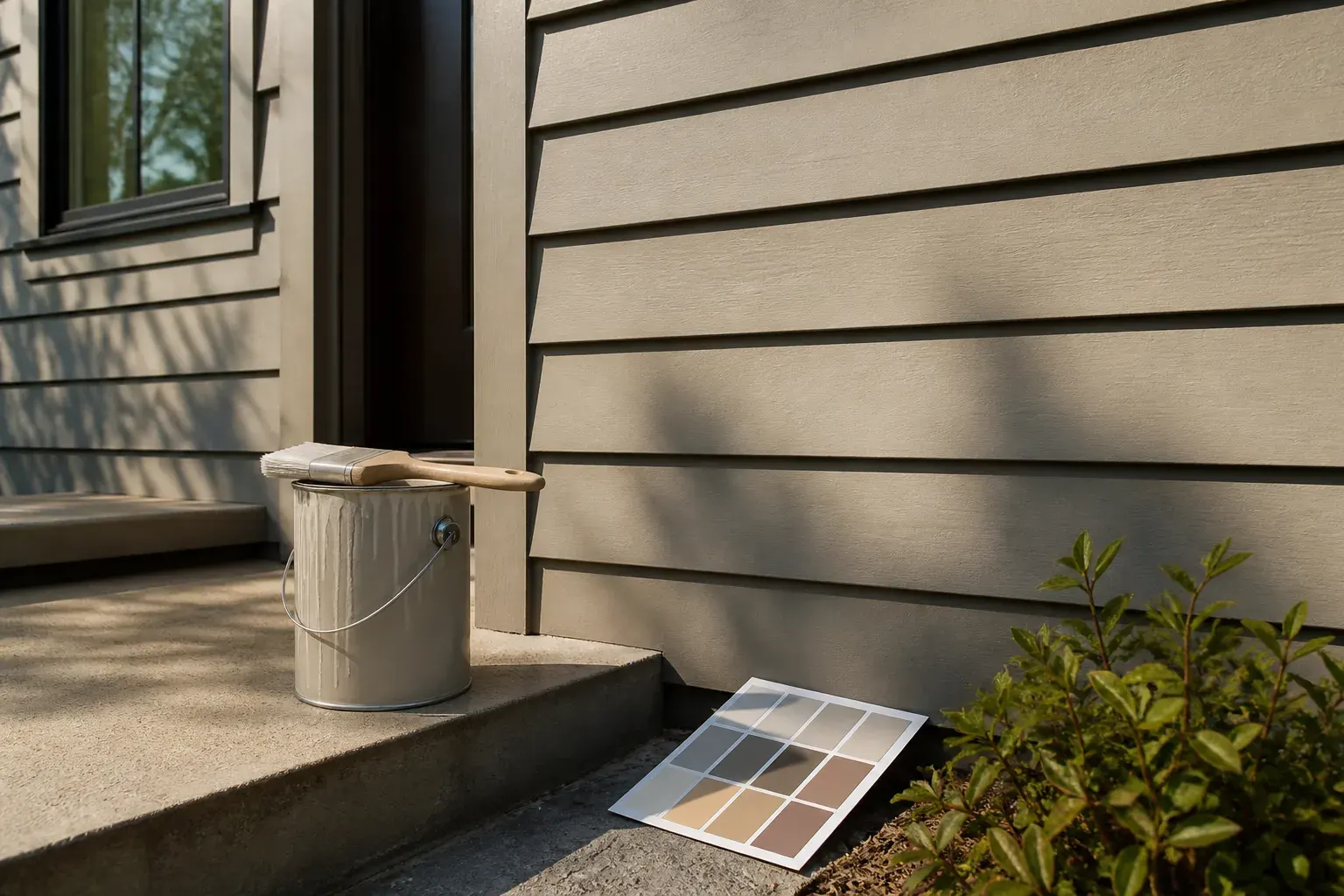
Three notes matter when you select an exterior paint color. A paint color reads two steps darker on a large wall than on a chip. Undertones decide whether neighboring colors agree. Durability varies by pigment, so saturated reds and bright blues show fading sooner on a sun struck wall. Choosing an exterior color is one job and selecting a finish is another, so test your shortlist on your own siding.
Modern exterior paints hold their tone longer than the paints of twenty years ago, and that longevity is why a designer pushes you toward a tested shade. Our color consulting services exist to transform a tired exterior, and even a subtle shift in undertone can refresh a whole elevation. exterior paint colors are easier to live with once somebody has tested them on your own siding. Paint your exterior once and your home keeps that color for years, so your colors are worth the time to test.
Our Exterior Repaint Process, Step by Step: Power Washing, Scraping, Priming and Final Coats
Our exterior painting workflow runs in five steps, and the exterior siding on a house our crew coats passes through all five.
- Inspection and a written proposal record wall area, siding type, trim count and repairs.
- Color confirmation and scheduling lock the palette and a start date.
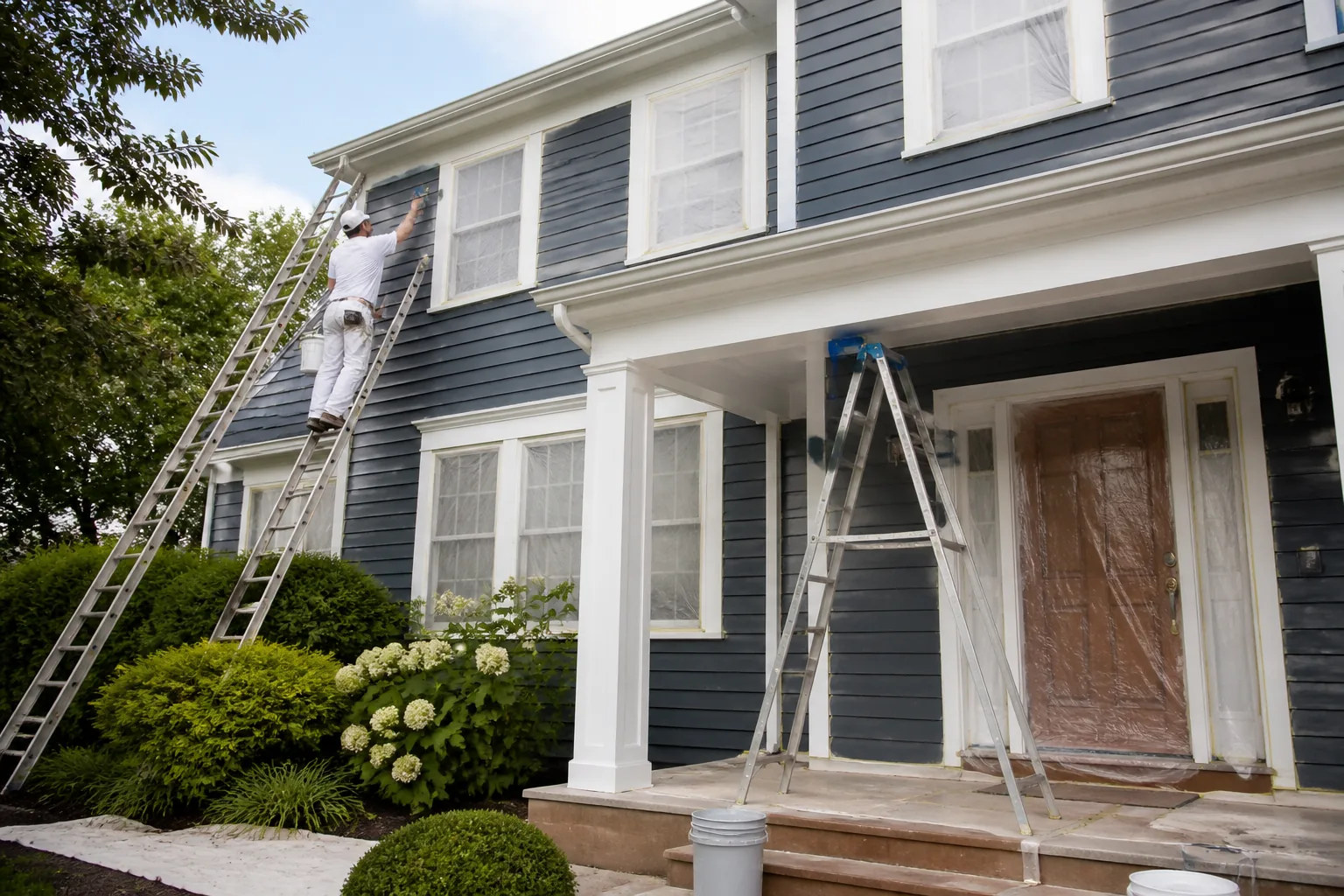
- Cleaning and preparation covers power washing, scraping, sanding, repairs, caulking and priming.
- Paint application puts the primer coat and the final coats on siding, trim, shutters, windows and doors.
- A detail review and a full cleanup close the exterior job out.
Power Washing, Priming and Two Coats
Most homes we paint are power washed first. Pressure lifts chalk, pollen and mildew off siding so a fresh coat gets real adhesion, and walls dry before primer. Bare wood and patched masonry take priming.
Finish coats go on by brush, roller or spray according to the surface. Heavy canvas drop cloths are used to protect what sits below the work. exterior finishes built to shrug off salt air start with that prep. Crews can start as early as the next day, and phones are answered 24 hours a day, 7 days a week.
What Affects the Cost of an Exterior Repaint: Siding, Trim, Shutters and Surface Condition
No figures appear here, because a real number comes from your own walls. These are the things an estimator records on site.
Color Changes, Coats and Surface Condition
Exterior surface area is first, because a crew coats square footage rather than rooms. Height is next, since a two story home needs ladders where a ranch needs none. Siding material is third, as wood drinks primer and masonry wants a breathable finish. Surface condition is fourth, and peeling paint turns half a day of prep work into three days.
Hand detail is last. Window sashes, door casings, soffits, fascia, railings and shutters are all cut in by brush. A home with ten windows and a wrapped porch takes far longer than a plain ranch. Trim, shutters and siding are priced separately, because a home that carries wide trim boards and twelve shutters takes more hand work than most homeowners first expect.
Color choice has an indirect cost. A move from a dark field to a pale paint color can need an extra coat, while a repaint in a close tone can need fewer. Lead-safe work on a pre-1978 home adds containment time.
Why Long Island Homeowners Choose Our Crews: Licensed Painters and Lead Safe Prep
Walker Painting was founded in 1995 and has 30+ years in business. Our crews have painted 12,000+ homes, and our rating is 5.0 stars across 300+ Google reviews. Most of our painters have been here 15+ years, and all employees are vetted and reference-checked.
We are licensed in Nassau and Suffolk counties and have liability insurance for New York City work. Nassau County is our primary exterior service area, and our crews also work across Suffolk County, Queens and Manhattan. We are a certified lead paint renovator, lead-safe certified for pre-1978 homes.
Exterior estimates are free, on-site and carry no obligation. Walk your exterior with the estimator, from the roof line down to the foundation, to see where the siding needs attention. A whole house project includes a free color consulting visit, which is where most color combinations get settled. Every job has a one-year written warranty against paint failure, and the on site inspection and written proposal come before the crew arrives.
So, Exterior House Painting Trends to Watch are worth a read, and your own answer arrives at the curb with an estimator next to you. Get a Free Estimate or call 516-447-2732, answered 24 hours a day, 7 days a week.
Exterior Repaint Trends FAQ: Colors, Durability and Garage Doors
Six frequently asked questions our estimator answers at the curb, with the tips that come with them, covering the most popular exterior paint colors, how these colors hold up for durability in salt air and sun, and what a garage door should do.
How do I choose the right exterior paint color for my home?
Start with what you cannot change. Your roof, your brick or stone, your window frames and your neighborhood set the undertone before any paint color enters. Our estimator works from those fixed items outward, then narrows the field to two or three shades and brushes samples on the siding itself. A whole house project includes a free color consultation, so nobody decides alone.
What are the most popular exterior paint colors?
Warm whites, soft grays, greige and deep charcoal are most of the requests our painters hear. Navy and forest green run next, usually on a front door or a garage door. Earthy browns and sage have replaced the cooler blue grays of a decade ago.
What exterior paint colors make a home feel warm and inviting?
Shades with a yellow, red or brown undertone read as warm. A creamy white, a warm greige, a soft taupe and a muted olive all give that feeling, and a wood front door next to them helps. Cool colors with a blue undertone read sharp on a north facing wall, so our painters check the light at the home first.
Should exterior colors be tested on the siding first?
Yes, and this is the step homeowners skip most. A paint color shifts from a chip to a phone screen to a real wall in real sun. Our crew brushes a board or a patch of the siding, then the homeowner looks at it in morning light and at dusk. It costs nothing to walk your own property with a color fan in hand.
What exterior house colors are easiest to maintain over time?
Mid tone neutrals are the least demanding. A warm gray, a greige or a soft taupe hides pollen, salt film and road dust between washes, and it fades slowly. Very dark saturated colors and bright reds show fading and chalking first on a south wall. Pure white reads clean, though it shows mildew next to shaded landscaping.
What exterior house colors are trending in 2026?
The direction homeowners ask about now is warm and quiet on the field, crisp on the trim and saturated on one accent. Warm whites, greige and earthy browns are the siding requests. Charcoal, navy and forest green are the door and shutter requests. Mixed materials, so siding painted above a brick veneer base, are in nearly every design question our estimator is handed.
Related work pairs with an exterior repaint. Interior rooms, cabinet painting, deck stain and roofing trim come up at the same visit, and one vetted crew handles the parts that are ours.